The landscape of personal health monitoring is rapidly evolving, moving beyond simple step counts and basic weight measurements towards sophisticated, integrated systems. It's at events like CES 2026: why Withings' latest innovation, the Body Scan 2, caught significant attention. This device stands out not just as an upgraded smart scale, but as a comprehensive 'longevity station' designed to bring clinical-grade insights directly into your home. The core reason for its standout appeal lies in its ability to deliver an unprecedented array of health biomarkers, rivaling features previously exclusive to medical settings or high-end smartwatches.
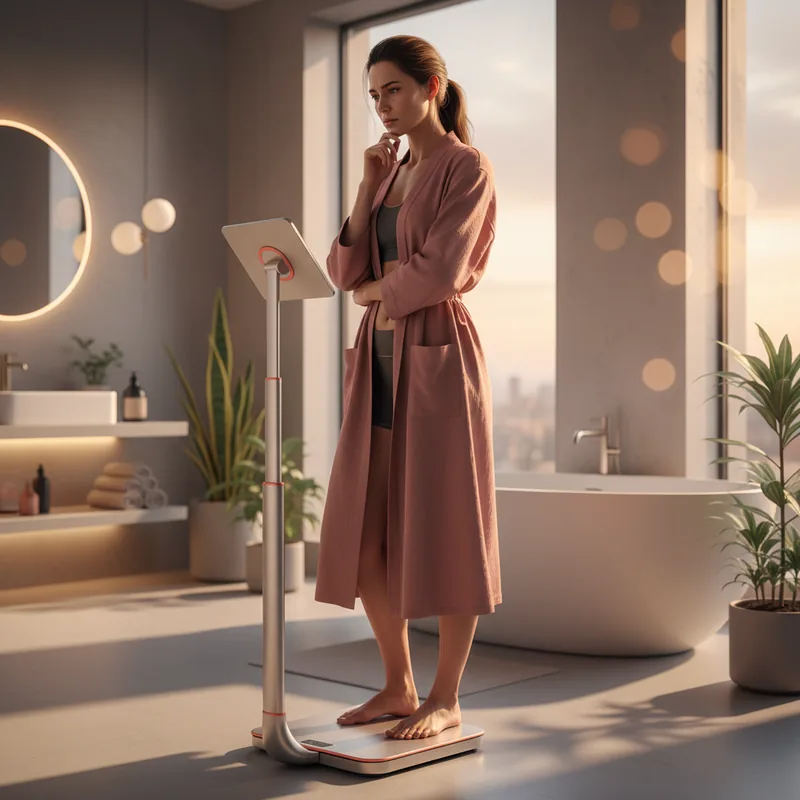
Unlike conventional smart scales that primarily measure weight and rudimentary body fat via foot-to-foot electrical currents, the Body Scan 2 introduces a retractable handle equipped with additional electrodes. This innovative design allows it to measure over 60 biomarkers by engaging both the upper and lower body, offering a far more holistic view of your health. This is a crucial distinction, and precisely why Withings' approach at CES 2026 is so impactful. Typical smart scales often struggle with accuracy for metrics beyond simple weight, operating more like a basic car speedometer. The Withings' Body Scan 2, conversely, is akin to a full diagnostic system for your body, rather than just a simple gauge.
The addition of hand-held sensors enables advanced readings such as a six-lead ECG, providing detailed heart rhythm data often found in clinical environments (Mayo Clinic, 2023). Furthermore, a Withings representative demonstrated how the device can assess arterial stiffness by precisely timing pulse wave velocity across different body segments--from torso to hands and feet. This is like checking the flexibility of a garden hose; the faster the flow between points, the better. This sophisticated approach, leveraging impedance cardiography, a well-studied technology for evaluating heart health, is a key component of why the Withings' Body Scan 2 represents a significant leap forward in personal health tech.
A small, integrated screen on the handle itself is another thoughtful design choice. This eliminates the need to squint at a display on the floor or constantly check an app, making the data immediately accessible and user-friendly. It means you can obtain detailed ECG readings and receive hypertension notifications--two headline features of premium smartwatches--without needing to wear a device 24/7. For individuals who prefer not to wear a smartwatch or desire a less intrusive method for daily health checks, the value proposition of the Withings' Body Scan 2 is clear. It's a dedicated, precise tool for proactive health management, providing deeper insights than a simple bathroom scale (Harvard Medical School, 2024). Instead of just knowing your car's speed, it's like getting real-time diagnostics on engine health, tire pressure, and fuel efficiency.
While not yet available for purchase, Withings anticipates a Q2 release this year, pending necessary FDA clearances for some of its advanced features, with a price point of $599.95. This positions it as a premium device, building on their existing first-generation Body Scan scale ($399.95) which includes a handle but fewer sensors and no integrated screen. The investment reflects its advanced capabilities, making the Withings' Body Scan 2 a compelling proposition for anyone serious about comprehensive home health monitoring and longevity, and certainly a highlight of CES 2026.