You've probably scrolled through countless fitness influencer feeds, seen their perfectly sculpted bodies, and wondered: "Do I really need a full gym setup, or can I get by with just a few pieces of equipment at home?" The truth is, the answer isn't a simple 'bands' or 'dumbbells.' It's far more nuanced, and understanding when to choose resistance from each category can completely transform your home workouts. Forget the endless debates; let's cut through the noise and figure out what truly works for you.
Strength Potential: Bands vs. Dumbbells
When it comes to building serious strength, many assume dumbbells reign supreme. After all, iron feels… substantial. But here's where things get interesting: resistance bands, particularly the beefier varieties, can offer a surprising amount of pull. Coach Greg Nuckols, a respected voice in strength training, even highlighted bands as his top pick for heavy home training during gym closures (American Council on Exercise, 2024). Imagine a pair of "strong" bands pulling on a barbell with the force of 122 to 275 pounds - that's some serious resistance, especially as you stretch them further.
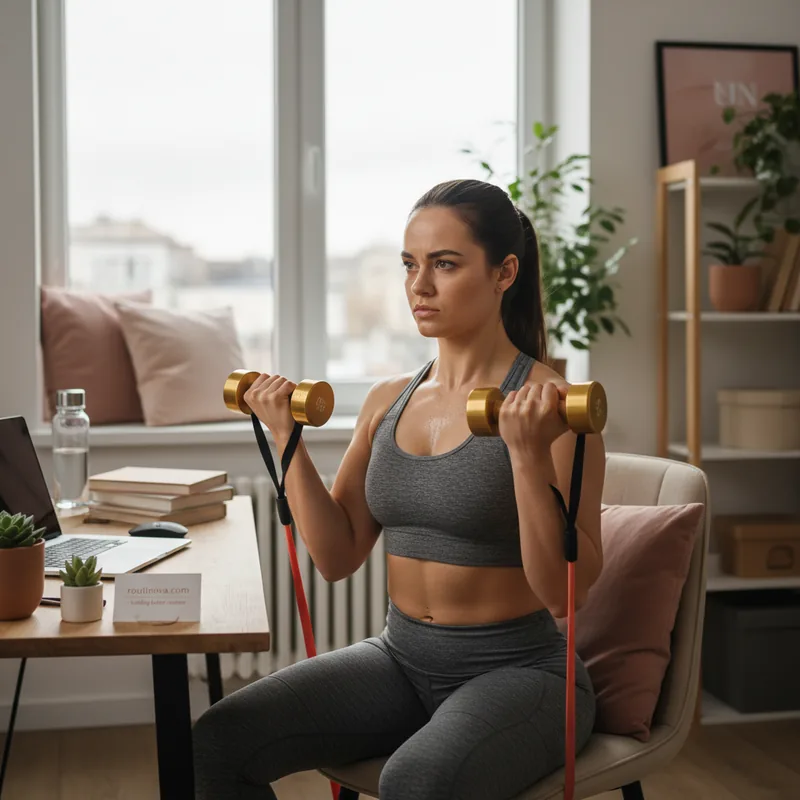
But there's a catch: the resistance from bands isn't constant. It's lighter at the beginning of a movement and progressively harder at the end. Think about a bicep curl: with a dumbbell, the weight is the same throughout the entire lift. With a band, it might feel easy at the bottom, but demand maximum effort as your arm fully contracts. This unique tension curve means understanding when to choose resistance bands for explosive movements or high-rep work can be a game-changer, but they aren't always a direct replacement for constant load.
Dumbbells, on the other hand, provide a consistent load, which is excellent for assessing strength gains and ensuring muscle activation throughout the entire range of motion. However, you'll quickly outgrow fixed-weight dumbbells. That trusty 20-pound pair that felt challenging for curls might be too light for squats or presses within a few months. Adjustable dumbbells offer a solution, but even these have limits on how much weight you can add before they become unwieldy or simply run out of plate room. This brings us to a crucial point: your strength journey is rarely static, and your equipment shouldn't be either.
Versatility and Movement Patterns
For most of us, dumbbells are simply more intuitive. Pick them up, and you're ready for bicep curls, shoulder presses, lunges, rows, and countless other staple exercises. No anchors needed, no complex setups. Just pure, unadulterated lifting. This ease of use means you can quickly string together an effective workout without much fuss, making them a go-to for many home fitness enthusiasts (Harvard Medical School, 2023).
Resistance bands, while incredibly versatile in the hands of an experienced user, often require a bit more planning. You'll need to find a sturdy anchor point - sometimes it's your foot (which isn't always comfortable if you're working out barefoot), other times it's a door frame, a sturdy pole, or even a heavy piece of furniture. The right placement for that anchor is critical for targeting the intended muscle group effectively. Imagine trying to do a face pull, pulling a band towards your face, only for the anchor to be too low or too high. It changes the entire exercise. This is crucial when to choose resistance type for specific exercises that demand precise angles or consistent tension.
Consider a lateral raise: with a dumbbell, you simply lift the weight to the side. With a band, you might have to step on it, creating an upward pull that intensifies as you raise your arm, potentially over-challenging the top of the movement while the bottom feels too easy. This isn't necessarily a bad thing - it can recruit different muscle fibers - but it highlights that bands aren't a drop-in replacement for dumbbell movements. They offer a different, complementary stimulus, allowing for unique joint-friendly movements like banded glute walks or assisted pull-ups that dumbbells can't replicate.
Durability and Long-Term Investment
Here's a simple truth: iron lasts forever. Rubber, on the other hand, has a shelf life. Resistance bands, no matter how high-quality, will degrade over time. Exposure to sunlight, friction against anchor points, and repeated stretching all contribute to wear and tear. Most manufacturers suggest replacing thinner bands every few months and thicker ones annually (Journal of Sports Science & Medicine, 2022). Imagine the frustration - and potential injury - of a band snapping mid-set during a powerful squat. It's a real risk, which is why proper care and regular inspection are non-negotiable.
When a band snaps, it may end up hitting you, which is why some trainers advise against moves like face pulls in which you're pulling a band toward yourself.
Dumbbells, while a higher initial investment, are a one-and-done purchase. Unless you're dropping them from a great height or leaving them out in corrosive conditions, they'll likely outlast you. This makes them an excellent long-term investment for a home gym. The cost difference is significant: you can buy a comprehensive set of resistance bands for less than the price of a single heavy adjustable dumbbell. So, considering the lifespan of your equipment is key when to choose resistance tools that offer long-term value and require minimal ongoing maintenance.
The Smart Choice: Why Not Both?
Ultimately, the decision of when to choose resistance bands or dumbbells isn't about finding a single winner. It's about understanding their unique strengths and weaknesses and leveraging them to create a dynamic, effective home workout routine. Bands excel at progressive resistance, adding intensity to bodyweight movements, and offering portability for travel. Dumbbells provide consistent, measurable load, intuitive handling for classic exercises, and unmatched durability.
Think of them as complementary tools in your fitness arsenal. Use bands for warm-ups, activation exercises, and specific movements that benefit from their progressive tension. Integrate dumbbells for your core strength exercises, where consistent load is paramount for muscle growth and progressive overload. By combining both, you unlock a far wider range of exercises and training stimuli, empowering you to confidently decide when to choose resistance for any given workout and truly maximize your gains from the comfort of your own home.