Walk into any gym, and you'll hear the whispers, the debates, the unsolicited advice: 'Are you going deep enough?' 'You'll ruin your knees!' The squat, a foundational movement, has become a battleground of opinions, leaving many of us wondering: how deep should you really go? It's a question shrouded in dogma and bro-science, but the truth is, the 'perfect' squat depth isn't a one-size-fits-all answer. It's about understanding your body, your goals, and ditching the noise to find what truly works for you.
The Squat Spectrum: Defining Your Depth
When coaches and lifters talk about a squat's 'depth,' they're referring to how low your hips descend relative to your knees. Some incredibly strong and flexible individuals can drop all the way down until their hamstrings touch their calves, almost sitting on the floor. This extreme range is often affectionately called an 'ass-to-grass' (ATG) squat.
On the other end of the spectrum, if your knees bend only slightly before your form falters, you might be told you're squatting 'high' or not 'to depth.' If this feedback comes from a trusted coach or friend, it's worth considering. But here's the thing: if it's some internet rando or a busybody at your local gym, you don't owe them a specific squat depth, and they should frankly mind their own business.
Ultimately, consistency is king. If you squat 225 pounds to parallel at the start of your training program and then claim 315 pounds with a super-high half-squat later, you haven't truly added 90 pounds to your strength. You've simply changed the exercise. For accurate progress tracking and meaningful gains, pick a depth that suits you and commit to it.
Parallel Squats: The Gold Standard for Most
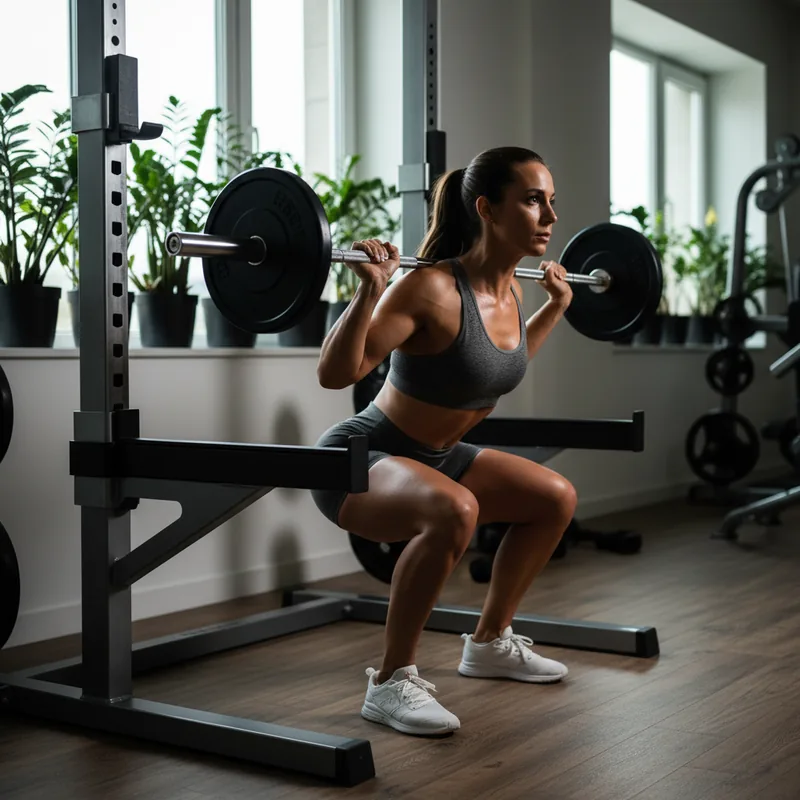
For the majority of lifters, the optimal squat depth is 'to parallel.' This means your thighs are roughly parallel with the floor, or, to put it another way, your hips and knees are approximately on the same level. If your hips drop lower than your knees, you're 'below parallel'; if they stay above, you're 'above parallel.'
This depth has become the universal definition of a 'full squat' largely due to its practicality. It's easy to visually judge when someone hits parallel, making it a convenient standard for trainers, coaches, and competition judges. This consistency is invaluable for your training, ensuring you're performing the same difficulty of squat week after week.
In powerlifting competitions, judges meticulously scrutinize your bottom position. The rule typically mandates that your hip joint (or the crease of your hip) must descend lower than the top of your kneecap. This roughly aligns with the parallel position. So, when it comes to the question of how deep should you go for general fitness and strength, parallel is often the sweet spot.
You can't accurately judge this in a mirror while squatting; your perspective will be off. Instead, video yourself from the side with the camera at or below hip level, or ask a trusted friend to observe your form. Another effective method for consistent depth is to use a bench or box of appropriate height, gently tapping your glutes on it with each repetition.
Benefits of Squatting to Parallel:
- You achieve a greater range of motion, engaging your muscles more effectively than with higher squats.
- Most individuals can achieve a parallel squat with consistent training, making it an accessible and rewarding goal.
- You can often lift more weight at parallel depth compared to going deeper, facilitating progressive overload.
- Maintaining a stable foot position on the floor is generally easier in a parallel squat than in a deeper one, especially for those with limited mobility.
- It provides a consistent benchmark for comparing your strength and progress across different sets and training cycles.
For someone like Sarah, a recreational lifter focused on general fitness and strength, the parallel squat offers the ideal balance. It challenges her muscles effectively without demanding extreme mobility, allowing her to progressively overload her lifts safely while ensuring proper form (American Council on Exercise, 2023).
Embracing the Deep Squat: When Lower is Better
What about squatting even lower than parallel? Technically, any squat below parallel still satisfies the depth requirements for most competitions. There's no such thing as being red-lighted for going too low. But usually, people only squat that low if they have a compelling reason.
Sometimes, it's simply personal preference. You might find that your squats feel more comfortable, and you may even be able to lift more weight, by allowing your hamstrings to gently 'bounce' off your calves at the bottom. As long as this is a controlled, precise movement and not a reckless dive, it can be a safe and effective strategy depending on your body type.
Olympic weightlifters frequently squat very low. This is because their sport, which includes lifts like cleans and snatches, often requires them to receive the bar in an extremely deep squat position. Essentially, they train the specific mobility and strength demands of their sport, ensuring they're prepared for those critical receiving positions.
Deep squats also appeal to gym-goers who prioritize improving overall mobility alongside strength, or who want to ensure they're training their legs through their fullest possible range of motion. For those wondering how deep should you descend to maximize specific muscle engagement or prepare for certain athletic movements, going deep can be highly effective.
An important caveat: not everyone feels comfortable squatting low. Limited ankle mobility can prevent you from achieving a deep squat while maintaining balance and keeping your feet firmly grounded. This position can also place greater strain on the knees for some individuals, leading them to prefer higher squats. That said, deep squats are not inherently proven to cause knee injuries, despite what old wives' tales or misinformed gym-goers might suggest (Sports Medicine Review, 2024).
Benefits of Squatting Low:
- You train a larger range of motion for your leg and hip muscles compared to a parallel squat, promoting comprehensive strength.
- Research suggests you may see more muscle growth for your glutes and adductors (Journal of Sports Science, 2022).
- It significantly improves and maintains flexibility in your hips and ankles.
- You will be better prepared for movements that demand extreme mobility, such as snatches, cleans, and pistol squats.
Consider a competitive CrossFitter, Mark, who needs to be proficient in everything from Olympic lifts to bodyweight movements. For Mark, mastering the deep squat isn't just an option; it's a necessity for excelling in his sport and developing comprehensive lower body strength and mobility.
The Strategic High Squat: Not Just for Cheaters
Allow the purists to clutch their pearls, but purposefully squatting above parallel is not a terrible idea. There's a legitimate place for this in many people's training regimens. I define high squats as those where your hip joint doesn't even come close to being on the same level as your knee. These are often called 'half squats' or even 'quarter squats' if the knee bend is minimal.
The debate often ignites around whether and how deep should you squat if your primary goal isn't maximal strength but rather sport-specific power. Half or quarter squats can be a legitimate training tool, especially for athletes in sports involving running and jumping. You rarely find yourself in a full squat position in, say, basketball, so training full squats might not be the highest priority in the weight room.
On the other hand, training half squats allows you to load up even more weight than you would use for a parallel squat, letting you overload the upper end of that range of motion. This can be highly effective for building explosive power and strengthening specific parts of the lift that are most relevant to certain athletic movements.
High squats are also frequently performed out of necessity. If you haven't yet developed the mobility for a parallel squat, or if you're working around an injury that prevents full knee flexion, you might have to choose between squatting high or not squatting at all. In most such cases, squatting high is the superior option. To ensure consistent depth, use a tall box placed just behind you, squatting down until your glutes gently touch the box.
Benefits of Squatting High:
- Half squats are excellent for building strength and explosive power specifically for running and jumping sports.
- When faced with limitations, squatting high is always better than avoiding squats entirely.
- It can serve as a crucial stepping stone for regaining normal squat depth when rehabilitating an injury or gradually improving mobility.
Imagine an athlete like David, a sprinter aiming to shave milliseconds off his 100-meter dash. For him, quarter squats with heavier loads can specifically target and strengthen the powerful quadriceps drive needed for explosive acceleration, without requiring the full range of motion that might not directly translate to his sport's demands.
Mastering Your Depth: Mobility, Consistency, and Self-Awareness
What if you aspire to squat deeper, but your body isn't cooperating? Most often, the limiting factor is ankle mobility. While your legs do the heavy lifting and your back supports the weight, restricted ankle flexibility can be the weakest link, preventing you from comfortably reaching parallel or lower depths.
How to Improve Your Squat Depth:
- Elevate Your Heels: For a quick fix, place small weight plates under your heels or invest in specialized weightlifting shoes, which have a raised heel.
- Dynamic Stretching: Incorporate calf and ankle stretches into your warm-up routine before squats.
- Long-Term Mobility Work: Dedicate time to stretching and foam rolling your calves and ankles on non-lifting days to build lasting flexibility.
- Experiment with Stance: Try different stance widths and toe-out angles. Sometimes, a slight adjustment can unlock significant depth.
- Vary Squat Types: Explore variations like front squats, goblet squats, or different bar positions (high bar vs. low bar back squats) to find what feels most natural and allows for greater depth.
Ultimately, how deep should you squat is a deeply personal question. The 'squat police' won't come to arrest you if your squats are too high, though your gym buddies might playfully heckle you. If you're cheating your squats to brag about numbers, it's time to swallow your ego and squat to parallel already.
Likewise, the 'squat police' won't come for you if you squat extremely low. While some strangers might warn you about 'ruining your knees,' you can safely ignore them. Deep squats aren't inherently bad for your knees if performed with proper form and within your comfortable mobility limits (Sports Medicine Review, 2024). So, if it feels good, keep going deep!
That said, if you dislike squatting low but feel compelled to do it because someone told you 'you should,' feel free to ditch that advice. Squatting ass-to-grass doesn't make you a better person or necessarily lead to better results for your specific goals. Prioritize comfort, safety, and alignment with your objectives.
For someone new to lifting, like Maria, who's working around a nagging knee discomfort, starting with higher box squats and gradually decreasing the box height as her mobility and strength improve is a smart, injury-conscious progression. It allows her to build foundational strength without pushing into pain.
The Final Rep: Finding Your Perfect Depth
So, where does that leave you? The world of squats is vast and varied, and the 'best' depth is the one that aligns with your individual goals, body mechanics, and current capabilities. Whether you're aiming for competitive powerlifting, explosive athletic performance, or simply building functional strength for a vibrant life, there's a squat depth that's right for you.
Tune out the noise, listen to your body, and squat with purpose. Remember, the question of how deep should you squat is less about rigid rules and more about informed choices. Empower yourself with knowledge, practice consistency, and make every rep count towards your unique fitness journey.