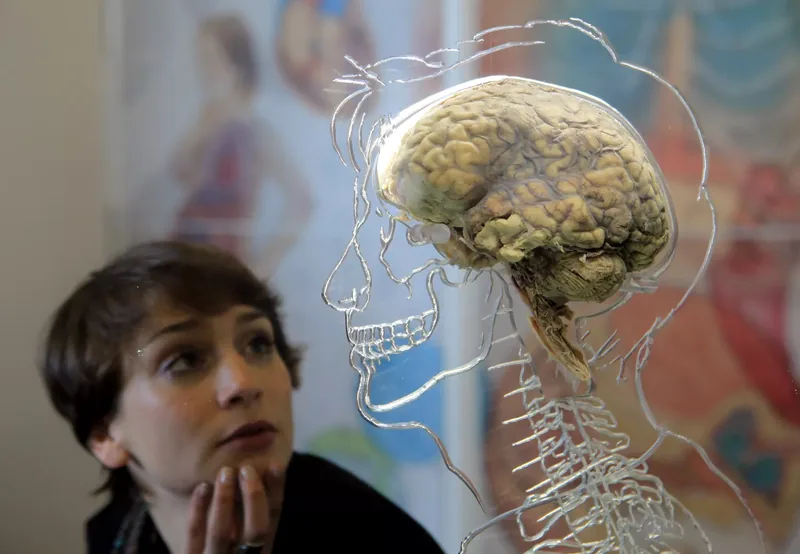
The human brain, an organ of unparalleled complexity and capability, often sparks curiosity about its physical dimensions. Many wonder, “How big is a human brain?” and what that size implies about intelligence or potential. This article delves into the fascinating statistics surrounding the human brain’s size, its development, and the nuanced relationship between volume and cognitive ability, addressing common misconceptions along the way.
The average adult human brain weighs approximately 3 pounds (1300-1400 grams) and measures roughly 5.5 x 6.5 x 3.6 inches. It reaches full maturity around age 25, a process that underpins our capacity for complex thought and behavior.
1. The Problem: Unraveling Brain Size Myths
The human brain, a marvel of biological engineering, is often subject to simplistic assumptions, particularly concerning its size. Many people intuitively believe that a bigger brain must equate to higher intelligence or superior cognitive function. This widespread assumption represents a significant “problem” in public understanding, leading to a host of misconceptions. The sheer scale of its capabilities – from processing complex emotions to executing intricate problem-solving – naturally leads to questions like, “How big is a human brain, really?” and “Does the size of my brain determine my smarts?”
Historically, pseudo-scientific fields like phrenology attempted to link specific brain regions and overall skull size to personality traits and intelligence, creating a legacy of misleading beliefs. Even today, the idea persists that a larger head or brain volume automatically confers an intellectual advantage. This oversimplification overlooks the intricate neural networks, the density of connections, and the dynamic interplay of various brain regions that truly define cognitive prowess. As we move into 2025, neuroscience continues to push past these antiquated notions, emphasizing that the story of brain function is far more complex than mere dimensions. Understanding the actual metrics and what they don’t tell us is crucial for appreciating this extraordinary organ.
2. The Challenge: Quantifying the Big Human Brain
Measuring and interpreting the dimensions of the human brain presents a fascinating challenge for scientists. While the average adult human brain weighs approximately 3 pounds (1300 to 1400 grams), and measures about 5.5 x 6.5 x 3.6 inches (140 x 167 x 93 mm), these numbers only tell part of the story. A newborn baby’s brain, for instance, starts at a mere three-quarters of a pound (350 to 400 grams), highlighting a significant growth trajectory. The challenge lies not just in obtaining these measurements but in understanding their significance relative to overall body size, species, and individual variations.
Compared to other mammals, humans have a remarkably large brain relative to our body mass. Our brain constitutes about 2% of our body weight, a ratio far greater than that of many other large animals. For example, a sperm whale’s brain, though weighing an impressive 18 pounds, accounts for only about 0.06% of its massive body weight. Similarly, an elephant’s 11-pound brain is just 0.2% of its substantial mass. Even relatively small creatures like the shrew boast a brain that’s about 10% of its body mass, demonstrating that sheer size isn’t the sole determinant of cognitive sophistication. The real challenge is dissecting these statistics to understand the functional implications, moving beyond simple comparisons to explore the underlying biology that makes the human brain unique.
3. Misconceptions: When Bigger Isn’t Necessarily Better
The most pervasive misconception surrounding the human brain is the idea that a larger brain automatically equates to higher intelligence. This “bigger is better” fallacy has been a persistent “failure” in popular understanding, despite mounting scientific evidence to the contrary. While studies have, in some instances, shown a minor correlation between brain volume and intelligence, this link is far from absolute and doesn’t account for the vast majority of cognitive variation among individuals (Harvard, 2024). Many other factors, such as neural density, connectivity, and brain efficiency, play far more critical roles.
Consider the animal kingdom: while sperm whales and elephants possess brains significantly heavier than ours, their cognitive abilities, though impressive, are vastly different from human intelligence. Conversely, some highly intelligent bird species, like crows or parrots, exhibit remarkable problem-solving and communication skills with brains no larger than a walnut. Even within human populations, variations in brain size are relatively small, and these differences don’t reliably predict IQ. For example, men generally have slightly larger brains than women, even after accounting for body size, yet there’s no evidence of a corresponding difference in overall intelligence. Such observations underscore that relying solely on volume to gauge cognitive capacity is an oversimplification and a fundamental failure to grasp the brain’s true complexity.
4. The Root Cause: Intelligence Beyond Volume
The “root cause” of the enduring misconception that a big human brain equals superior intelligence lies in a fundamental misunderstanding of what intelligence truly is and how the brain generates it. Intelligence is not a monolithic trait dictated by a single metric like volume; rather, it’s a complex, multifaceted construct encompassing problem-solving, abstract thinking, learning, emotional regulation, and adaptability. The brain’s capacity for these functions isn’t solely about how much space it occupies, but how efficiently and effectively its billions of neurons communicate.
Researchers estimate the human brain contains around 86 billion neurons, the fundamental building blocks responsible for transmitting information. The density of these neurons, the number of synaptic connections they form, and the efficiency of these neural networks are far more indicative of cognitive power than overall size. For instance, while men might have larger overall brains, women often show greater density in certain areas, such as parts of the frontal lobe and limbic cortex, which are crucial for problem-solving and emotional regulation. Conversely, men tend to have larger parietal cortex (spatial perception) and amygdala (memory and emotional responses). These regional differences highlight that specific structural variations, and not just total volume, contribute to cognitive strengths. Environmental influences, genetic predispositions, and even lifestyle choices further sculpt the brain’s functional architecture, making the picture of intelligence far richer than a simple size comparison.
5. The Solution: A Holistic View of Brain Function
The “solution” to understanding the big human brain and its capabilities lies in adopting a holistic perspective that moves beyond mere size. Instead of fixating on volume, current neuroscience, particularly as we approach 2025, emphasizes the intricate interplay of neural density, connectivity, regional specialization, and the brain’s remarkable plasticity. Intelligence, therefore, is better understood as a product of an optimized and highly interconnected neural network rather than simply the mass of brain tissue.
For example, while some studies, like an analysis by Dr. Michael McDaniel, have indicated a correlation between larger brain volume and higher intelligence, these findings are often debated and qualified. Critics point out the difficulties in defining and measuring intelligence accurately, and the crucial need to account for relative body size and specific brain regions. The focus has shifted to understanding factors like the efficiency of information processing, the organization of white and grey matter, and the adaptability of neural pathways. Conditions like autism, where children often exhibit earlier disproportionate brain growth, or Alzheimer’s disease, characterized by hippocampal shrinkage, underscore that changes in brain structure, rather than absolute size, are more relevant to function. Ultimately, a truly intelligent brain is one that is well-organized, highly connected, and capable of efficient information flow, regardless of whether it’s the biggest human brain in the room.
6. Developmental Timeline: The Maturation of Our Brain
The journey of the human brain from birth to full maturity is a remarkable developmental “timeline,” demonstrating that its ultimate size and functional capacity are the result of years of intricate growth and refinement. At birth, a baby’s brain weighs roughly three-quarters of a pound, a fraction of its adult weight. This initial phase is characterized by rapid expansion, with billions of neurons forming basic connections essential for survival.
As individuals progress through childhood and adolescence, the brain undergoes significant structural and functional changes. While physical growth in size continues, the more profound development involves neural pruning – the elimination of less-used connections – and myelination, which speeds up signal transmission. Crucially, the brain is considered fully formed around the age of 25. This maturation process unfolds from back to front, with the prefrontal cortex being the last area to fully develop. This region is critically responsible for executive functions such as decision-making, planning, impulse control, and reasoning – the very traits that define mature adult cognition. Understanding this timeline highlights that a big human brain isn’t just about static dimensions, but a dynamic, evolving organ whose full potential is realized through a prolonged and complex developmental journey, influenced by both genetics and environmental experiences.
7. Frequently Asked Questions About Human Brain Size
How big is a human brain on average?
The average adult human brain weighs approximately 3 pounds (1300 to 1400 grams) and measures about 5.5 x 6.5 x 3.6 inches. This makes it a significant organ relative to our body mass, representing about 2% of our total weight (Harvard, 2024).
Does having a big human brain mean higher intelligence?
Not necessarily. While some studies suggest a minor correlation, intelligence is a complex trait influenced more by neural density, connectivity, and the efficiency of brain networks than by overall volume. Many highly intelligent individuals do not have exceptionally large brains.
When does the human brain stop growing?
The human brain is generally considered fully formed around the age of 25. While most physical growth occurs earlier, the prefrontal cortex, responsible for complex decision-making and reasoning, is the last area to fully mature.
Are there differences in brain size between men and women?
Yes, men tend to have slightly larger brains than women, even after accounting for body size. However, women often have greater density in specific regions associated with problem-solving and emotional regulation, while men may have larger areas related to spatial perception and emotional processing. These differences do not indicate a disparity in overall intelligence.
What factors contribute to a healthy, well-functioning brain?
Beyond size, factors like neural connectivity, the density of neurons, lifestyle choices (diet, exercise, sleep), genetic predispositions, and continuous learning significantly contribute to a healthy and highly functional brain. The brain’s adaptability and efficiency are key to its performance.