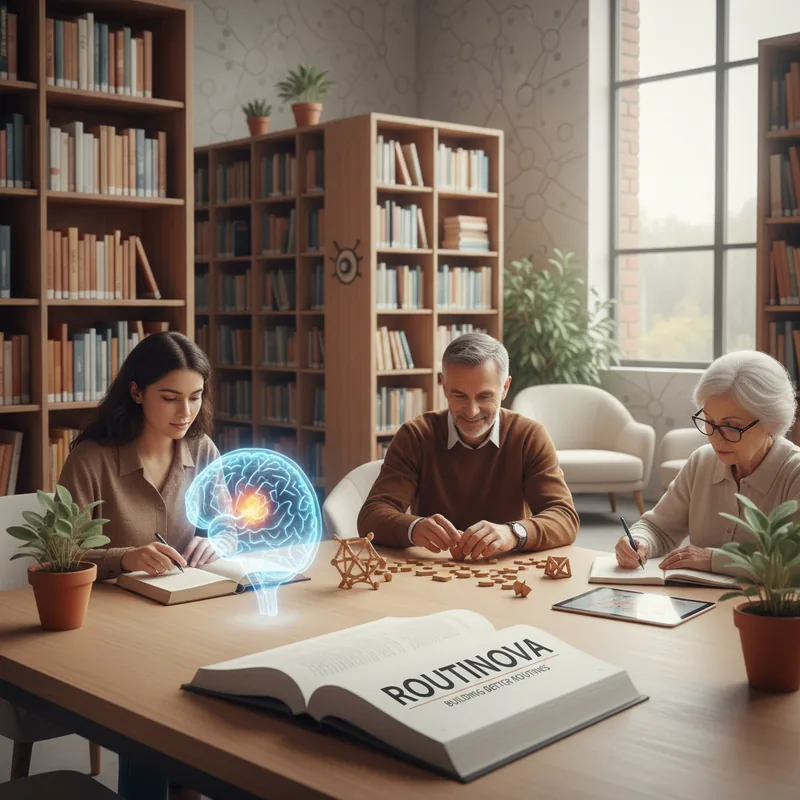
Imagine a seasoned athlete hitting their stride, a musician mastering a complex concerto, or a writer crafting their magnum opus. We often associate peak performance with youth, but when do our mental powers truly shine? The answer might surprise you, as research reveals that different cognitive abilities peak at vastly different stages of life, with many not reaching their zenith until well into adulthood.
The Unfolding of Mental Abilities
It's a common misconception that our brains operate at their absolute best during our early 20s, only to enter a steady decline. While some abilities, like processing speed, do indeed slow down after their initial peak, others flourish much later. Think of it less like a single summit and more like a series of rolling hills, each with its own highest point.
For instance, your ability to process information rapidly tends to be at its peak around age 18 or 19. Shortly after, around age 25, your short-term memory is thought to be strongest. However, this doesn't mean you're past your prime. Instead, it's a reminder that when do your mental faculties reach their apex is a complex, age-dependent journey.
Consider the ability to recognize faces - research suggests this skill continues to improve until around age 30, after which it begins a subtle decline. This nuanced view challenges the notion of a single, universal mental peak.
Intelligence: Fluidity and Crystallization
The concept of intelligence itself is often divided into two main types: fluid and crystallized. Fluid intelligence refers to your ability to reason, solve new problems, and think abstractly. This is often the type of intelligence we associate with youth, and indeed, some aspects of it do peak relatively early.
However, crystallized intelligence is a different story. This encompasses the accumulation of knowledge, facts, and skills acquired throughout your life. Think of vocabulary, general knowledge, and understanding complex social cues. This form of intelligence doesn't just hold steady; it often continues to grow and improve with age.
Studies analyzing large datasets have revealed that while some fluid cognitive skills might peak in the mid-30s, other related abilities, like those involving accumulated knowledge, can continue to develop and reach their highest point much later. This means that the wisdom and experience you gain over decades are directly contributing to specific peaks in your mental sharpness.
Emotional Intelligence and Later-Life Peaks
Beyond raw processing power and accumulated knowledge, human cognition also involves navigating the complex world of emotions and social interactions. Emotional understanding, the ability to perceive, interpret, and manage emotions in yourself and others, appears to reach its zenith in middle to later adulthood. This is a crucial aspect of cognitive function, enabling better relationships, more effective leadership, and a deeper understanding of the human experience.
Imagine a seasoned negotiator, able to read subtle cues and de-escalate tension, or a mentor guiding a young colleague with empathy and insight - these are manifestations of emotional intelligence honed over years. This capacity often peaks in the 40s and 50s, demonstrating that when do your mental capabilities truly excel isn't solely about speed or memory recall.
Furthermore, vocabulary skills, a key component of crystallized intelligence, continue to expand well into your 60s. The breadth of your lexicon and your ability to use language precisely are skills that benefit from a lifetime of learning and exposure. It suggests that even as certain cognitive functions may shift, others are actively maturing and strengthening.
Making the Most of Your Cognitive Journey
So, what does this mean for you? It means letting go of the idea that there's a single, definitive age when your brain is at its absolute best. Instead, embrace the reality that your cognitive abilities are dynamic, with different strengths emerging and peaking at various points throughout your life. Your brain is constantly evolving, with some skills sharpening while others may subtly wane.
Understanding this can empower you. Instead of lamenting a perceived decline, you can focus on leveraging your current strengths and anticipate the development of others. For example, if you notice your processing speed isn't what it used to be, perhaps you're simultaneously developing a richer vocabulary or a more nuanced understanding of social dynamics. This perspective shift is crucial for maximizing your cognitive potential at every age.
The research into when do your mental powers are at their height is ongoing, but the current findings offer a hopeful and empowering outlook. You're not on a downward trajectory after your 20s; you're on a lifelong journey of cognitive development, with new peaks to reach and new strengths to discover. As you age, your brain may indeed become slower in some areas, but it's likely to become more accurate, knowledgeable, and emotionally astute (Hartshorne & Germine, 2015; MIT News, 2015).