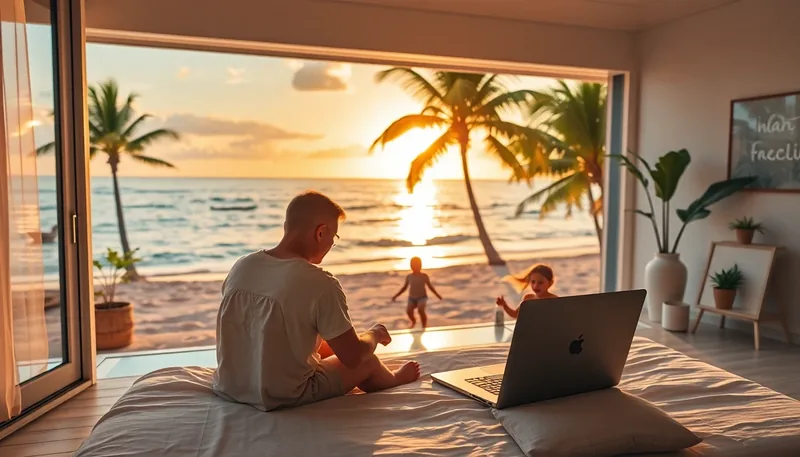
Hawaii, a name synonymous with paradise, conjures images of pristine beaches, lush landscapes, and an idyllic, unhurried existence. Yet, beneath this tranquil veneer lies a stark financial reality: the islands are one of the most expensive places to live globally, often coupled with lower wages. This paradox begs the question: if you can make it in Hawaii, can you truly make it anywhere? The answer is a nuanced yes, but it demands a unique blend of financial strategy, resilience, and a willingness to redefine what 'making it' means. Success here often hinges on embracing a slower pace, leveraging remote work or entrepreneurship, and sometimes, leaning on the strong communal support of 'ohana' (family), rather than adhering to traditional mainland metrics of wealth accumulation.
The Allure and the Reality of Island Life
For many, Hawaii represents the ultimate dream destination, a place where the stresses of mainland life melt away under the tropical sun. Yet, this idyllic image often clashes with the practicalities of making a sustainable life there. The islands, particularly Oahu, are renowned for their breathtaking beauty but also for their formidable cost of living. For instance, the median home price in Honolulu hovered around $700,000 in 2025 (Hawaii Real Estate Board, 2024), making homeownership a significant hurdle for many residents. This financial reality shapes daily life, influencing everything from career choices to family dynamics.
A Legacy in Paradise
My personal connection to Hawaii runs deep, spanning generations. My grandparents first arrived in 1906, laying roots that bind my family to the islands. As a Chinese Hawaiian, my ties to Oahu are profound, nurtured by 46 years of regular visits. This enduring connection fuels a long-term aspiration: to eventually relocate my family back to Hawaii, once my children reach an age where they can truly appreciate and adapt to island life. This dream, however, is tempered by the stark contrast between the fast-paced, high-earning environment I've known on the mainland and the unique economic rhythm of the islands.
The Mainland Grind vs. Island Pace
My two decades as a San Francisco resident, starting in 2001, allowed me to achieve a significant level of financial independence. The Bay Area, much like New York City, is a crucible of ambition and opportunity. The saying, “If you can make it in New York, you can make it anywhere,” aptly describes the intense competition and relentless drive required to succeed in such environments. My own experience on a hardcore investment bank's trading floor in NYC was brutal, marked by long hours, punishing weather, and a high cost of living that diluted earnings. I candidly admit I didn't 'make it' in NYC, opting for San Francisco's perceived easier pace in 2001.
However, the current AI boom in San Francisco presents an alluring, albeit challenging, reason to stay. Fortunes are being made, and the temptation to participate is strong. Yet, the promise remains: to return to Hawaii and embrace a more balanced retirement in my 50s. This transition requires a fundamental shift in mindset. Living in Hawaii successfully means adopting the slower, 'aloha' lifestyle, a stark departure from the relentless pursuit of wealth that characterizes mainland metropolises. It's about finding contentment beyond the dollar, a crucial lesson for anyone hoping to thrive in paradise. This is where you truly discover if you can make it with a different definition of success.
Navigating Hawaii's Unique Economic Landscape
Hawaii's economy operates distinctly from the mainland, presenting both challenges and unique opportunities. The islands' remote location and reliance on imports significantly impact the cost of living, while local wage structures don't always keep pace. Understanding these dynamics is crucial for anyone considering a move or long-term residency.
The Cost of Paradise
The allure of Hawaii comes at a premium. Beyond housing, daily expenses such as food and gasoline are notably higher. For instance, gasoline prices typically range from $4.70 to $5.00 per gallon, exceeding national averages (AAA Gas Prices, 2024). Food costs are particularly impactful, with over 80% of consumed food being imported. This translates to prices that are regularly 10-30% higher than on the mainland. For those accustomed to diverse culinary scenes in cities like New York or San Francisco, the local cuisine, while delicious, can feel limited, revolving primarily around Korean BBQ, Chinese, Japanese, Hawaiian, and fast food. The expectation of commensurately tastier food for the higher price often leads to disappointment.
The median home price in Honolulu reached approximately $780,000 in 2024 (Honolulu Board of Realtors, 2024). Applying a conservative financial rule of thumb, such as the 30/30/3 rule (house price max 3x annual salary, 30% cash on hand), an individual would need to earn roughly $260,000 annually and have $234,000 in cash for a downpayment and buffer. With a median household income of about $85,000, significantly higher than the national median of $76,000, Honolulu households still face a substantial gap. This disparity highlights the immense challenge of homeownership for many residents, often requiring creative financial strategies.
Income Disparities and Generational Support
One of the most significant economic hurdles in Hawaii is the disparity between wages and the cost of living. Pay for similar jobs on the mainland can be 30-70% higher than on the islands. This economic reality fosters a strong tradition of multi-generational living, where 'ohana' (family) plays a foundational role in housing affordability. It's not uncommon for three generations to live under one roof, allowing younger family members to save money while contributing to the household.
Many childhood friends, after graduating from the University of Hawaii, found stable jobs across various sectors—from accounting and dentistry to telecom and public service—earning between $35,000 and $90,000 annually. Instead of immediate independent living, they often resided with their parents, diligently saving for a future home. This extended cohabitation allows for the accumulation of significant nest eggs, often $50,000-$70,000 over five to eight years. However, even with these savings, a down payment on a median-priced home typically requires substantial parental assistance, underscoring the vital role of generational wealth and family support in navigating Hawaii's housing market. This communal approach is a testament to how locals find ways to thrive, proving that if you can make it with family support, the dream is attainable.
Forging a Path: Earning a Living in Hawaii
Despite the economic challenges, Hawaii offers diverse avenues for earning a livelihood. Success often involves aligning one's skills with the unique demands and opportunities of the island economy, or creating one's own path through entrepreneurship and remote work.
Traditional Industries and Growing Sectors
Hawaii's economy is heavily influenced by its natural beauty and strategic location. The **tourism industry** remains a primary employer, offering a wide array of roles in hotels, resorts, restaurants, and tour operations. The **hospitality and service sectors** also flourish, catering to both a growing local population and a steady stream of visitors. Beyond these, **healthcare professions** are consistently in demand, with needs for nurses, doctors, and allied health professionals. The **education sector** also provides opportunities for qualified teachers and academics, from K-12 schools to the University of Hawaii system.
Other vital sectors include **local agriculture**, focusing on sustainable farming and produce, and **real estate**, which remains active despite high prices. Given Hawaii's unique ecosystems, **environmental and conservation work** offers specialized roles. The islands also boast a vibrant scene for **creative arts and culture**, from traditional hula and music to contemporary art forms, providing a niche for artists and cultural practitioners. For example, local artisans selling handmade koa wood carvings or bespoke aloha wear often find success by tapping into both tourist and local markets, demonstrating how niche businesses can flourish here.
The Rise of Remote Work and Entrepreneurship
The digital age has opened new doors for those aspiring to live in Hawaii. **Technology and remote work** have become increasingly viable pathways, allowing individuals to earn mainland or international salaries while enjoying the island lifestyle. This flexibility is a game-changer, enabling a higher earning potential without the geographical constraints. Imagine working for a Silicon Valley tech firm from a lanai overlooking the Pacific – this is the new reality for many.
Entrepreneurship also stands out as a fulfilling option. Starting a local business, whether it's a farm-to-table restaurant, a boutique shop, or an online venture, allows individuals to craft their own destiny. A new example is the rise of small-batch coffee roasters on the Big Island, leveraging direct-to-consumer online sales to reach customers globally, bypassing traditional retail markups. Another burgeoning area is sustainable tourism consulting, where experts help local businesses implement eco-friendly practices, capitalizing on Hawaii's commitment to environmental stewardship. These ventures demonstrate that if you can make it by creating your own opportunities, Hawaii offers a unique canvas.
Strategic Income Generation
For individuals with diverse skill sets, a multi-faceted approach to income generation in Hawaii can be highly effective. Personally, if I were to return to Honolulu, my primary focus would be on expanding my online business, Financial Samurai, which offers the ultimate location independence. Complementing this, I would likely pursue a real estate agent license. My passion for real estate, combined with fluency in Mandarin, could open doors to serving international clients from China and other Chinese-speaking countries, a niche market with significant potential.
Furthermore, with the resurgence of tourism, especially from Japan and China, leveraging language skills becomes a distinct advantage. Brushing up on Japanese and becoming a scuba diving instructor presents an exciting opportunity to combine a passion with a lucrative income stream. Imagine earning a living by guiding divers through Hawaii's vibrant coral reefs—it's a testament to the unique work-life balance the islands can offer. This blend of remote work, specialized sales, and passion-driven instruction illustrates how one can strategically carve out a prosperous life in Hawaii.
The Paradox of Motivation and Satisfaction
Hawaii's inherent beauty and relaxed atmosphere, while drawing many, can also pose a unique challenge to traditional notions of ambition and productivity. The very elements that make it paradise can subtly shift one's drive, creating a paradox of motivation.
The "Permanent Vacation" Effect
The constant presence of tourists, often in full vacation mode, can make island residents feel like they too should be perpetually relaxing. Hawaii's temperate climate, with daily temperatures consistently between 70-88 degrees, means a beautiful outdoor life is always accessible. When surfing, hiking, or simply lounging on a public beach costs nothing, the motivation to spend long hours inside a cubicle for a 'better life' can wane. As locals, 'Kama'aiana' rates offer further discounts on hotels, services, and golf, enhancing the feeling of perpetual leisure. This pervasive atmosphere can lead to thinking, "If they are enjoying life on vacation, why can't I?" Hawaii's biggest 'import' often feels like other people's leisure, making it challenging to maintain the mainland's intense work ethic.
In contrast, the harsh winters, muggy summers, and grey skies of cities like New York made working 14-hour days surprisingly easy. The discomfort of the environment naturally fueled a desire for escape and financial freedom. Amenities like free food, gyms, and internet within the workplace became a sanctuary from the outside world, inadvertently encouraging long hours. The cold reality outside fostered a relentless drive to save money, with the ultimate goal of buying a plane ticket to somewhere warm and never working again. Hawaii, by its very nature, offers that 'somewhere warm' every single day, which can dilute the urgency to 'grind' for future rewards.
Redefining Success and Financial Independence
Major mainland cities often perpetuate an insatiable desire for 'more'—more money, more achievements, more status. There's a perceived endless ladder to climb in places like New York or the relentless startup culture of San Francisco. Hawaii, however, offers a profoundly different experience, compelling residents to slow down and appreciate what they already possess. This shift can be a powerful force for contentment, but also a potential dampener for conventional ambition. My personal journey involved a deliberate choice to test my limits on the mainland, knowing that an early return to Hawaii might have satisfied me with a $50,000-a-year job and a 9-to-5 schedule.
While there's nothing inherently wrong with a modest income and regular hours, my goal was to achieve financial independence elsewhere, allowing me to return to Hawaii without the pressure of a demanding work schedule. The temptation to slack off, given Hawaii's pervasive vacation vibe, would be too great otherwise. It's a delicate balance, as locals often express resentment towards non-locals who return with flashy mainland wealth, driving up costs. This awareness reinforces my desire to blend in, opting for an older home and a modest car, embodying the spirit of 'kama'aina' rather than conspicuous consumption. To truly flourish here, if you can make it with a redefined vision of success, valuing lifestyle over limitless wealth, then Hawaii is your ultimate reward.
Family, Future, and the Hawaiian Dream
Beyond the economic considerations and lifestyle shifts, the prospect of family life and long-term retirement holds immense appeal in Hawaii. The islands offer a unique cultural environment that prioritizes family and community, alongside an enviable quality of life.
Raising a Family in Ohana Culture
As a father, the appeal of relocating to Hawaii for family reasons is incredibly strong. Honolulu boasts one of the highest kids-per-capita rates in the country, fostering a vibrant, child-friendly environment. The 'ohana' culture, with its deep emphasis on multi-generational family bonds and community support, provides an exceptional upbringing. Imagine children growing up with easy access to world-class beaches, hiking trails, and a rich cultural heritage. Securing admission to prestigious private schools like Punahou or I'olani would further enhance educational opportunities, providing a strong academic foundation within this unique cultural context.
However, a lingering concern remains: the potential for paradise to temper ambition. My own grit and determination were forged through the hardships of growing up as a minority in Virginia. The fear is that children, knowing only the ease and beauty of island life, might lack the motivation to explore beyond its shores or strive for conventional markers of success. This raises an important question for parents: how do you instill resilience and ambition when temptation, in the form of unparalleled natural beauty and leisure, is constantly present? It’s a challenge to ensure children develop a strong work ethic when the external environment makes it so easy to be satisfied.
The Long-Term Vision: Retiring in Hawaii
For those who have navigated their careers and achieved financial independence, retiring in Hawaii presents an incredibly attractive proposition. If you are genuinely content with stepping away from the corporate ladder and embracing a life focused on well-being, Hawaii could be your ideal retirement haven. The state consistently ranks among the highest in the country for life expectancy, a testament to its healthy lifestyle, supportive social influences, and access to nature (Centers for Disease Control and Prevention, 2023). Its policies and cultural norms are conducive to a longer, more fulfilling life.
The beauty of retiring in Hawaii is that many of its greatest pleasures—the beaches, parks, and hiking trails—are entirely free. With core living expenses and food taken care of, a retired life here can be wonderfully rich without requiring constant high spending. It’s a place where the simple joys of nature and community take precedence over material pursuits. For those who have worked hard to build their nest egg, Hawaii offers a serene reward, proving that if you can make it to retirement with your finances in order, the islands offer an unparalleled quality of life.
Strategic Wealth Building for Your Hawaii Dream
Achieving the dream of living, or retiring, in Hawaii requires thoughtful financial planning and strategic wealth building. Optimizing your finances is the first step towards making this paradise a reality.
To gain clarity on your financial standing, tracking your net worth and analyzing your investment portfolios is paramount. Tools like Empower's free financial management suite can be invaluable. They allow you to monitor your net worth, scrutinize investment fees, and utilize a robust Retirement Planning Calculator. Individuals who actively manage their finances consistently build greater long-term wealth. I've personally relied on Empower since 2012, finding it to be the most comprehensive free financial application available for managing personal wealth.
For those with over $100,000 in investable assets across various accounts—savings, taxable investments, 401(k)s, or IRAs—Empower offers a complimentary financial check-up. This no-obligation service connects you with a seasoned financial professional who can review your portfolio, identify hidden fees, suggest more efficient allocations, and uncover optimization opportunities. A fresh perspective can provide immense clarity and confidence in your financial trajectory. My own experience with their free review revealed I was overly conservative, prompting me to adjust my strategy to worry less and enjoy my wealth more.
Beyond traditional investments, exploring venture capital can provide access to high-growth opportunities. Many of Hawaii's wealthiest individuals are entrepreneurs or their heirs, underscoring the power of private business. While starting your own venture is challenging, investing in private growth companies allows brilliant entrepreneurs to work for you. Companies are increasingly remaining private for longer, meaning more significant gains accrue to early private investors. Identifying the next Google or Apple before its IPO can be transformative, but typically requires substantial capital and connections.
Fortunately, platforms like Fundrise Venture democratize access to these opportunities, allowing investments in tomorrow's leading tech companies with as little as $10. Fundrise Venture strategically invests across five key sectors: Artificial Intelligence & Machine Learning, Modern Data Infrastructure, Development Operations (DevOps), Financial Technology (FinTech), and Real Estate & Property Technology (PropTech). With roughly 65% of Fundrise Venture currently allocated to artificial intelligence, an area I'm extremely bullish on, it offers a compelling way to participate in future growth. I've personally invested over $250,000 in Fundrise Venture and continue to allocate capital, recognizing its potential. It's a powerful avenue for those who want to build wealth strategically, whether aiming to retire in Hawaii or simply strengthen their financial future. If you can make it by diversifying your investments, your path to Hawaii becomes clearer.