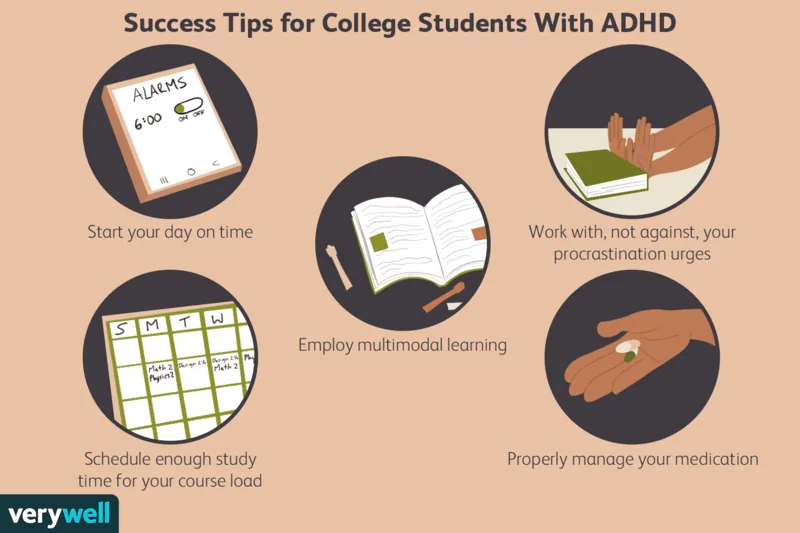
College life can feel like navigating a maze, especially when ADHD presents unique hurdles. Forget the idea that success is only for those with perfect organization or unwavering focus. The truth is, with the right strategies, students with ADHD can not only survive but genuinely thrive academically and socially. This guide provides actionable insights to help you build a successful college experience by understanding your strengths and managing challenges head-on.
Why College is a Different Ballgame for ADHD Brains
The transition to college is a significant leap for any student, but for those with ADHD, it often amplifies existing challenges. The newfound independence, less structured schedules, and increased social demands can feel overwhelming. Executive functions, which are often impacted by ADHD, are crucial for managing these changes. This can manifest as difficulties with time management, organization, task initiation, and emotional regulation, leading to academic struggles and social anxieties (Pineda-Alhucema et al., 2018).
You might find yourself wrestling with deadlines, losing track of assignments, or feeling perpetually behind. Socially, building new connections can feel daunting. But here's the critical insight: it's not about a lack of capability; it's about needing different tools and approaches. Understanding how ADHD uniquely affects your college journey is the first step toward building effective strategies.
Conquer Your Mornings: Starting the Day Right
Mornings can be a major stumbling block. The combination of needing to wake up, get ready, and depart on time, all while battling potential distractions and disorganization, is a recipe for lateness. But what if you could engineer your mornings for success?
The Triple Threat: Waking Up, Staying Focused, Staying Organized
- Waking Up Challenges: If hitting snooze is your nemesis, try a two-alarm system. Place the first alarm across the room, forcing you out of bed. Set a second, louder alarm strategically to ensure you don't linger. Setting both alarms earlier than you think you need them provides a crucial buffer.
- Distraction Dilemmas: Identify your morning derailers--scrolling social media, checking emails. Make a pact with yourself: these activities wait until *after* you're ready. Time yourself getting dressed, eating, and packing your bag. Use music playlists as a natural timer; dedicate specific songs to specific tasks. Finishing breakfast by the end of song six, for instance, gets you out the door by song eight.
- Organizational Hurdles: Create a "launch pad" by your door. The night before, gather everything you need for the next day--backpack, keys, wallet, notes for that crucial 9 AM class, even a packed lunch. This visual cue minimizes morning chaos and ensures you don't forget essentials.
New Example: If you have a morning class that requires specific materials, like a lab coat or a presentation binder, place these items directly on your launch pad, perhaps with a sticky note reminding you of their purpose.
Embrace the Urge to Procrastinate (Strategically)
For many with ADHD, procrastination isn't laziness; it's a unique way of managing urgency. Tasks often gain momentum and clarity when a deadline is imminent. Instead of fighting this tendency, learn to harness it.
The key is strategic procrastination. If you know you work best under pressure, prepare the groundwork in advance. For a research paper, complete all your reading and outline your key arguments beforehand. Then, schedule dedicated blocks of time for writing as the deadline approaches. This ensures that when the urgency kicks in, you have the necessary resources and structure to complete the task effectively.
New Example: Facing a major project? Break it down. Complete the research phase by the halfway point of the semester. Then, when the final weeks arrive, you're not starting from scratch but refining and writing, leveraging that natural deadline-driven focus.
Study Smarter, Not Harder: Engaging Your ADHD Brain
Traditional study methods can feel like hitting a brick wall for students with ADHD, often due to challenges with focus and working memory. The solution isn't brute force, but creative engagement. Multi-modal learning--engaging multiple senses--is your superpower.
Creative Study Tactics:
- Use different colored highlighters to visually chunk information.
- Doodle diagrams or mind maps while listening to lectures.
- Record yourself summarizing key concepts and listen back as voice memos during commutes or workouts.
- Develop silly mnemonics or acronyms for complex facts.
- Try studying while standing or pacing.
- Read textbook chapters aloud with an animated voice.
- Listen to audiobook versions while simultaneously taking notes.
- Form study groups where active discussion reinforces learning.
New Example: For a history class, try creating a timeline mural on your wall, using different colors for different eras and drawing small icons for significant events. This visual and kinesthetic approach can make dates and events more memorable.
Remember to schedule regular breaks and prioritize sleep. Sleep is vital for consolidating short-term memories into long-term ones, making it crucial for test performance (Walck-Shannon et al., 2021).
Structure Your Success: Scheduling and Prioritization
College requires a proactive approach to time management. Instead of reacting to your schedule, create it. Planning time to plan is essential.
Weekly and Daily Planning Rituals:
- Dedicate Monday mornings to a high-level overview of your week's priorities.
- Use Friday mornings to map out your weekend activities and study goals.
- Start each day with a quick breakfast review of your schedule, adding any necessary details.
When planning, distinguish between what you *must* do and what you *could* or *should* do. Prioritize essential tasks, tackling them first. This proactive approach helps you regain control over your academic journey.
New Example: For a course with multiple components (lectures, readings, problem sets), break down the weekly requirements into daily, manageable tasks. Instead of just writing "Study for Chem," list "Read Chapter 5," "Complete practice problems 1-10," and "Review lecture notes." This specificity makes tasks less daunting.
Sticking to the Plan: Motivation and Accountability
The best plan is useless if it's not followed. For students with ADHD, consistency requires intentional strategies.
Leverage Your Personality:
- Rewards: Promise yourself a small reward after completing a study block, like a coffee break or watching an episode of your favorite show.
- Competition: If you're competitive, set personal goals to outperform your previous performance or friendly goals against a classmate.
- Social Accountability: Schedule study sessions with friends. Knowing others are counting on you can be a powerful motivator. Consider hiring a tutor for structured, dedicated study time.
Research highlights the effectiveness of focusing on skills like time management, goal setting, and problem-solving for ADHD students (Prevatt, 2016). ADHD coaching, which often blends cognitive-behavioral techniques, can also be invaluable for developing these skills, boosting self-confidence, and reducing overwhelm.
Medication Management: A Crucial Component
Medication adherence is vital for managing ADHD symptoms, yet many college students struggle. Studies show a significant portion don't stick to their prescribed plans, impacting academic outcomes (Hall et al., 2016).
Tips for Adherence:
- Local Healthcare: Find a doctor or university health service for regular check-ins and dosage adjustments.
- Pharmacy Logistics: Identify a reliable local pharmacy and set phone reminders for refills. Many pharmacies offer text alerts.
- Safe Storage: Keep your medication secure to prevent misuse, which is a growing concern on campuses (Stanford Medicine, n.d.). Never share your medication.
- Daily Reminders: Use medication reminder apps or your phone's alarm system to ensure you take your medication consistently.
Medication is a powerful tool, but it's most effective when discussed openly with a healthcare provider to determine the best treatment approach for your individual needs.
Nurturing Social Connections with ADHD
College is also about social growth. ADHD can sometimes make forming and maintaining friendships challenging, but proactive strategies can help.
Tips for Social Success:
- You're Not Alone: Recognize that many peers feel excited and overwhelmed. Be approachable and a good listener during orientation and beyond.
- Seek Opportunities: View every interaction--in class, the dorm, the cafeteria--as a chance to connect.
- Join In: Explore clubs and activities that align with your interests. This is a fantastic way to meet like-minded individuals.
- Maintain Old Ties: Don't let distance erase your existing friendships. Stay in touch via calls, texts, or social media. Your established friends offer invaluable support.
Building a supportive social network is as crucial as academic success. By actively engaging and staying connected, you can foster meaningful relationships throughout your college years.