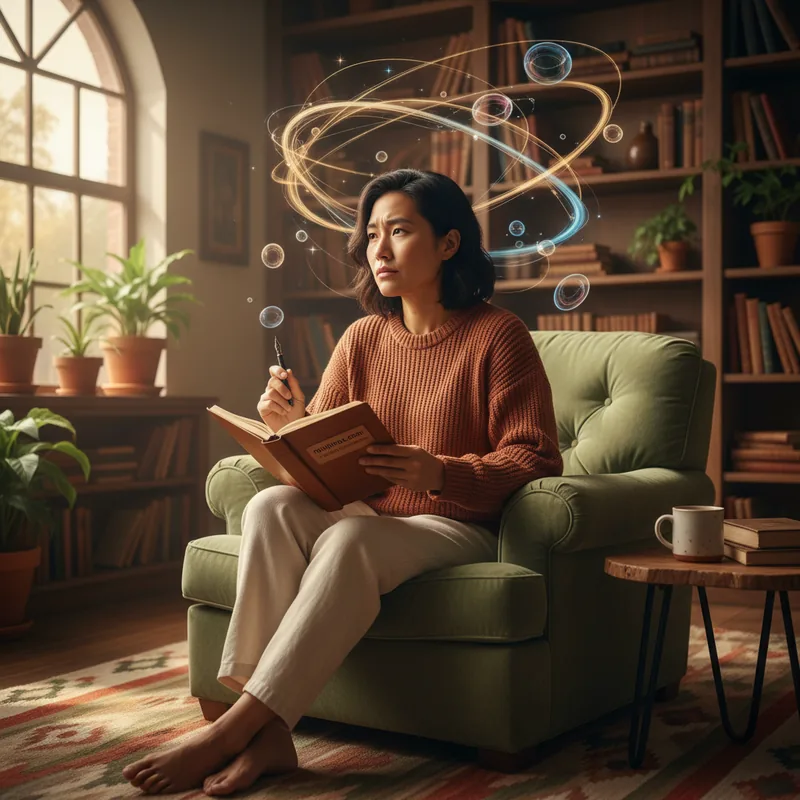
The classroom buzzed with nervous energy. Sarah, clutching her worn backpack, watched as the teacher called out names for the coveted art club positions. Each time a name was announced, a wave of relief and excitement washed over the recipient. But Sarah's name remained unspoken. She knew her portfolio was strong, her technique refined, yet a familiar pang of inadequacy settled in. It wasn't the first time she'd felt overlooked, a feeling that whispered, 'Maybe it's because I don't have pretty privilege.'
What Is Pretty Privilege, Anyway?
Pretty privilege, at its core, is the unearned advantage given to individuals perceived as conventionally attractive. It's a subtle, often unconscious, bias that shapes how we interact with and perceive others. Think of it as a societal shortcut: if someone looks good by current standards, we're more likely to assume they possess other positive qualities like intelligence, kindness, and competence. This phenomenon isn't about being beautiful; it's about benefiting from a societal predisposition that equates attractiveness with inherent goodness and capability.
For many, the realization that they don't fit the mold of this privilege can be a difficult one. It's the quiet sting of being passed over for opportunities, the feeling of invisibility in social circles, or the constant internal battle against societal messages that equate worth with appearance. The truth is, if you've ever felt that your efforts are met with more resistance because your looks don't align with a narrow beauty ideal, you're likely experiencing the flip side of pretty privilege. You might be thinking, 'I don't have pretty privilege, now what?' The good news is, understanding this bias is the first step toward reclaiming your narrative and defining your own value.
The Invisible Advantage: How Pretty Privilege Works
The foundation of pretty privilege lies in a psychological phenomenon known as the halo effect. This is where a single positive trait--in this case, physical attractiveness--casts a positive glow on all other perceived attributes of a person. Research suggests that we instinctively associate facial symmetry with health and positive personality traits, while asymmetry might be perceived as anxiety (Fink et al., 2006). This subconscious association can lead to a cascade of preferential treatment.
Historically, this bias has had stark consequences. The infamous "ugly laws" in the U.S. from the 1860s to the 1970s explicitly banned individuals with visible disabilities or deformities from public spaces, leading to forced institutionalization (Schweik, 2009). While such laws are long gone, the underlying prejudice persists. In modern workplaces, for instance, individuals perceived as less attractive may be steered towards less visible roles or assigned more menial tasks, while their more conventionally attractive counterparts might be favored for client-facing positions or leadership opportunities (Busetta & Fiorillo, 2013).
Consider this: a hiring manager might unconsciously perceive a candidate with a warm smile and conventionally pleasing features as more trustworthy and capable, even if another candidate has a more impressive resume but a less 'approachable' appearance. This isn't about malice; it's about deeply ingrained biases influencing perception and decision-making. It's a stark reminder that for those of us who don't have pretty privilege, the path can feel significantly steeper.
The Far-Reaching Impact of Beauty Bias
The effects of pretty privilege ripple through nearly every aspect of life, shaping social interactions, emotional well-being, and professional trajectories.
Social and Emotional Repercussions
Socially, conventionally attractive people often find it easier to build connections. They may receive more invitations, be included more readily in activities, and generally be perceived as having better social skills (Alaei et al., 2022). Conversely, individuals who don't benefit from this privilege might experience social exclusion or feel like they constantly need to prove their worth. This disparity can reinforce societal hierarchies where appearance dictates social standing.
Emotionally, the constant positive reinforcement for attractive individuals can bolster self-esteem. However, it can also create immense pressure to maintain their appearance, leading to anxiety about aging or physical changes. For those who don't experience pretty privilege, the lack of consistent positive feedback can contribute to lower self-esteem, body dissatisfaction, and a propensity for self-comparison. This can fuel a cycle of inadequacy, potentially contributing to mental health challenges like anxiety and depression (Maestripieri et al., 2017).
Professional and Personal Growth
In the professional arena, the advantages are undeniable. Studies consistently show that attractive individuals are more likely to receive job callbacks, secure promotions, and earn higher salaries (Scholz & Sicinski, 2015). They are often perceived as more effective leaders, giving them a distinct career advantage. For those who don't have pretty privilege, this can feel like an uphill battle, requiring significantly more effort to achieve the same recognition.
Beyond careers, this bias can impact personal development. If your successes are consistently attributed to your looks rather than your hard work and talent, it can lead to imposter syndrome, where you doubt your own abilities. Conversely, feeling overlooked or undervalued due to appearance can stifle ambition and lead to a reluctance to pursue opportunities. It's a subtle form of discrimination that can profoundly impact one's sense of self and potential.
Even the Law Isn't Immune
Believe it or not, beauty bias can even extend into the legal system. Research indicates that attractive defendants are less likely to be arrested, convicted, or receive harsh sentences compared to their less attractive counterparts (Beaver et al., 2019; Stewart, 1980). This highlights how deeply ingrained appearance-based judgments are, influencing even critical societal structures.
Pretty Privilege in Context: More Than Just Looks
It's crucial to understand that pretty privilege doesn't exist in a vacuum. It shares common ground with other forms of systemic bias, acting as a lens through which we can examine broader issues of equity and fairness.
Like white privilege or male privilege, pretty privilege is a form of implicit bias--subconscious attitudes that influence our actions without our conscious awareness. While explicit biases are overt prejudices, implicit biases are the subtle, often unintentional, assumptions we make. For example, a manager might unconsciously favor a male employee for a challenging project over a female employee with similar qualifications, influenced by gender bias. Similarly, the halo effect can lead us to assume an attractive person is more competent, regardless of actual merit.
Furthermore, pretty privilege intersects with other arbitrary characteristics, much like colorism, ageism, and weight bias. These biases grant unearned advantages based on superficial traits rather than intrinsic qualities like skill, character, or effort. Someone might be both conventionally attractive and white, compounding their privilege, while another person might face discrimination based on their race, gender, and perceived attractiveness, demonstrating the complex nature of intersectionality (Cech, 2022).
The ethical implications are profound. When appearance influences everything from classroom grades and teacher evaluations to the quality of healthcare received (Marici et al., 2023; Westfall, 2018), it creates a fundamentally unfair system. These biases don't just skew the playing field; they actively disadvantage entire groups, making it harder for them to thrive.
Navigating Life Without Pretty Privilege: Strategies for Empowerment
So, if you find yourself navigating the world without the inherent advantages of pretty privilege, what can you do? The key is to shift your focus from external validation to internal strength and to actively challenge the societal norms that perpetuate these biases.
Embrace Body Neutrality: For many, the leap to full body positivity can feel daunting. Body neutrality offers a more accessible approach. Instead of focusing on loving your body's appearance, body neutrality emphasizes appreciating your body for what it can *do*. It's about recognizing your body as a vessel for experiencing life, focusing on its function, strength, and capabilities rather than its aesthetic appeal. This shift can be incredibly liberating.
Cultivate Self-Acceptance: Remember that your worth is not determined by societal standards of beauty. Practice affirmations that reinforce your inherent value, such as, "I am enough," or "I am confident in my unique qualities." Acknowledge your strengths, talents, and accomplishments. If negative self-talk persists, consider seeking support from a therapist specializing in body image or cognitive behavioral therapy to reframe those deeply ingrained thought patterns.
Curate Your Environment: Surround yourself with people who genuinely appreciate you for who you are--your personality, your intellect, your kindness. Actively curate your social media feeds and information intake. Unfollow accounts that trigger comparison or feelings of inadequacy. Instead, seek out content that celebrates diversity, promotes self-compassion, and reflects a broader, more inclusive definition of beauty.
Harness the 'Goodness is Beautiful' Effect: Interestingly, the halo effect isn't one-sided. Positive personality traits and actions can actually increase perceived attractiveness. Kindness, integrity, and compassion can make people more appealing over time. By focusing on being a good person and acting with decency, you can enhance how others perceive you, creating a positive feedback loop that transcends superficial appearances (Niimi & Goto, 2023).
Examine Your Own Biases: We all carry unconscious biases. Take time to reflect on your own perceptions and how they might influence your interactions. If you benefit from pretty privilege, actively educate yourself about the experiences of others and strive to create more inclusive spaces. True equity requires those with privilege to acknowledge and sometimes relinquish their advantages to level the playing field.
Challenge the Norms: Don't be afraid to speak up when you encounter appearance-based judgments or coded language that diminishes others. Offer genuine compliments that go beyond physical appearance, focusing on character, achievements, or kindness. By actively challenging these norms in your daily interactions, you contribute to reshaping society's definition of beauty and worth. It's a collective effort, and every voice matters in dismantling these harmful biases.
Ultimately, recognizing that you don't have pretty privilege isn't a sentence; it's an opportunity. It's an invitation to build a self-worth that is unshakeable, founded on your character, your actions, and your intrinsic value--qualities that truly define who you are.