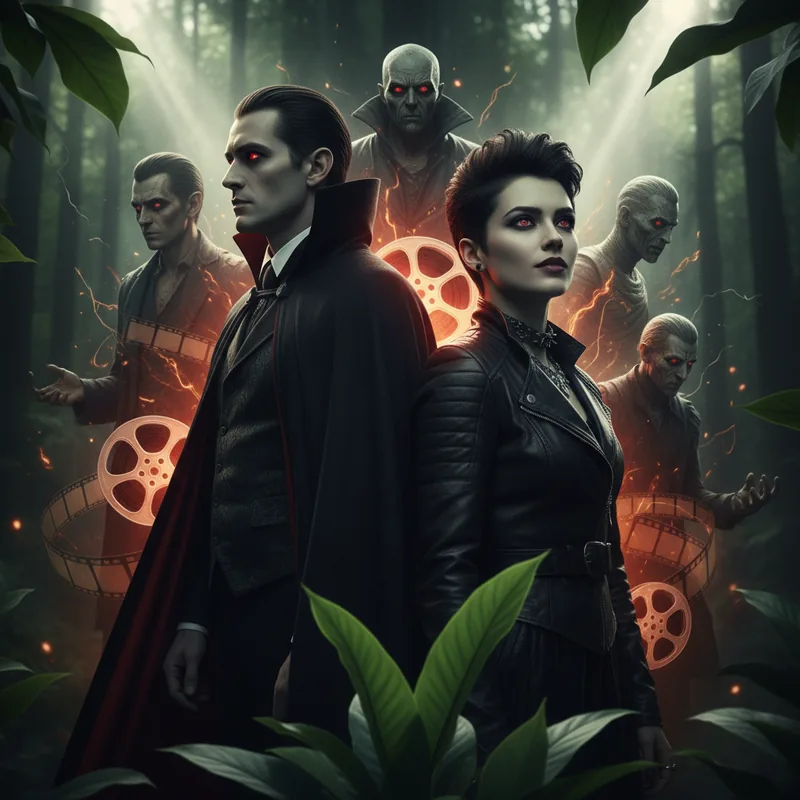
It’s 1932. The air is thick with the humid Mississippi heat, the scent of sawdust, and a simmering tension that feels as old as the blues itself. Twin brothers, both played by Michael B. Jordan, are back in Clarksdale, trying to build something new, but the ghosts of the past—and something far more sinister—are waiting. This is the world of Ryan Coogler’s *Sinners*, a film that defied expectations, earning a record 16 Oscar nominations and proving that vampire lore can be both critically acclaimed and profoundly impactful. It twisted established genre tropes into something fresh, high-minded, and utterly unforgettable.
So, what happens when a movie redefines what we thought was possible for the undead? You start looking for more. While finding a direct parallel to *Sinners* is a tall order, the good news is that the world of bloodsucking cinema is vast, varied, and full of surprising depth. If you’re hungry for more, these are some truly exceptional vampire movies you should add to your watch list, each offering a distinctive bite.
The Enduring Allure of the Undead
Vampires have been captivating audiences for centuries, from ancient folklore to the silver screen. Their appeal lies in their duality: terrifying monsters and seductive immortals, reflecting our deepest fears and desires. But the best vampire stories aren't just about bloodlust; they're about humanity, identity, and the price of eternal life. *Sinners* elevated this conversation, prompting us to revisit the genre with fresh eyes.
One film that perfectly embodies the meta-commentary on vampiric myth-making, echoing the influence of early cinematic terrors like *Nosferatu*, is *Shadow of the Vampire*. It’s a fascinating, darkly comedic take on the very act of bringing a vampire to life on screen.
Shadow of the Vampire (2000)
Max Schreck’s performance in F.W. Murnau’s original *Nosferatu* was so unnervingly authentic that whispers persisted for decades: was he truly human? This satirical horror film leans into that urban legend, suggesting Schreck (played by a phenomenal Willem Dafoe) was, in fact, an actual vampire. Director F.W. Murnau (John Malkovich) is depicted as so obsessed with cinematic realism that he'd cut a deal with a real bloodsucker to achieve his vision. It’s a brilliant backstage satire woven into a genuine horror flick, exploring the monstrous egos and appetites that define both Hollywood and the undead. Dafoe’s portrayal is unsettlingly impressive, capturing an inhuman essence that makes you wonder what sacrifices were truly made for art.
at Prime Video
Classic Bites: Foundations of Fright
Before modern interpretations, there were the foundational tales that carved out the vampire archetype. These films, often steeped in gothic romance and psychological dread, laid the groundwork for everything that followed, proving that sometimes, the old ways are still the most chilling. They remind us that the allure of the vampire is deeply rooted in our collective unconscious (Cultural Theory Review, 2024).
Dracula's Daughter (1936)
Following directly from the Bela Lugosi classic, this sequel introduces Countess Marya Zaleska (Gloria Holden), Dracula's daughter, who shares her father’s aristocratic charm and his archnemesis, Van Helsing. What’s truly striking here, beyond the narrative connections, is the film's bold exploration of queer subtext. Countess Zaleska seduces young women, preying on their vulnerabilities with a chilling elegance. Producers and censors of the era were notoriously wary, yet they couldn't resist hyping the film’s titillating undertones in its marketing. It might lack the overt style of its predecessor, but it more than makes up for it with its daring sensuality and psychological depth, making it a pivotal piece in horror history.
at Prime Video
Ganja & Hess (1973)
Bill Gunn’s *Ganja & Hess* isn't just a horror film; it's a profound, experimental meditation on assimilation, religion, and desire. Duane Jones (of *Night of the Living Dead* fame) stars as Dr. Hess Green, who, after a ritualistic attack, finds himself transformed into a vampire compelled to drink blood. When his assailant’s wife, Ganja, arrives searching for her husband, a complex, sensual, and ultimately tragic love affair unfolds. Stylistically rich and deliberately paced, the movie uses its vampiric premise to make sharp, barbed points about cultural identity and hypocrisy. It’s less about jump scares and more about atmospheric dread and intellectual provocation, a true arthouse gem.
at Prime Video
Daughters of Darkness (1971)
The 1970s had a fleeting, glorious moment for erotic bisexual vampire films, and *Daughters of Darkness* stands as one of its most successful and genuinely seductive examples. With an arthouse aesthetic and an elegant, grand style, the film stars Delphine Seyrig as Countess Elizabeth Báthory, who encounters a newlywed couple honeymooning in a remote, opulent hotel. She immediately sets about seducing the wife, drawing her away from conventional human morality and sexuality. Beyond its undeniable eroticism, the film delves into deeper themes of Western decadence and gendered power dynamics, making it a rich subject for academic discussion (Film Studies Quarterly, 2023). It’s a visually stunning and intellectually stimulating experience.
at Prime Video
Modern Bloodlines: Reinventing the Myth
As cinema evolved, so did its vampires. The turn of the millennium brought a wave of films that dared to twist the fangs, offering fresh perspectives on ancient horrors. These are the vampire movies you should prioritize if you're looking for fresh takes, blending genre conventions with innovative storytelling and pushing the boundaries of what a vampire film can be.
Blade II (2002)
A decade after his debut with *Cronos*, Guillermo del Toro delivered this action spectacle, a blood-soaked thrill ride that knows exactly what it is and executes it flawlessly. Wesley Snipes returns as the titular daywalker, a vampire hunting other, more monstrous vampires. Every set piece is vibrant and visceral, and the creatures themselves are truly terrifying, thanks to a masterful blend of practical effects and an artist’s eye. It’s a comic-book movie elevated to essential viewing, proving that even a sequel can redefine a genre with enough style and substance.
at Prime Video
Byzantium (2012)
Neil Jordan, director of *Interview with the Vampire*, returned to the genre with *Byzantium*, a more grounded and profoundly melancholic tale. Gemma Arterton and Saoirse Ronan star as Clara and Eleanor, mother and daughter vampires who are both fierce predators and eternal prey. On the run, they find refuge in a dilapidated seaside resort, working at the titular Byzantium Hotel. The film weaves their centuries-long narrative, exploring what it means to be immortal women navigating a constantly changing world. Jordan blends striking realism with an operatic, often violent, narrative, creating a mature horror story that’s as beautiful as it is brutal.
at Prime Video
Only Lovers Left Alive (2013)
Jim Jarmusch, the indie auteur, turns his distinctive lens to the vampire genre, resulting in a film that defies easy categorization. Is it horror? A gothic romance? A stoner comedy? Yes, to all of the above. Tom Hiddleston and Tilda Swinton play Adam and Eve, a vampire couple centuries old, living separate lives in Detroit and Tangier. Adam is a reclusive, melancholic musician; Eve is his vibrant, worldly counterpart. Their reunion is a slow-burn meditation on immortality, art, and the mundane frustrations of eternal existence. It’s stylish, witty, and deeply romantic, proving that sometimes, the most terrifying thing about being a vampire is simply being bored.
at Prime Video
The Last Voyage of the Demeter (2023)
If you're familiar with Bram Stoker's *Dracula*, you already know the grim fate awaiting the crew of the *Demeter*. Director André Øvredal takes a single, terrifying chapter from the novel and expands it into a full-length feature, charting the Count's bloody, claustrophobic journey across the sea. This isn’t the elegant, seductive Dracula of some adaptations; he’s a ravenous, feral beast, a shadow of pure, predatory instinct. The film’s deliberate pacing and gorgeously shadowed cinematography expertly milk every ounce of tension from his unhurried rampage, delivering a grisly, suspenseful, and surprisingly fresh take on a familiar horror.
at Prime Video
Blood Relatives (2022)
This charmingly quirky comedy, directed by and starring Noah Segan, offers a refreshing puncture of vampire lore. Segan plays Francis, a terminally uncool vampire whose solitary existence is upended when he discovers he has a grown daughter, Jane (Victoria Moroles), who's inherited some of his vampiric traits. Jane, fresh off her mother's death, just wants to connect with her dad. The film finds its humor in their awkward, reluctant bonding, filled with snappy dialogue and sharp characterizations. It’s a story about found family, self-discovery, and a vampire who’s far more interested in his vintage car than eternal damnation. It’s proof that the genre can still be surprisingly heartfelt and funny.
at Prime Video
Global Thirsts: International Visions
Vampires are a global phenomenon, and their stories transcend cultural boundaries, often reflecting unique societal anxieties and folklore. From the icy landscapes of Sweden to the desolate streets of Iran, these films offer a global perspective on the vampire movies you should seek out, proving that the undead speak many languages.
A Girl Walks Home Alone at Night (2014)
Ana Lily Amirpour’s Iranian-American masterpiece is a visual feast, a 'vampire western' shot in stunning black-and-white. The Girl (Sheila Vand) glides through the desolate, crime-ridden streets of 'Bad City' in her chador, an iconic figure both eerie and empowering. Amirpour brilliantly subverts expectations, turning the perceived victim into the predator. The chador, often seen as a symbol of oppression, becomes a tool of concealment, a cloak for a skateboarding avenger. It's a film that’s cool, stylish, and deeply resonant, offering a fresh feminist take on the vampire mythos.
at Prime Video
Cronos (1992)
Guillermo del Toro’s directorial debut is a deeply unconventional vampire story, blending steampunk aesthetics with gothic horror. In 16th-century Mexico, an alchemist invents the Cronos device—a scarab-like artifact that grants immortality at a cost. Rediscovered in the present by an antique dealer, Jesús Gris (Federico Luppi), it injects him with an elixir that makes him younger but also instills an insatiable thirst for blood. Complicating matters is a dying oligarch who desperately wants the device, sending his relentless nephew (Ron Perlman) to retrieve it. The imagery is bizarre and endlessly inventive, infused with del Toro’s signature dark humor, preventing the proceedings from ever becoming too self-serious. It's a unique origin story for a new kind of vampire.
at HBO Max
Thirst (2009)
Park Chan-wook, the visionary director behind *Oldboy*, takes Emile Zola’s 1868 novel *Thérèse Raquin* and infuses it with vampirism in this wildly stylish and darkly comedic horror film. The original novel tells of an orphan forced into a miserable marriage who begins a torrid, ill-fated affair. Here, the orphan is Tae-ju (Kim Ok-vin), and her dashing lover is Sang-hyun (Song Kang-ho), a Catholic priest who develops vampiric hungers after a failed medical experiment. It's a testament to Chan-wook’s genius that he can remain surprisingly faithful to the core narrative of a book that has absolutely nothing to do with vampires, while crafting a visceral, sensual, and unforgettable horror experience.
at Prime Video
Let the Right One In (2008)
One of the finest vampire movies of this century, this Swedish masterpiece is unexpectedly poignant, yet doesn't shy away from brutal reality. Oskar (Kåre Hedebrant), a bullied 12-year-old, finds an unlikely friend in Eli (Lina Leandersson), a mysterious girl who appears to be his age but is, in fact, a centuries-old vampire. Their bond, forged in the gloomy Swedish suburb of Blackeberg, is a tender exploration of childhood loneliness, first love, and the desperate need for connection. It’s a profoundly moving story that uses vampirism to explore themes of innocence lost and found, and the quiet horrors of both human and monstrous nature.
at Prime Video
Unexpected Fangs: Genre-Bending Takes
Sometimes, the most thrilling vampire stories are the ones that refuse to play by the rules. These films throw vampires into unexpected genres, from sci-fi to comedy to action-horror, creating entirely new experiences. If you think you’ve seen it all, these genre-bending vampire movies you should absolutely experience will prove you wrong.
Lifeforce (1985)
Tobe Hooper, the wildly inconsistent but beloved director of *The Texas Chain Saw Massacre*, took a bold stab at adapting *The Space Vampires* with bizarre, spectacular results. Scientists discover an interstellar spaceship within Halley’s Comet, containing three suspended humanoid beings and bat-like creatures. Naturally, all obvious red flags are ignored, and they bring them back to Earth. Hooper’s vampires drain energy, not blood, and the film is impressively bold in its Lovecraftian themes and refusal to rein in its scope. The threat quickly escalates to imperil entire civilizations. To some, it’s a clever, sneakily intelligent sci-fi horror; to others, it’s just vampires from space. Either way, it’s a wild ride.
The Lost Boys (1987)
It might not be the *gayest* vampire movie (the competition is stiff), but it might just be the sweatiest. Directed by Joel Schumacher, *The Lost Boys* drops brothers Sam (Corey Haim) and Michael (Jason Patric) into sunny, perpetually humid Santa Carla, California. Michael is soon seduced by a charismatic vampire gang led by the electrifying David (Kiefer Sutherland). The film brilliantly captures the allure of rebellion and eternal youth, wrapped in a stylish 80s aesthetic. It’s a quintessential teen horror-comedy that blends genuine scares with rock-and-roll cool and a palpable homoerotic subtext, making it a beloved classic.
at Prime Video
What We Do in the Shadows (2014)
Before the equally brilliant TV series, Jemaine Clement and Taika Waititi brought us this mockumentary masterpiece. The premise is simple: a house full of ancient, old-world vampires struggles hilariously to adapt to the modern world in Wellington, New Zealand. Their centuries of accumulated lore and antiquated customs clash spectacularly with mundane concerns like paying rent or doing chores. Many vampire narratives derive pathos from the idea of unchanging immortality; *Shadows* takes that notion and mines it for consistently solid laughs. It’s a genuinely clever and endlessly quotable comedy that proves even the undead can be utterly relatable in their incompetence.
at Apple TV+
Nadja (1994)
Michael Almereyda’s *Nadja* is a fascinating, idiosyncratic art-house take on the vampire myth, loosely inspired by André Breton’s surrealist manifesto. When funding for his ambitious vision fell through, David Lynch (who also appears in the film) stepped in to finance it. To achieve its distinct look, Almereyda even filmed vampire point-of-view shots on a Fisher-Price camera. The plot kicks off with the death of Count Dracula, traumatizing his daughter, Nadja (Elina Löwensohn). She then seeks out the daughter of Van Helsing for revenge, leading to a complex web of seduction and vengeance. It’s an arty, atmospheric dive into blood, gore, and horny lesbian vampires that’s truly unlike any other film on this list.
at Prime Video
Vampire's Kiss (1988)
Before he became a meme, Nicolas Cage delivered one of his most unhinged and iconic performances in *Vampire's Kiss*. Cage plays Peter Loew, a literary agent whose life spirals into delusion after he believes he's been bitten by a vampire. The film is a dark comedy, a psychological horror, and a masterclass in over-the-top acting. As Peter's sanity unravels, his behavior becomes increasingly erratic and grotesque, leading to memorable scenes like him eating a cockroach. It’s a unique exploration of mental breakdown through the lens of vampirism, where the monster might just be the man himself. You'll either love it or be utterly bewildered, but you definitely won't forget it.
From Dusk Till Dawn (1996)
Co-written by Quentin Tarantino and directed by Robert Rodriguez, *From Dusk Till Dawn* is a genre-bending ride that starts as a crime thriller and abruptly swerves into full-blown vampire horror. George Clooney and Tarantino star as the Gecko brothers, bank robbers on the run who take a family hostage to cross the Mexican border. Their refuge, a sleazy strip club called the Titty Twister, turns out to be a nest of bloodthirsty vampires. It's a chaotic, gory, and ridiculously fun film that revels in its absurdity, delivering relentless action and memorable creature design. It’s a cult classic that proves sometimes, the best surprises come from throwing all expectations out the window.
Beyond the Bite: Deeper Themes
Beyond the thrills and chills, vampire stories often serve as powerful allegories, exploring themes of sexuality, identity, power, and societal decay. These thought-provoking vampire movies you should explore use the undead to shine a light on the very human condition, prompting us to reflect on our own desires and fears.
Interview With the Vampire (1994)
Neil Jordan’s adaptation of Anne Rice’s iconic novel brought gothic romance to the mainstream with a star-studded cast. Tom Cruise and Brad Pitt portray Lestat and Louis, respectively, two vampires whose complex, often tumultuous relationship forms the heart of the story. Their “adoption” of the child vampire Claudia (Kirsten Dunst) creates a gloriously dysfunctional, immortal family unit in moody New Orleans. While the modern TV series adaptation might be more explicit about their relationship, the 1994 film walks an impressive line, hinting at the deep emotional and romantic bonds between its characters. It's a lavish, sensual, and melancholic exploration of eternal life, loss, and the nature of evil.
at Prime Video
Bit (2019)
Nicole Maines (*Supergirl*) stars as Laurel, a trans teenage girl seeking a fresh start in sunny Los Angeles after her transition. Her new life takes an unexpected turn after a club afterparty leads to a bloody encounter. Soon, Laurel is invited to join an all-female coven of vampires dedicated to protecting the vulnerable and preying on the predatory men who infest the city. *Bit* is a vibrant, fun, and fiercely feminist take on the vampire genre, using its supernatural premise to explore themes of identity, empowerment, and sisterhood within a distinctly modern context. It’s a refreshing and relevant addition to the canon.
at Prime Video
Stake Land (2010)
*Stake Land* strips away any notion of sexy, subtle vampires, presenting them as feral, animalistic creatures that stalk an apocalyptic wasteland. This film cuts straight to the chase about what a world overrun by vampires might truly look like. As a thriller, it’s gory and effective, but its true genius lies in its nuanced portrayal of humanity’s enduring capacity for cruelty. It’s not just the vampires who are terrifying; religious fanatics calling themselves The Brotherhood believe the undead are God’s will, a punishment for sins, and actively aid the hungry beasts. It’s a bleak, brutal, and profoundly human story about survival and the monsters we create, both supernatural and spiritual (Cinema & Society, 2022).
at Prime Video
Near Dark (1987)
Kathryn Bigelow’s *Near Dark* is a cult classic that reimagines vampires as a nomadic, gritty biker gang roaming the American heartland. When Caleb (Adrian Pasdar) falls for Mae (Jenny Wright), he’s reluctantly pulled into her family of brutal, sun-allergic drifters. There are no capes or elegant mansions here; these vampires are savage, unromantic, and utterly terrifying. The film blends elements of Western, horror, and road movie genres, creating a unique atmosphere of dread and desperate survival. It’s a visceral, character-driven story that explores themes of family, loyalty, and the struggle to retain humanity in inhuman circumstances. A truly influential and often overlooked gem.
Your Next Immortal Obsession
From the high-minded social commentary of *Sinners* to the gritty survivalism of *Stake Land*, the vampire genre continues to evolve, reflecting our deepest fears, desires, and cultural shifts. These films prove that the undead are far from dead; they’re constantly reinventing themselves, offering new perspectives on what it means to be both monster and human.
Whether you’re drawn to gothic romance, action-packed thrillers, cerebral art-house, or laugh-out-loud comedies, there’s a vampire story out there waiting to sink its teeth into you. So, after experiencing the groundbreaking vision of *Sinners*, why not dive into these diverse vampire movies you should absolutely sink your teeth into? You might just find your next immortal obsession.