Imagine standing on a vast, empty plain, the horizon stretching endlessly in every direction. You carry a heavy load, convinced that the only way to manage it is by shouldering it all yourself. Every instinct screams to keep moving, to rely on no one, because asking for help feels like an admission of failure, a risk too great to take. This is the lonely landscape of ultra-independence, a place many of us find ourselves inhabiting, often without realizing how deeply it impacts our well-being.
The Lonely Peak of Ultra-Independence
Do you find yourself shouldering every responsibility, convinced that doing it alone is the only way? Is the thought of asking for help met with a deep-seated fear of disappointment or being perceived as weak? If this resonates, you're not alone. Many of us develop ultra-independence as a survival mechanism, a shield built from past hurts or a fear of losing ourselves in others. It's a strategy that can feel safe, but it often comes at the cost of profound loneliness and exhaustion.
This pattern often stems from a lack of trust in others, or a belief that we aren't truly worthy of love and support. We might mistakenly believe that by shouldering everything ourselves, we prove our worthiness and avoid becoming a burden. But the truth is, connection and support are fundamental human needs. When we declare we need no one, it's often a protective part of us trying to prevent future pain, abuse, criticism, or rejection (Rising Woman, n.d.).
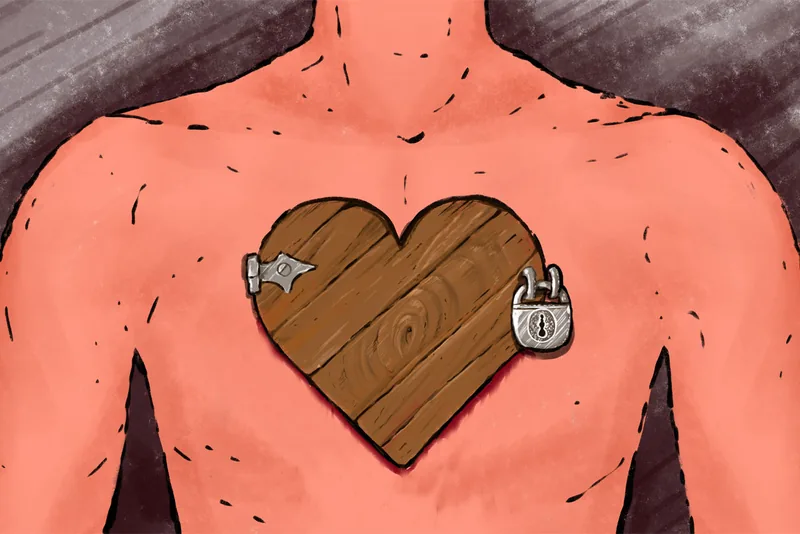
The idea of needing or receiving support can trigger a powerful internal alarm, signaling that it's unsafe. We might worry that asking for help makes us needy or codependent, overlooking the concept of healthy interdependence. Sometimes, ultra-independence is an unspoken, rigid boundary, a defense against vulnerability. We fear that letting people in will expose our flaws and insecurities, or worse, trigger unresolved traumas (Rising Woman, n.d.).
Carrying deep shame can also drive us to isolate, to avoid the risk of others seeing our perceived imperfections. Yet, paradoxically, it is within safe, supportive relationships that we can truly begin to heal from the very wounds inflicted in past connections (Rising Woman, n.d.).
Breaking the Cycle of Self-Reliance
For years, my own relationships were fraught with criticism and hurt. Asking for what I needed felt like inviting more pain, especially after a childhood where expressing needs often angered my father. This created a deep-seated belief that I had to navigate life entirely on my own, a belief that fueled years of anxiety, depression, and self-harm. The struggle to do everything myself became overwhelming, leading me to suppress my own needs and feelings.
This internal conflict manifested in a vow to never receive anything from anyone again. I remember a moment playing slots with a friend; when we won, my immediate reaction was to push the money back towards him, convinced that receiving meant owing him and being controlled. It took a patient conversation with him, where he expressed the joy he found in giving, to begin shifting my perspective. He saw my struggle, and his unconditional generosity, free of strings, was a powerful counter-narrative to my ingrained beliefs.
My true healing journey began when I started reconnecting with myself—my needs, my feelings, and the deep trauma I carried. Learning to ask for support was terrifying. Some people reacted negatively, but many were genuinely happy to help. Instead of blaming myself for my ultra-independent stance, I began to understand the fears driving it. I made peace with the part of me that felt it didn't need anyone, acknowledging its past pain of rejection and hurt.
By listening with compassion, I validated its fears and thanked it for its protective role. Then, I asked what it truly desired. The answer was simple yet profound: authentic connection and the safety to receive support. This younger part of me was trapped by childhood wounding and past negative experiences. Giving it a voice allowed us to develop a new understanding, fostering a sense of safety and love.
This process also helped me develop a more nuanced view of who is safe to connect with, moving away from the all-or-nothing thinking that no one could be trusted. While ultra-independence did play a role in my recovery from years of struggle, I learned that even in healing oneself, a supportive environment—where people offer care without trying to fix or control—is invaluable. We aren't meant to do life alone, but the fear of hurt can make solitude feel like the only refuge.
Cultivating Healthy Interdependence
Overcoming ultra-independence isn't about forcing yourself into uncomfortable situations. It's about first cultivating a loving, accepting relationship with yourself. Understanding the roots of your need for self-reliance is the crucial first step toward allowing others in. Ask yourself: Why does it feel unsafe for me to receive support? Sit with that part of yourself, allow it to show you its beliefs, and listen with compassion. Then, gently inquire about its true desires and needs.
Receiving support isn't about becoming completely dependent, which often leads to frustration. It's about finding a balance—learning to be independent while also being open to interdependence. This means developing the ability to meet your own needs and communicate them effectively to others. For example, when facing a challenge, you might say, “I’m struggling right now, and I’d really appreciate someone to just listen without trying to solve the problem. Is that something you might be able to offer?”
If making such requests feels impossible, affirmations can be a powerful tool. Start with phrases like, “I like the idea of…” if “I am…” feels too daunting:
- I like the idea of being worthy of support and love.
- It feels possible that it’s safe for me to experience connection.
- I am open to the idea of being seen, heard, and accepted.
- I am worthy of being cared for by myself and others.
- I am open to shining authentically.
- I am worthy of receiving help and support.
Remember, you don't need to earn or prove your worth. You are inherently valuable. If past traumas have led you to shut people out, know that you don't have to carry every burden alone. While some may disappoint, countless individuals are ready and willing to offer love and support. The key is to allow them in (Rising Woman, n.d.).
Learning how to overcome ultra-independence is a journey of self-compassion and courage. It involves understanding that vulnerability is not weakness, but a pathway to deeper connection and healing. By gently challenging the belief that you must do it all alone, you open the door to a richer, more supported, and ultimately more fulfilling life.