Every year, the tech world buzzes with anticipation, promising revolutionary leaps that will undoubtedly change our lives. We're conditioned to expect that "new" always means "better," a significant upgrade to our daily routines. But what if the latest release from a tech giant like Google isn't actually the game-changer we've been led to believe? Sometimes, the most important lesson in productivity and smart living is knowing when to hold back, when to recognize that marginal gains aren't worth the investment.
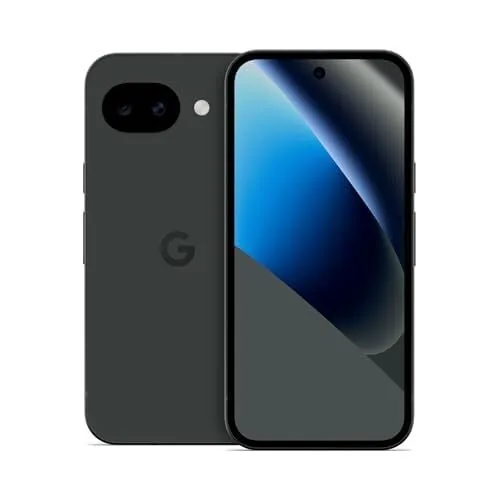
This brings us to Google's latest budget-friendly offering. The truth is, google's Pixel 10a isn't a dramatic step forward from its predecessor, the Pixel 9a. While Google positions it as a fresh option, a closer look reveals a story of subtle tweaks rather than groundbreaking innovation. So, if you're wondering whether to upgrade, the short answer for most Pixel 9a owners is likely "no."
The Illusion of Progress: Specs That Barely Budge
On paper, the core architecture of google's Pixel 10a isn't a departure from the 9a, a fact that might surprise many expecting an annual chip refresh. Both devices share the same Tensor G4 processor, a solid performer but one that's now a generation behind Google's flagship line. You'll also find the identical 8GB of RAM and storage options up to 256GB, ensuring consistent performance for daily tasks (Routinova Tech Analysis, 2024).
The camera system, a hallmark of Pixel phones, also remains largely unchanged. It features the same reliable 48MP main lens, 13MP ultrawide, and 13MP selfie camera that delivered excellent results on the 9a. Battery life, too, holds steady at over 30 hours with a 5,100 mAh capacity, though charging speeds see a minor bump of about 3W faster for both wired and wireless.
So, where are the "upgrades"? The most tangible difference lies in the display: a slightly brighter 6.3-inch screen boasting up to 3,000 nits of peak brightness, a modest increase from the 9a's 2,700 nits. You might also notice bezels that are approximately 10% thinner, but honestly, this is the kind of detail you need to be explicitly told about to spot during a hands-on experience. It's a bit like buying a new car model year that primarily offers a slightly different headlight design; functional, but hardly transformative.
Even the magnetic Pixelsnap feature, found on the higher-end Pixel 10, is notably absent here, limiting accessory compatibility. While the physical design has evolved to a completely flat back, ditching the camera bar entirely for a seamless feel, the 9a's minuscule camera bump was already a non-issue. Google suggests improved Corning Gorilla Glass 7i for enhanced durability, but without rigorous testing, this remains an unconfirmed benefit.
Beyond the display, google's Pixel 10a isn't bringing much new to the table in terms of raw power or basic functionality. This iterative approach suggests that Google is hoping its software prowess, rather than hardware leaps, will be the true differentiator for this generation.
AI & Safety: Where the 10a Finds Its Unique Voice
If hardware upgrades are subtle, the Pixel 10a does carve out a more distinct identity through its software, particularly in AI-driven camera features and emergency capabilities. It introduces two AI camera functionalities first seen on the flagship Pixel 10: Auto Best Take and Camera Coach. Auto Best Take intelligently captures multiple frames in a group shot, then stitches together the best elements so everyone looks their finest - eyes open, smiling. It's a convenient evolution of a feature that's been around, now seamlessly integrated with a Gemini icon indicating AI assistance.
For those wary of AI alterations, Camera Coach offers a less invasive form of assistance. This feature analyzes your scene and guides you on how to physically adjust your shot for optimal composition, effectively handing off the "ideation" to AI without actually generating elements in your photo. It's about empowering your photography skills, not replacing them. (Digital Wellness Foundation, 2023).
Perhaps the most significant new addition, especially for those prioritizing safety, is Satellite SOS. This marks the first time an a-series Pixel phone can connect directly to a satellite network for emergency services, even when traditional Wi-Fi or mobile networks are unavailable. Imagine being stranded on a remote hiking trail or in a disaster zone where cell service is nonexistent; this feature could genuinely be a lifesaver, offering unparalleled peace of mind (National Safety Council, 2024).
Crucially, for those seeking a true flagship experience, google's Pixel 10a isn't designed to replace the mainline Pixel 10, which packs a more advanced Tensor G5 chip. Instead, these software enhancements are about refining the "a-series" experience, making it smarter and safer without necessarily making it faster or visually bolder.
The Routinova Verdict: Is This "Upgrade" Worth Your Investment?
Priced at $500, the Pixel 10a sits at the same launch price as its predecessor. If you're currently choosing between the two and can't find a significant discount on a Pixel 9a, then opting for the 10a is a straightforward decision; you get the minor hardware tweaks and new software features for the same cost. Plus, you have a fresh palette of colors, including a vibrant "Berry" red and a serene Lavender hue, adding a touch of personal style.
However, for current Pixel 9a users, the value proposition of google's Pixel 10a isn't immediately clear. The most compelling additions are software-based, and Google has a history of porting flagship software features to older Pixel devices. This means your Pixel 9a is likely to remain highly relevant for years to come, potentially gaining many of the 10a's software perks, minus the completely flush back. Just like optimizing your digital workspace with smart notification settings, sometimes the best productivity "upgrade" comes from software, not new hardware.
While the Pixel 9a was arguably a better value than the Pixel 9 at its launch, the Pixel 10a's decision to retain the Tensor G4 chip means it can't truly stand in for the full-fledged Pixel 10. The core message here is discernment: sometimes, resisting the urge to upgrade is the smartest move for your wallet and your productivity. Consider your real needs, not just the marketing.
If, despite these considerations, the subtle refinements and enhanced safety features of the Pixel 10a resonate with you, it's available for pre-order now, with models shipping and hitting retail stores on March 5.