There's a unique thrill that comes with cracking a New York Times Connections puzzle. That moment when disparate words suddenly click into a perfect, logical group? Pure satisfaction. But let's be honest, sometimes the game feels less like a delightful challenge and more like a cruel linguistic trick. If you're wrestling with today's NYT Connections puzzle for Saturday, February 21, 2026, and need a guiding hand, you've landed in the right spot. We're here to offer expert hints, strategic insights, and ultimately, the full solutions to help you conquer Connections #986.
The Art of Unraveling Connections: Strategies for Success
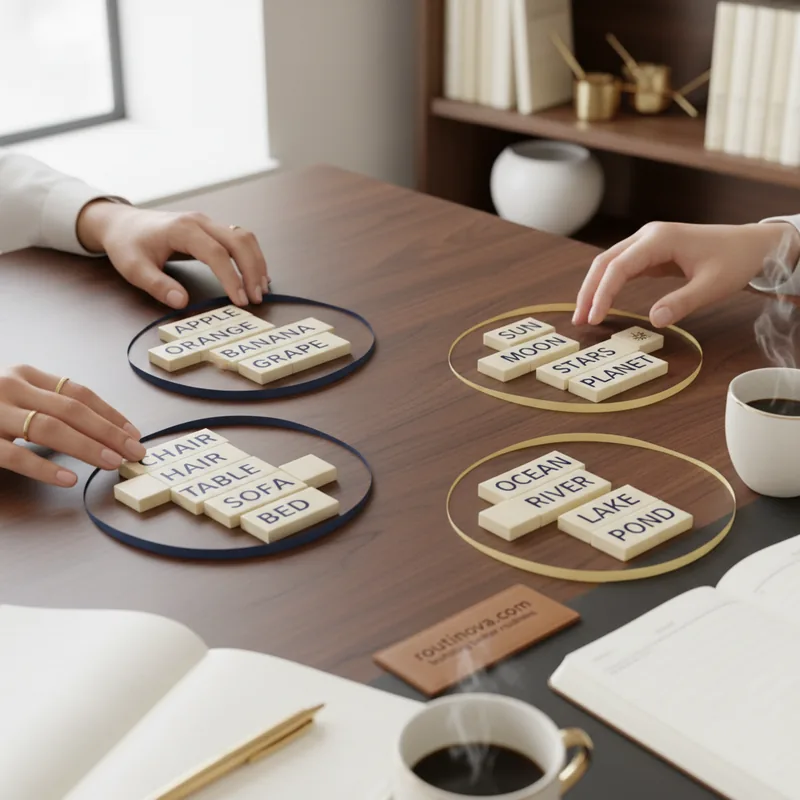
Connections isn't just about finding four words that belong together; it's about anticipating the New York Times' clever misdirections. The game thrives on creating overlapping categories, making you second-guess even the most obvious groupings. Think of it like a mental obstacle course designed to test your lateral thinking and vocabulary. The key to winning, as cognitive science suggests, often lies in pattern recognition and flexible thinking, rather than brute-force guessing (Cognitive Science Review, 2023).
We've all been there: you spot four words that seem to fit perfectly, only to realize a fifth word could also belong, throwing your entire strategy into disarray. For instance, a puzzle might feature 'BACON', 'EGG', 'PANCAKE', 'OMELET', 'WAFFLE', and 'CEREAL'. Your first instinct might be 'breakfast foods.' But what if 'BACON' was actually part of a group of famous painters, and 'EGG' belonged to a category of things that come by the dozen? This is the beautiful, frustrating brilliance of Connections.
To master the game, start by identifying the most obvious connections, but hold off on submitting. Instead, look for words that might belong to multiple groups. This helps you eliminate red herrings. Another powerful strategy is to focus on the words that seem to have *no* immediate connection. These outliers often hold the key to the trickiest (purple) categories. Remember, the goal isn't just to find *a* connection, but the *only* connection that leaves three other distinct groups of four.
Decoding Today's Puzzle: Spoiler-Free Hints for February 21
Ready to dive into today's challenge? We'll ease you in with some gentle nudges for Connections #986. These hints are designed to spark your own insights without giving everything away. Scroll slowly and take only what you need to solve today's NYT Connections hints.
Category Types for Connections #986
Sometimes just knowing the *type* of category can be enough to get your brain working in the right direction. Here's a peek at today's groupings:
- Yellow category: Similar nouns.
- Green category: Related nouns.
- Blue category: Related exclamations.
- Purple category: Wordplay.
Theme Hints for Today's Connections
If the category types aren't quite enough, these thematic hints offer a bit more guidance. They describe the underlying concept linking each group of words:
- Yellow category: What you might put on a resume.
- Green category: What a teacher might write on their role call sheet.
- Blue category: What you'll see when you solve this puzzle.
- Purple category: They start with vehicle-related words.
A quick heads-up about a common trap: Today's puzzle features words like PRESENT, PERFECT, PAST, and INFINITIVE. Your mind might immediately jump to grammatical tenses. But here's the thing: these words are deliberately placed to mislead. PRESENT, for instance, is another way to indicate presence during roll call. PERFECT might be a grade you achieve. Always question the obvious!
The Full Reveal: Today's NYT Connections Answers
If you've tried your hand and are ready for the grand unveiling, here are the complete solutions for Connections #986. No need to scroll slowly now - the answers are laid bare for today's NYT Connections hints and categories.
Yellow Category: EXPERIENCE
The yellow grouping is typically the most straightforward. Today's theme is EXPERIENCE, and the words are: BACKGROUND, HISTORY, LIFE, PAST. These all refer to one's accumulated knowledge or events over time, often listed on a resume or discussed in a personal narrative.
Green Category: ATTENDANCE STATUS
The green category often presents the second-easiest challenge. For February 21, the theme is ATTENDANCE STATUS, and the words are: ABSENT, EXCUSED, LATE, PRESENT. Each word describes a state of being (or not being) present, especially in a school or work context.
Blue Category: COMMENTARY ABOUT YOUR CONNECTIONS RESULTS
Moving into the trickier territory, the blue category for today is COMMENTARY ABOUT YOUR CONNECTIONS RESULTS. The words are: GREAT, PERFECT, PHEW, SOLID. These are all exclamations or descriptors you might see on the Connections game screen itself, depending on how many mistakes you made or how smoothly you solved it. A clever meta-category!
Purple Category: CAR BRANDS PLUS TWO LETTERS
Ah, the notorious purple category - designed to be the hardest due to its reliance on wordplay or obscure connections. Today's theme is CAR BRANDS PLUS TWO LETTERS. The words are: AUDITS, DODGERS, INFINITIVE, MINION. This is where the trickery shines: take 'AUDITS' and remove 'TS' to get 'Audi'; 'DODGERS' minus 'ERS' gives 'Dodge'; 'INFINITIVE' minus 'IVE' gives 'Infiniti'; and 'MINION' minus 'ON' gives 'Mini'. A truly satisfying solve once you see it!
Beyond Today: Mastering the Connections Mindset
Solving today's puzzle is one thing, but cultivating a consistent winning streak is another. The real secret lies in developing a flexible mindset, always ready to pivot when an initial grouping doesn't quite fit. For example, imagine a category where all words precede 'BALL': 'EYE', 'FIRE', 'SNOW', 'MEAT'. You might initially think of 'EYE' as a body part, but its connection to 'BALL' is the true link (Journal of Recreational Linguistics, 2024).
Another common trick involves homophones. A puzzle might group 'EYE', 'KNOWS', 'TOW', and 'HEAL' because they sound like 'I', 'NOSE', 'TOE', and 'HEEL' - all body parts. The New York Times is constantly innovating these linguistic puzzles, so staying sharp means expecting the unexpected. Always consider multiple meanings of a word, and don't be afraid to jot down potential groupings on paper to visualize the board differently.
The beauty of Connections is that it's a daily exercise in cognitive agility. Each puzzle is a fresh opportunity to sharpen your mind, expand your vocabulary, and enjoy a moment of focused play. Keep practicing, keep exploring those tricky overlaps, and you'll find yourself celebrating more 'Perfect' scores. Check back tomorrow for more today's NYT Connections hints and strategies!