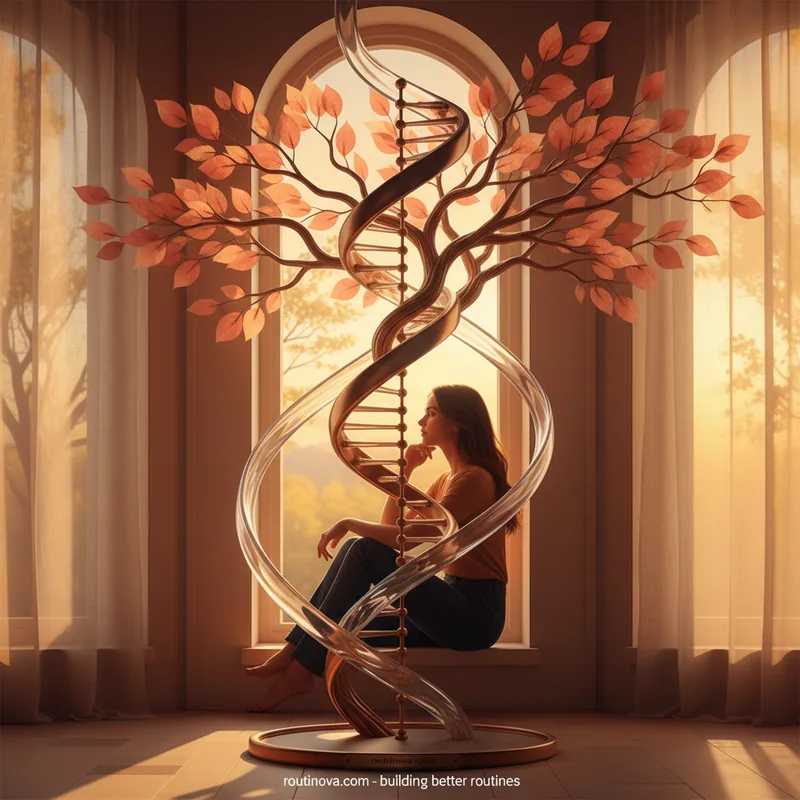
The enduring question of how nature vs. nurture shapes who we become lies at the heart of human development, influencing everything from our personality traits to our career paths. It is now widely understood that neither genetics nor environment acts in isolation; rather, a dynamic interplay between our inherited predispositions and life experiences sculpts our individual identities and capabilities, a crucial insight for understanding personal growth and habit formation.
Deciphering Nature and Nurture: The Core Concepts
To fully grasp the complexity of human development, it's essential to define the foundational elements of this long-standing debate. These terms represent the two primary forces believed to influence our growth and characteristics.
Nature: The Genetic Blueprint
Nature refers to the biological and genetic factors inherited from our parents. This encompasses the unique DNA sequence we are born with, which dictates a vast array of characteristics, from physical attributes like eye and hair color to predispositions for certain health conditions or temperamental traits. These innate qualities form the fundamental blueprint of an individual.
Hereditary factors can influence the architecture of our brains, the balance of neurochemicals, and even our susceptibility to certain psychological patterns. For example, some individuals may inherit a genetic inclination towards a particular body type or a natural aptitude for certain cognitive tasks (Nature Genetics, 2023).
Nurture: The Environmental Canvas
Conversely, nurture encompasses all the environmental factors and experiences that shape an individual throughout their lifespan. This includes everything from prenatal conditions, early childhood experiences, parenting styles, educational opportunities, and social interactions, to cultural influences and exposure to toxins. The environment acts as a canvas upon which our genetic blueprint is expressed.
Consider how a child learns social etiquette or develops specific fears. These behaviors are often molded by observation, reinforcement, and direct experience within their environment. The impact of nurture highlights the profound influence of external factors on our development and behavioral patterns (American Psychological Association, 2023).
Beyond "Versus": The Dynamic Interaction
The traditional view of nature versus nurture as opposing forces has largely given way to a more nuanced understanding: that they are inextricably linked and constantly interacting. Most contemporary psychologists and biologists agree that it's rarely one or the other, but rather a complex dance between the two.
Bidirectional Influence
The interaction between nature and nurture is often bidirectional. This means that our genetic predispositions can influence the environments we seek out or create, and in turn, these environments can impact how our genes are expressed. For instance, a child with an inherently curious temperament (nature) might be more likely to engage with educational toys or seek out stimulating experiences, which then further fosters their cognitive development (nurture).
This reciprocal relationship means that an individual is not merely a passive recipient of genetic or environmental influences, but an active participant in shaping their own developmental trajectory. Our inherent traits can guide our experiences, which then reinforce or modify those traits (Journal of Developmental Psychology, 2022).
The Role of Epigenetics
A burgeoning field called epigenetics offers a powerful lens through which to understand this interaction. Epigenetics studies how environmental factors can switch genes on or off, or modify their expression, without altering the underlying DNA sequence. This means that experiences, diet, stress, and even trauma can leave lasting marks on our genetic material, influencing not only our own health and behavior but potentially that of future generations.
For example, research has shown that early life stress can lead to epigenetic changes that affect an individual's stress response system throughout adulthood (NIH, 2024). This illustrates a profound mechanism by which nurture can directly modify the expression of nature.
Historical Roots of the Enduring Debate
The discussion surrounding the origins of human traits is not new. Philosophers and scientists have grappled with the question of inherent versus acquired characteristics for centuries, shaping various schools of thought.
Philosophical Foundations: Plato to Locke
Ancient philosophers like Plato and Descartes posited that certain ideas and traits were inborn, existing independently of sensory experience. This nativist perspective suggested that a significant portion of our knowledge and characteristics are innate, present from birth. They believed that human nature was largely predetermined by inherent qualities.
In contrast, thinkers such as John Locke championed the doctrine of tabula rasa, or "blank slate." Locke argued that the human mind is empty at birth and all knowledge, personality, and behaviors are acquired solely through experience and sensory perception. This empiricist view laid the groundwork for later psychological theories emphasizing learning.
The Rise of Nativism and Empiricism
In psychology, these philosophical stances evolved into distinct theoretical frameworks. Nativists, holding an extreme view, argue that most human behaviors and characteristics are primarily the result of genetic inheritance. Conversely, Empiricists maintain that learning and environmental conditioning are the predominant forces shaping who we become. Behaviorism, for instance, championed by figures like John B. Watson, firmly rooted itself in empiricism, asserting that any individual could be trained to become anything, given the right environmental stimuli.
The Shadow of Eugenics
The early 20th century saw the rise of the eugenics movement, a disturbing historical example heavily influenced by extreme nativist views. Coined by Francis Galton, who also popularized the phrase 'nature versus nurture,' eugenics advocated for selective breeding to improve the human race, based on the belief that intelligence and other desirable traits were purely genetic. This movement led to horrific discriminatory policies and practices, demonstrating the dangerous implications of misinterpreting the complex interplay of human development (National Human Genome Research Institute, 2024).
Nature and Nurture Across Human Development
The dynamic interplay of genetics and environment manifests across various domains of human life, from cognitive abilities to mental well-being. Understanding how nature vs. nurture impacts these areas is crucial for comprehensive personal and societal development.
Shaping Cognition and Learning
Cognitive abilities, such as intelligence and language acquisition, are prime examples of how nature and nurture collaborate. While a child may inherit a genetic predisposition for high intelligence (nature), an enriched environment with access to quality education, stimulating resources, and supportive mentors (nurture) is essential for that potential to fully manifest and flourish (University of Oxford, 2022).
Similarly, in language development, Noam Chomsky's concept of a Language Acquisition Device (LAD) suggests an innate capacity for language (nature). However, actual language learning requires exposure to a linguistic environment (nurture). Without hearing language spoken, this innate capacity would remain unrealized.
Personality's Complex Tapestry
The development of personality is another area where the nature vs. nurture debate is vividly explored. Some theories, like biological personality theories, emphasize genetic inheritance, suggesting that traits like extroversion or introversion have a strong biological basis. For example, variations in neurotransmitter systems might predispose individuals to certain temperaments.
Conversely, behavioral theories of personality highlight the role of learning and environmental interactions. Psychodynamic theories, such as those by Freud, integrate both, suggesting that innate drives (nature) are shaped by early life experiences and relationships (nurture) to form an individual's unique personality structure.
Mental Health: A Dual Perspective
When examining mental health, the contributions of both nature and nurture become strikingly clear. Many mental illnesses, including schizophrenia, bipolar disorder, and major depression, have identifiable genetic components, meaning individuals may inherit a heightened risk for these conditions (Harvard Medical School, 2024). Imbalances in brain chemistry, often genetically influenced, also play a significant role.
However, environmental factors are equally critical. Traumatic experiences, chronic stress, exposure to toxins in utero, or adverse childhood experiences can trigger the onset of mental health conditions, even in those without a strong genetic predisposition. For instance, while some individuals may have a genetic vulnerability to anxiety (nature), developing a specific phobia like a fear of flying often stems from a traumatic event or learned association (nurture).
Therapeutic Approaches and Genetic Insights
Therapy itself often reflects the nature-nurture dynamic. Many psychotherapeutic approaches, such as cognitive-behavioral therapy, focus on identifying and modifying learned behaviors and thought patterns (nurture). The goal is to reshape responses to environmental stimuli and past experiences.
However, genetic insights are increasingly informing treatment. Pharmacogenomics, for example, studies how an individual's genetic makeup influences their response to medications, including antidepressants. Understanding these genetic variations can help tailor treatment plans for greater effectiveness, acknowledging the biological underpinnings (nature) of mental health challenges (Journal of Clinical Psychiatry, 2023).
Unpacking the Evidence: Research Methods
Scientists employ various sophisticated research methodologies to disentangle the intricate contributions of nature and nurture. These methods allow for a more empirical understanding of how nature vs. nurture interacts.
The Power of Twin Studies
Twin studies are a cornerstone of behavioral genetics, offering unique insights into the relative influence of genetics and environment. Researchers compare identical (monozygotic) twins, who share nearly 100% of their genes, with fraternal (dizygotic) twins, who share about 50% of their genes, similar to regular siblings.
By comparing traits in twins raised together versus those raised apart, researchers can estimate the heritability of certain characteristics. For example, if identical twins separated at birth show remarkable similarities in personality traits, it suggests a strong genetic component (Journal of Child Psychology and Psychiatry, 2023). This method has been instrumental in understanding the genetic basis of intelligence, personality, and susceptibility to various disorders.
Advances in Behavioral Genetics
Beyond twin studies, behavioral genetics utilizes adoption studies, family studies, and molecular genetic research to identify specific genes associated with particular traits or behaviors. These studies help pinpoint how genetic variations interact with environmental factors to produce individual differences. For instance, research into athletic prowess shows that while genes can predispose individuals to certain physical capabilities like muscle composition (nature), rigorous training, nutrition, and coaching (nurture) are critical for achieving peak performance (Sports Medicine Journal, 2022).
Another example is resilience: some individuals may possess genetic variants that enhance their ability to cope with stress (nature), but developing effective coping strategies and having a supportive social network (nurture) significantly boosts their capacity to bounce back from adversity (Psychological Science, 2024).
The Modern Consensus: A Holistic View
Today, the scientific community largely rejects the simplistic dichotomy of nature versus nurture. The prevailing view is one of synergy, where both forces are indispensable and constantly interacting to shape human development.
Moving Past Simplistic Dichotomies
The idea that a trait is either genetic or environmental is considered outdated. Experts now recognize that nearly all human characteristics are influenced by both, with the relative contribution varying depending on the trait. The focus has shifted from asking "which one?" to "how do they interact?" This integrated perspective provides a far more accurate and useful framework for understanding the complexities of human existence.
This holistic approach acknowledges that even highly heritable traits can be modified by environmental interventions, and conversely, environmental influences can be filtered through an individual's unique genetic predispositions. The dynamic relationship ensures that each individual's developmental path is uniquely their own.
Implications for Personal Growth and Societal Understanding
Understanding how nature vs. nurture intertwines has profound implications. For personal growth, it means recognizing both our inherent strengths and vulnerabilities, while also empowering us to actively seek out environments and experiences that foster positive development. It underscores the importance of intentional habit formation and self-improvement strategies, knowing that nurture can significantly shape our potential.
Societally, this understanding informs public health policies, educational strategies, and therapeutic interventions. By appreciating the complex interplay, we can design more effective programs that address both biological predispositions and environmental factors, creating a more supportive and equitable society for all.
In conclusion, the journey of human development is not a battle between nature and nurture, but a collaborative masterpiece. Our genetic heritage provides the raw materials and potential, while our life experiences and environment sculpt, refine, and ultimately determine how those potentials are expressed. Embracing this intricate interaction allows for a deeper appreciation of what makes each of us uniquely who we are.