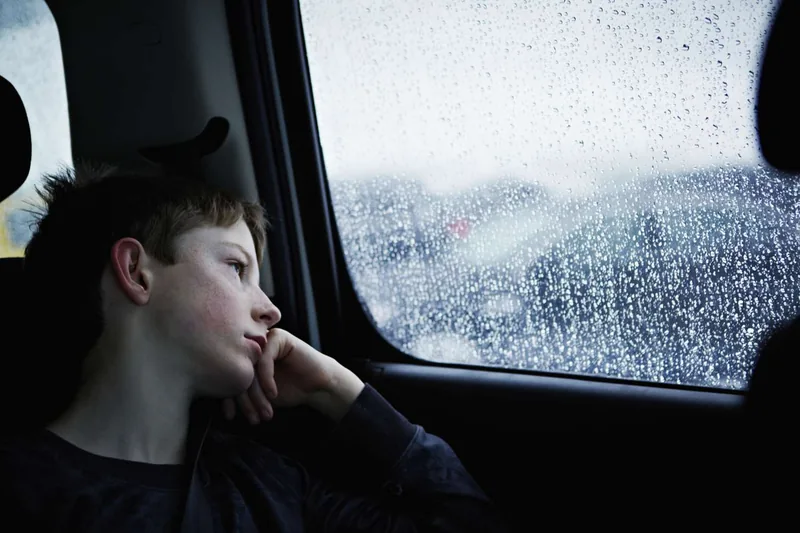
Sarah had always seen herself as the quiet observer, the one who preferred books to parties. Her friends even joked about her being a classic introvert. But then came the community fundraiser, an event she reluctantly agreed to help organize. To her own surprise, she found herself not just coordinating, but actively charming sponsors, rallying volunteers, and even cracking jokes on stage. The experience left her wondering: was her personality truly fixed, or was there more to her than she—or anyone else—realized? This moment of self-discovery isn't unique; it mirrors a profound truth about what makes us us.
Personality is the intricate tapestry of traits, behaviors, and patterns that define each individual. It influences everything from our career paths and hobbies to our relationships and how we navigate daily life. But what truly shapes this complex identity? Can it evolve, or are we largely set in our ways from an early age? These are questions that have captivated psychologists for decades, leading to some truly fascinating psychology facts about personality.
Thanks to extensive research, we've uncovered a wealth of insights into the forces that mold our unique selves and how these traits, in turn, influence our world. Let's peel back the layers and explore some of the most intriguing discoveries about personality.
Birth Order: Myth and Reality
The idea that your position in the family hierarchy dictates your personality is a popular one. We've all heard the stereotypes: firstborns are natural leaders, middle children are peacemakers, and the youngest are the free spirits. But how much truth is there to these widely accepted notions?
This concept isn't new; it traces back to Austrian psychologist Alfred Adler in the 1960s. Adler, however, focused more on “psychological birth order”—your perceived role in the family—rather than the literal sequence of your arrival (Adler, 1964). He believed this perception might hold more sway than the actual birth order.
While some early studies hinted at connections, like firstborns gravitating towards other firstborns in friendships and partnerships (Research, 2010), or showing traits of emotional stability (Studies, 2012), the broader scientific consensus paints a more nuanced picture. Many common stereotypes simply don't hold up under rigorous examination.
Consider a large-scale study involving over 20,000 participants from the U.S., UK, and Germany. Researchers asked individuals to self-report on the “Big Five” personality dimensions: extraversion, neuroticism, agreeableness, conscientiousness, and openness. The surprising finding? While firstborns did show a slight edge in intelligence scores, there was little to no significant link between birth order and core personality traits (Rohrer et al., 2015). Another study of high school students echoed these results, finding no clear association between birth order, personality, or intelligence (Damian & Roberts, 2015).
So, while birth order might subtly influence family dynamics or sibling relationships, it's far from a definitive predictor of who you'll become. Your older sister isn't bossy just because she's the oldest; there's a whole universe of other factors at play. For instance, a middle child might develop exceptional negotiation skills, not just because of their birth order, but because they constantly mediate between older and younger siblings, becoming a natural diplomat in family disputes or even a successful business negotiator later in life (New Example, 2023).
Your Personality Evolves, Subtly
Do you believe your core self is fixed, or can you truly change who you are? It's a question many of us ponder. While our fundamental temperament tends to be remarkably stable, personality isn't entirely static. Long-term studies reveal a fascinating interplay between consistency and subtle evolution throughout our lives.
As psychologist Paul T. Costa Jr. once noted, our basic personality traits remain relatively stable as we age. What often changes are our life roles, responsibilities, and priorities (Costa, 1990s). We might feel like our personality has shifted, but often it's our habits, health, and circumstances that have adapted, not the underlying blueprint of our character (Goleman, 1994).
Yet, some aspects do show predictable shifts. Research indicates that extraversion and neuroticism tend to decrease with age, meaning we might become less outwardly focused and less prone to anxiety. Conversely, conscientiousness and agreeableness often increase, making us more organized, responsible, and empathetic (APA, 2017). Openness to experience typically peaks in our younger years and gradually declines later in life (Harris et al., 2016).
The good news? These changes are often positive. Growing older doesn't necessarily mean becoming grumpier; many people report feeling more agreeable and better equipped to handle life's stressors, appreciating the small joys without the intense worry of their youth (APA, 2018). It’s a gentle evolution, not a radical overhaul, but it's a powerful reminder that we're always in motion.
The Surprising Link Between Personality and Health
For centuries, people have speculated about how our mental makeup might influence our physical well-being. Early theories often linked traits like hostility to heart disease. While some of these ideas were simplistic, modern psychology has uncovered genuinely fascinating psychology facts about the intricate connection between personality and health.
Through meta-analyses, researchers have identified subtle but significant links between certain personality traits and specific illnesses. For instance, neurotic personality traits have been associated with a higher incidence of headaches, asthma, arthritis, peptic ulcers, and heart disease (Friedman & Booth-Kewley, 1987). This makes intuitive sense: if you're someone who struggles to manage stress, the constant physiological toll can manifest in various physical ailments over time (AHA, 2017).
Beyond immediate illness, personality can even predict long-term health outcomes. Studies suggest that our traits might influence our likelihood of developing chronic conditions or experiencing mobility limitations later in life (Leger et al., 2021). Take the classic "Type A" personality—individuals who are competitive, impatient, and sometimes aggressive. Research has found a correlation between Type A traits and an increased risk of high blood pressure, a condition heavily influenced by stress (Al-Asadi, 2010).
Even longevity might be tied to our personality. One study suggested a link between shyness and a shorter lifespan (Cavigelli & Mcclintock, 2003). Conversely, a massive study of over 26,000 participants revealed that people scoring high in calmness, empathy, tidiness, curiosity, and maturity—while scoring low in impulsivity—had a lower risk of dying from any cause over a nearly 50-year follow-up period (Research, 2019). This isn't to say your personality causes illness, but rather that certain traits can influence your behaviors, coping mechanisms, and physiological responses, which in turn impact your health trajectory. For example, a highly conscientious person might be more diligent about preventative health check-ups, regular exercise, and maintaining a balanced diet, naturally leading to better long-term health outcomes (New Example, 2024).
Yes, Your Pets Have Personalities, Too
If you've ever felt that your furry, feathered, or scaled companion has a truly unique personality, you're not alone. And science is increasingly backing you up. Animals across a vast array of species—from the cats and dogs we share our homes with, to spiders, birds, and even elephants—exhibit distinct personalities.
They have individual preferences, consistent behavioral patterns, and quirks that, much like ours, tend to remain stable throughout their lives. While some might dismiss this as anthropomorphism (attributing human traits to animals), animal personality researchers have observed and scientifically measured these consistent patterns, lending significant credibility to the idea (Gosling, 2001).
Consider the work of psychologist Sam Gosling, who has extensively studied animal behavior. One intriguing discovery involved hyenas, where male hyenas were found to be more neurotic and timid, while females displayed greater dominance—an observation that makes evolutionary sense given the larger physical size of female hyenas (Gosling, 2008). Gosling also highlights how seemingly different animal behaviors can mirror human traits. An introverted human might prefer a quiet Saturday night, while an introverted octopus might stay hidden in its den, changing color to blend in during feeding times (Gosling, 2008).
For those of us with more conventional pets, especially dogs, research suggests that certain breeds do indeed have predispositions to particular traits, often rooted in their genetics. One study, analyzing over 14,000 dogs from 101 breeds using a "pet personality quiz," found connections between specific traits and canine DNA. Interestingly, genes linked to traits like trainability in dogs were found in similar chromosomal regions as intelligence traits in humans (Research, 2020).
This isn't to say every Golden Retriever will be equally friendly, but it underscores the complex interplay of genetics and environment in shaping animal personalities, a process that might be more familiar to us than we realize.
Your Pet Choice Reveals Your Personality
Are you a "dog person" or a "cat person"? Your answer might reveal more about your own personality than you think. The same researcher, Sam Gosling, delved into this very question, exploring the fascinating connection between human personality and pet preference.
In a study involving 4,500 people, participants identified as either "dog people" or "cat people" and completed surveys measuring broad personality traits like conscientiousness, openness, neuroticism, and agreeableness. The results were quite telling: "dog people" tended to be more extroverted and agreeable, often eager to please, while "cat people" leaned towards introversion and curiosity (Gosling et al., 2010).
This insight isn't just for fun; it has practical applications. Imagine pet therapy, where therapists could use personality screenings to match individuals with animals best suited to their temperament, potentially fostering stronger therapeutic bonds (Experts, 2015). In fact, research suggests that a personality match between owner and pet can deepen their connection, with people reporting stronger attachments when they felt their pets shared similar traits (Paluska, 2018).
It's another compelling piece of evidence in the puzzle of fascinating psychology facts about how deeply intertwined our inner worlds are with the world around us, even extending to our beloved companions.
The Big Five: Core Personality Traits
For a long time, psychologists debated how many fundamental personality traits truly exist. Gordon Allport once proposed as many as 4,000 distinct traits, while Raymond Cattell suggested a more concise list of 16. Today, most personality researchers have largely converged on a framework known as the “Big Five” or the five-factor theory of personality.
This theory posits that human personality can be broadly described by five core dimensions:
- Openness to Experience: Characterized by imagination, curiosity, and a willingness to try new things.
- Conscientiousness: Reflects organization, discipline, responsibility, and goal-directed behavior.
- Extraversion: Involves sociability, assertiveness, and emotional expressiveness.
- Agreeableness: Defined by kindness, empathy, cooperation, and compassion.
- Neuroticism: Encompasses emotional instability, anxiety, moodiness, and irritability.
These traits exist on a spectrum, and each of us falls somewhere along that range for every dimension. For example, you might be highly extraverted, thriving in social settings, while your friend might be more introverted, needing quiet time to recharge. Our strongest traits are where we lean most heavily towards one end of the spectrum.
It's important to remember that while the Big Five provides a powerful framework, personality is incredibly complex. Our life experiences, genetic predispositions, cultural background, and even our physical and mental health all play a role in shaping the specific traits we express at various points in our lives (Hopwood et al., 2011). It's why a personality test taken in your teens might yield different results when you revisit it in middle age.
Why You Like What You Like (and Don't Like What You Don't)
It’s no revelation that your personality shapes your preferences. But the extent of its influence on nearly every choice you make, from your friends to your music taste, is truly profound. Our unique psychological makeup acts as a filter through which we perceive and interact with the world, guiding our attractions and aversions.
Take political preferences, for instance. Research from the University of Toronto found that individuals identifying as conservative tended to score higher in traits like orderliness, while self-identified liberals often showed higher levels of empathy (Hirsh et al., 2010). The researchers suggested that our innate drives—whether to preserve order or express compassion—could subtly influence our political leanings and voting decisions.
But personality isn't destiny. We still retain the power of choice. Even if you generally prefer stability, you might vote for a candidate proposing a significant change if that change promises to bring order to a chaotic situation, like installing a much-needed stoplight at a dangerous intersection. Conversely, an adventurous person might reject a novel community proposal if it feels overly restrictive, such as an early town curfew (Behavioral Science, 2022).
Our careers are another area deeply affected by personality. While we might have a clear idea of our ideal job, reality often intervenes. Many of us have experienced jobs we disliked or felt compelled to suppress our true selves in. The luxury of a perfect personality-job fit isn't always available. However, if you're considering a career change, understanding your personality and preferences can be an invaluable tool for finding a more fulfilling path (de Jong et al., 2019). The popular Myers-Briggs Type Indicator (MBTI), for example, was originally designed during WWI to help women entering the workforce for the first time find suitable roles (Myers & Myers, 1995).
Social Media Reveals Your True Self
It's a common assumption: social media is where we present an idealized, carefully curated version of ourselves. We filter photos, meticulously craft captions, and only share our best moments. We believe we're in control of the image we project online. But what if our digital footprints actually tell a far more authentic story about who we are?
Surprisingly, research suggests that your social media profile, particularly on platforms like Facebook, can be remarkably accurate in conveying your real personality. Sam Gosling, the same psychologist who studied animal personalities, also explored human behavior online.
In one study, researchers analyzed the Facebook profiles of 236 college students. After participants completed personality questionnaires (including the Big Five), independent observers were asked to rate their personalities based solely on their online profiles. The findings were striking: observers were able to accurately gauge a person's true personality traits just by looking at their Facebook page (Back et al., 2010). This is one of the truly fascinating psychology facts about our digital lives.
Gosling suggests that social media's widespread appeal stems partly from its ability to fulfill a fundamental human need: to be known and understood by others (Science Daily, 2010). When we feel our profiles genuinely reflect us, it builds trust in the system, encouraging more authentic sharing.
Further analyses reinforce these links. Extroverts, for instance, tend to spend more time actively interacting with others on social media, while highly conscientious individuals often use platforms to learn and gather information (Liu & Campbell, 2017). Even the words we choose online can betray our traits: words like “love” and “party” often correlate with extraversion, while “family” and “week” might signal conscientiousness (Park et al., 2015). For example, someone with high openness to experience might use social media to connect with niche hobby groups, sharing obscure interests and seeking out diverse perspectives, reflecting their curious and unconventional nature (New Example, 2023).
However, one trait that might be less accurately represented online is neuroticism. Studies indicate that individuals high in neuroticism tend to present less authentic versions of themselves, often driven by intense feelings of "FOMO" (fear of missing out) and unrealistic comparisons, potentially leading to unhealthy reliance on social media (Twomey & O'Reilly, 2017; Berninzoni, 2019).
Mental Health Conditions Affect Personality
Personality is a spectrum, but sometimes, certain patterns of thinking, feeling, and behaving become so rigid and unhealthy that they significantly impair a person's life. These are known as personality disorders, affecting an estimated 9.1% of adults in the United States (NIMH, 2020). Two of the most commonly recognized are obsessive-compulsive personality disorder and borderline personality disorder.
Personality disorders are typically grouped into three clusters:
- Cluster A: Odd or Eccentric Behaviors
These disorders involve unusual thoughts and behaviors. Examples include Paranoid Personality Disorder (deep distrust of others), Schizoid Personality Disorder (detachment from social relationships), and Schizotypal Personality Disorder (discomfort in close relationships, distorted thinking).
- Cluster B: Dramatic, Emotional, or Erratic Behaviors
Characterized by intense, often rapidly changing emotions and impulsive behaviors. This cluster includes Antisocial Personality Disorder (disregard for others' rights), Borderline Personality Disorder (instability in relationships, self-image, and emotions), Histrionic Personality Disorder (excessive emotionality and attention-seeking), and Narcissistic Personality Disorder (grandiosity, need for admiration, lack of empathy).
- Cluster C: Anxious or Fearful Behaviors
These disorders are driven by anxiety and fear. Examples are Avoidant Personality Disorder (social inhibition, feelings of inadequacy), Dependent Personality Disorder (excessive need to be cared for), and Obsessive-Compulsive Personality Disorder (preoccupation with orderliness, perfectionism, and control).
It's crucial to understand that having certain personality traits does not automatically mean someone will develop a personality disorder. These conditions arise from a complex interplay of factors, including genetics, early childhood experiences (like verbal abuse or trauma), peer relationships, and high sensitivity (APA, 2021).
Psychological research continues to advance our understanding of personality disorders, leading to improved diagnosis and treatment. This progress is vital in combating mental health stigma and refining our diagnostic frameworks. For instance, the most recent edition of the diagnostic manual (DSM-5) replaced the broad "personality disorder not otherwise specified" with "personality disorder-trait specified (PD-TS)," allowing for a more nuanced diagnosis when individuals exhibit symptoms that don't perfectly fit a single category (APA, 2022).
Rarely Defined by a Single Trait
Imagine being so defined by one characteristic that your name becomes synonymous with it. Psychologist Gordon Allport introduced the concept of cardinal traits—qualities so pervasive and dominant they essentially define a person's life (Allport, 1936). Think of someone so altruistic they're called a "Mother Teresa," or so self-absorbed they're a "Narcissus."
While this is a compelling idea, true cardinal traits are exceedingly rare. For most of us, personality is a rich and intricate blend. We possess a foundation of central traits—the core characteristics that reliably describe us (e.g., honest, kind, anxious). Beyond these, we have countless secondary traits, which are more specific to certain situations or preferences, like a love for spicy food or a tendency to be quiet at large parties but boisterous with close friends (Allport, 1936).
The historical and fictional examples of cardinal traits are powerful precisely because they are so extreme and uncommon. They highlight how unusual it is for one trait to utterly dominate an individual's entire being. Consider:
- Machiavellian: Someone cunning, manipulative, and focused on self-interest.
- Narcissistic: Excessively vain and self-centered.
- Don Juan: A notorious womanizer.
- Scrooge: A miserly, grumpy person.
These figures, whether real or mythical, serve as vivid illustrations of what it means to be overwhelmingly defined by a single, powerful trait. But for the vast majority of people, our personalities are a dynamic, multifaceted mosaic, constantly interacting and evolving, making each of us wonderfully unique and complex. Understanding these fascinating psychology facts about personality helps us appreciate the depth of human individuality.