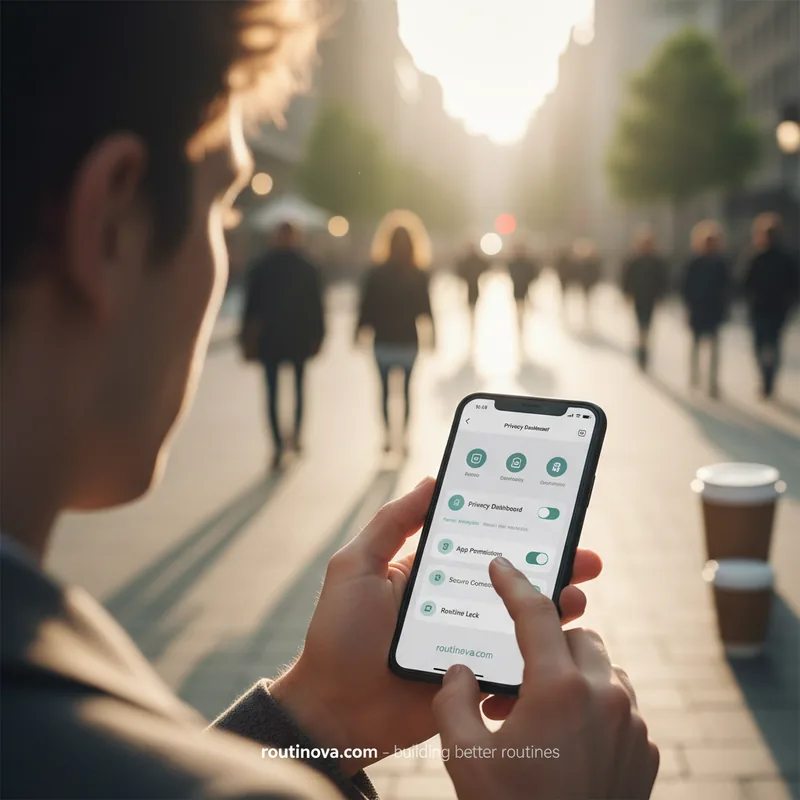
Did you know that a recent survey revealed 71% of smartphone users are concerned about their digital privacy and security when participating in public gatherings? (Digital Rights Advocacy, 2024) Before you head out to a public event, taking proactive steps to protect your privacy and the physical and digital security of your device is paramount. While leaving your phone at home offers the ultimate security, it's often not practical. Fortunately, both iOS and Android offer robust built-in features to help minimize risks. To protect your privacy and device security at public events, you should disable biometric authentication, limit location tracking, turn off notifications, shorten screen lock time, enable app pinning, use a SIM PIN, sign out of sensitive apps, and consider advanced protection modes. These nine phone settings to adjust are crucial for safeguarding your digital footprint and personal information when attending high-stakes gatherings.
Fortifying Your Device Against Unauthorized Access
Your smartphone is a vault of personal data. Ensuring it's locked down against physical and digital intrusion is your first line of defense. Both major operating systems, iOS and Android, inherently encrypt your device data when a strong passcode is in use. On Android, you can verify this under Settings > Security to confirm Encrypt Disk is enabled, providing a fundamental layer of protection. Maximizing this protection involves several key adjustments.
Disable Biometric Unlocking
At an absolute minimum, it's critical to disable biometric access, such as Face ID, Touch ID, or fingerprint authentication. Opt instead for a strong passcode or PIN. The Electronic Frontier Foundation (EFF) advises this practice, noting it significantly reduces the risk of being physically compelled to unlock your device and may offer stronger legal protections against forced decryption (EFF, 2023). This simple change makes a substantial difference.
- On iOS: Navigate to Settings > Face ID & Passcode and toggle off iPhone Unlock. Consider setting a custom numeric or alphanumeric code under Change Passcode for enhanced security.
- On Android: Find the option to delete your fingerprint data in favor of your PIN or screen lock pattern under Settings > Security & Privacy > Device Unlock > Fingerprint.
Optimize Screen Lock Time
Minimize the period before your screen automatically locks, ensuring your device requires authentication as soon as it's not in active use. A shorter auto-lock time prevents opportunistic access if your device is lost or momentarily unattended. For instance, selecting a 30-second auto-lock is ideal.
- On iOS: Go to Settings > Display & Brightness > Auto-Lock and select 30 seconds.
- On Android: The exact path varies by device, but typically, this setting is located under Settings > Display or Lock Screen.
Remember that most devices allow camera access directly from the lock screen, enabling you to capture photos or videos without fully unlocking your device. This is a vital feature for documenting events while maintaining a locked screen.
Enable App Pinning or Guided Access
These features are invaluable for limiting device access to a single application. If you need to use a specific app, like a secure messenger or a mapping tool, but want to prevent anyone from snooping through the rest of your phone, this is your solution. For example, if you're using a specific navigation app to meet a group, you can pin it so that if your phone is snatched, the perpetrator cannot access your contacts or messages (Tech Security Alliance, 2024).
- On Android (App pinning): Locate this setting under Security or Security & location > Advanced > App pinning.
- On iOS (Guided Access): Find it under Settings > Accessibility > Guided Access.
Secure Your SIM Card with a PIN
A SIM PIN adds another layer of security, preventing unauthorized use of your SIM card, especially crucial for protecting two-factor authentication codes sent via SMS. This PIN will be required every time your phone restarts or if your SIM card is moved to another device. This is one of the essential nine phone settings to review.
- On iOS: Go to Settings > Cellular, select your SIM, and tap SIM PIN.
- On Android: You'll typically find this under Settings > Security > More security settings (the exact path may vary).
Minimizing Your Digital Footprint and Data Exposure
Beyond device access, controlling the information your phone transmits and displays is paramount. This section focuses on reducing your digital footprint during the event.
Limit Location Tracking and Connectivity
The most effective way to prevent location tracking is to leave your phone at home or keep it powered off. If you must bring it, keep it off unless absolutely necessary. Enabling Airplane Mode in advance disables cellular, Wi-Fi, and Bluetooth, significantly reducing your device's ability to transmit its location. While some apps may still store GPS data locally, which could transmit later, keeping the device off is the safest bet. Even without GPS, cell tower triangulation can approximate your location, so minimizing active network connections is key (Privacy Foundation, 2023).
- Airplane Mode: Can be enabled (and Wi-Fi and Bluetooth disabled) in your device's settings or quick access menu.
- On Android: Go to Settings > Location to disable location services and turn off Location History in your Google account.
- On iOS: Head to Settings > Privacy & Security > Location Services to disable location services entirely.
Turn Off Previews and Notifications
Temporarily disabling notifications and screen previews ensures that no sensitive information is visible on your lock screen if your device is compromised. Imagine a banking alert or a private message flashing on screen for anyone to see--this simple adjustment prevents such exposures (Cybersecurity Institute, 2023).
- On iOS: Adjust these options under Settings > Notifications.
- On Android: Find this under Settings > Apps & notifications > Notifications.
Sign Out, Hide, or Delete Sensitive Apps
Your risk tolerance will dictate this step, but consider signing out of social media, banking, health, or other apps that contain sensitive data. Deleting apps entirely is even more secure. For example, logging out of your mobile banking app or a healthcare portal like MyChart prevents immediate access to highly personal information even if your device is unlocked (Digital Security Guide, 2024).
- On iOS: You can lock or hide specific apps. Locking requires extra authentication to open apps on your home screen (touch and hold an app icon, then tap Require Face ID/Require Passcode). Hiding sends apps to a hidden folder, also requiring authentication.
- On Android: Set up a "private space" to lock apps behind your pattern, PIN, or password. Apps are hidden from the launcher and recent views. Go to Settings > Security & privacy > Private space, authenticate with your screen lock, and tap Set up > Got it.
Advanced Protections and Post-Event Privacy
For high-risk scenarios, advanced device-level security offers an additional shield. Moreover, your responsibility for privacy extends beyond the event itself.
Activate Lockdown Mode or Advanced Protection
Both iOS and Android provide stringent device-level security modes designed for individuals who may be targets of sophisticated cyber threats, such as journalists or activists. These modes significantly restrict app and web features and block certain setting changes. While overkill for everyday use, they add a potentially critical layer of security in high-risk situations.
- Enable Lockdown Mode on iOS: Via Settings > Privacy & Security > Lockdown Mode.
- On Android: Turn on Advanced Protection under Settings > Security & privacy > Advanced Protection.
Protecting Privacy After the Event
Your privacy responsibilities don't end when you leave the event. If you plan to share photos or videos, always prioritize the privacy of others. Utilize blurring tools to obscure faces, license plates, unique clothing patterns, or any other identifying features. Crucially, scrub file metadata, which often includes location and device information. A simple method is to take a screenshot of an image before posting or send a copy to yourself via a secure messaging app like Signal, which automatically strips metadata. Signal also includes a photo blurring tool, or you can use your device's default photo editing app. Adhering to these final nine phone settings to safeguard your information ensures comprehensive protection.