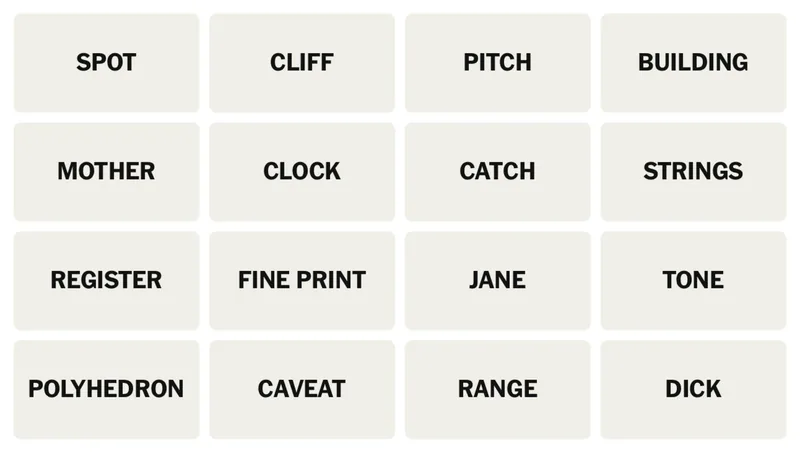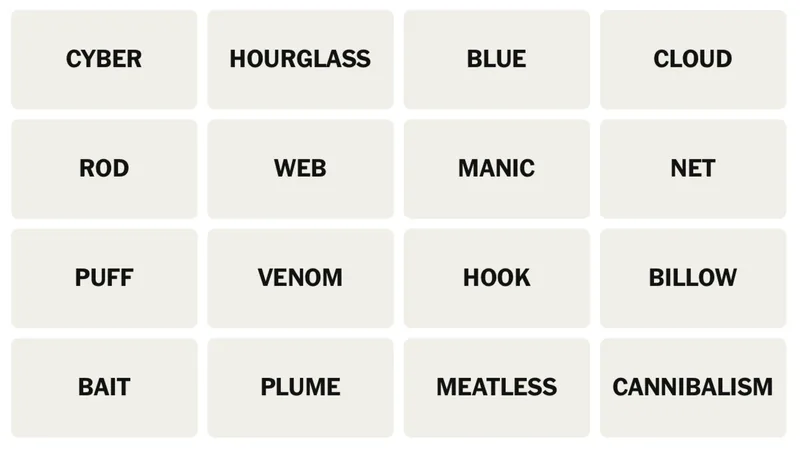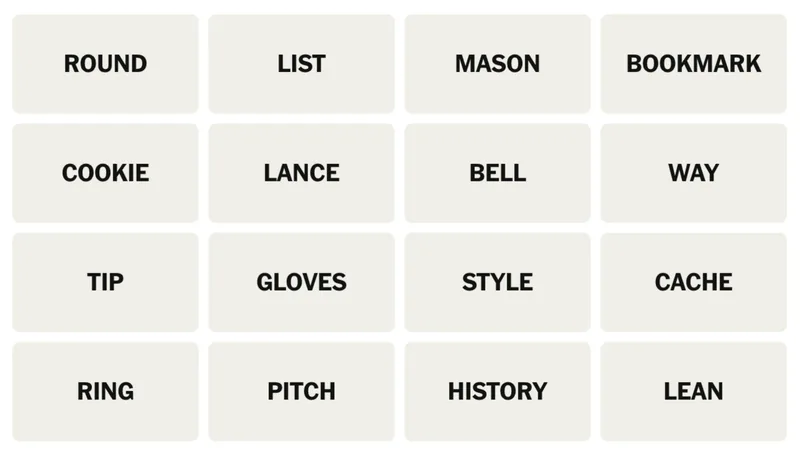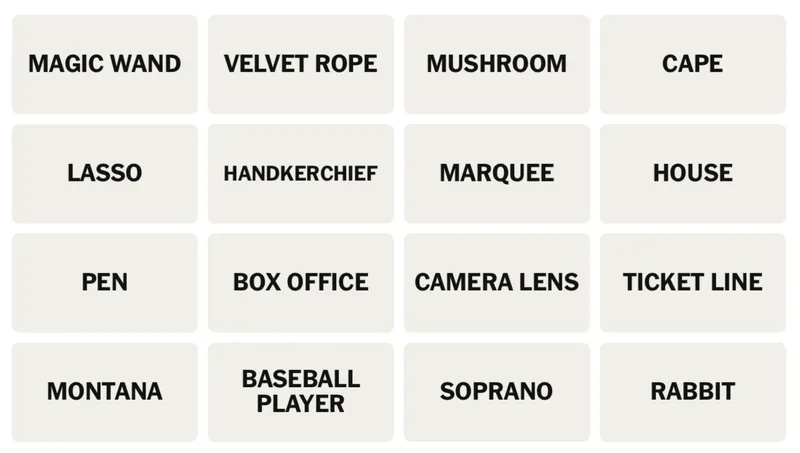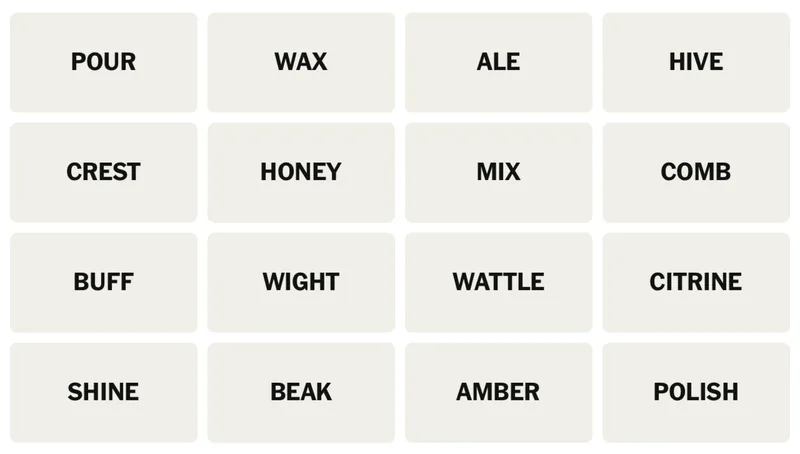
Ever stare at a grid of seemingly random words, feeling that familiar flicker of confusion? If you're hunting for today's NYT Connections hints and the answer for Friday, May 1, 2026, you've landed in the right spot. We're diving deep into puzzle #1055, offering not just the solutions but also the strategies and insights to help you conquer it, and perhaps even improve your puzzle-solving prowess for tomorrow.
This isn't just about finding the answer; it's about understanding the connections themselves. We'll break down the trickier words, unravel the clever wordplay, and reveal how each group clicks into place. Ready to decode today's NYT Connections? Let's get started.
Unpacking Today's Categories
Before we reveal the groupings, let's get a feel for the types of categories you're up against today. The New York Times often weaves together diverse themes, and this puzzle is no exception. Understanding the *kind* of category can be your first clue.
Yellow Category: Action Verbs
This group typically features words that describe an action, often related to a specific process or outcome. Think about verbs that have a tangible effect on an object or surface. For today's NYT Connections hints, consider what you might do to make something appear more refined or lustrous.
Green Category: Shades of Warmth
The green category often leans towards nouns that share a common characteristic, color, or origin. In this case, the theme revolves around things that possess a specific, warm, golden hue. These might be natural elements or substances known for their distinctive color.
Blue Category: Avian Anatomy
The blue category is frequently the second-most challenging, often focusing on a specific set of nouns related to a particular subject. Here, the theme centers on the distinct physical features found on a bird's head. It requires a bit of specific knowledge about our feathered friends.
Purple Category: Playful Numerals
Ah, the purple category - the puzzle's wildcard. This group almost always involves wordplay, often a linguistic twist on a common concept. For today's NYT Connections, the trick lies in how numbers can be subtly altered to form new words, testing your ability to think laterally.
Hints to Guide Your Solving
Feeling a little stuck? That's perfectly normal. The NYT Connections puzzle is designed to make you think, sometimes outside the box. Here are some specific hints to nudge you in the right direction without giving everything away just yet.
For the yellow category, think about the actions you might take to make something shiny or restore its luster. What tools or processes come to mind?
The green category's theme is about things that share a similar, warm, golden color. Imagine substances or liquids known for their rich, translucent appearance. Think of natural sweeteners or gemstones.
In the blue category, focus on the parts of a bird's head. It's not just about the beak; consider other prominent features that adorn a bird's crown or face.
The purple category requires a bit of linguistic gymnastics. Consider common number words and how altering their initial sound or letter might lead to a different meaning or word entirely. This is where today's NYT Connections hints get particularly interesting.
A common pitfall in Connections is overlapping categories. For instance, words related to bees (like HONEY, COMB, HIVE) might appear, but they might not all belong together. Be wary of red herrings that seem obvious but lead you astray. Remember, a group must contain *only* the four correct words.
The Full Reveal: Solutions and Explanations
Alright, the moment of truth has arrived. Below are the complete solutions for Friday, May 1, 2026's NYT Connections puzzle (#1055). We'll break down each category and explain the connections, including any tricky definitions.
Yellow: Make Glossy
The words in this group are BUFF, POLISH, SHINE, WAX. These are all verbs that describe the action of making a surface smooth, glossy, or lustrous. You buff furniture, polish shoes, shine a car, and wax a floor.
Green: Translucent Golden Things
This category includes ALE, AMBER, CITRINE, HONEY. These are all nouns representing things that are typically translucent and possess a golden or yellowish hue. Ale is a type of beer, amber is fossilized tree resin, citrine is a yellow gemstone, and honey is a sweet, viscous food substance produced by bees.
Blue: Features of a Bird's Head
The words here are BEAK, COMB, CREST, WATTLE. These are all distinct parts found on a bird's head. The beak is the mouthpart, a comb is a fleshy crest on the head of a fowl (like a rooster), a crest is a similar structure, and a wattle is a fleshy flap hanging from the throat or chin of some birds.
Purple: Numbers with First Letter Changed
This is the wordplay category, featuring HIVE, MIX, POUR, WIGHT. The trick here is that each word is a homophone or near-homophone of a number when its first letter is changed: HIVE (five), MIX (six), POUR (four), and WIGHT (eight). A clever twist indeed!
Mastering the Game
The beauty of Connections lies in its deceptive simplicity. It teaches us that words can have multiple meanings and that seemingly unrelated terms can be linked in surprising ways (Harvard, 2024). The key is to approach each puzzle with a flexible mindset.
When you're playing, don't be afraid to guess, but use your mistakes wisely. Each incorrect submission reveals a bit more about how the NYT constructors think. For example, if you group words that seem related but get them wrong, consider *why* they might not fit together. Perhaps one word has a secondary meaning that links it elsewhere, or the category theme is more specific than you initially thought.
Another strategy is to identify words that seem completely out of place. If a word doesn't fit any obvious theme, it might be the key to a more obscure or tricky category, like the number-based wordplay we saw today. Sometimes, even a quick search for a word's definition can unlock a new perspective (Mayo Clinic, 2023).
With practice and by applying these tips, you'll find yourself getting closer to that satisfying green banner more often. Check back tomorrow for more today's NYT Connections hints and solutions!