Unlock Your Mind: The Ultimate Guide to Freud’s Id, Ego, Superego
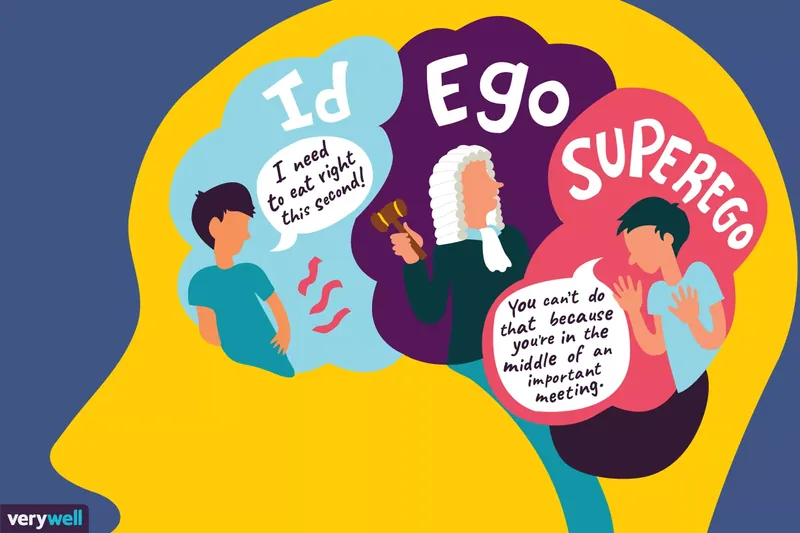
Understanding the complex layers of your personality can be a game-changer for personal growth and self-awareness. What is Freud’s id, ego, and superego? These three fundamental components, proposed by Sigmund Freud, represent distinct aspects of the mind that continuously interact to influence our thoughts, emotions, and behaviors. The id embodies our primal instincts, the ego navigates reality, and the superego internalizes moral standards. While modern psychology offers diverse viewpoints, grasping this foundational theory provides a powerful lens for balancing desires, responsibilities, and values in your daily life in 2025.
1. Understanding Freud’s Core Theory
Sigmund Freud’s psychoanalytic theory revolutionized our understanding of the human mind, positing that our personality isn’t a single, unified entity but rather a dynamic interplay of three distinct elements. These elements—the id, the ego, and the superego—work in concert to produce the intricate tapestry of human behaviors we observe daily. Their continuous interaction shapes our decisions, emotional responses, and overall approach to life.
For anyone seeking to master self-awareness and improve their daily routines, delving into what is Freud’s id, ego, and superego offers invaluable insights. Freud believed these components emerge at different stages of development, each contributing its unique influence to our psychological makeup. The id, present from birth, acts as the wellspring of our most basic urges. Subsequently, the ego develops to mediate these urges with the demands of the external world, ensuring our actions are realistic. Finally, the superego internalizes societal and parental moral codes, acting as our inner conscience.
In 2025, while contemporary psychology has evolved beyond some of Freud’s original tenets, his framework remains a potent metaphor for understanding the internal conflicts that drive us. Recognizing the push and pull between our desires, our sense of reality, and our moral compass can illuminate why we make certain choices. This foundational knowledge empowers us to better navigate personal challenges and foster a more balanced lifestyle, making it crucial to grasp the role of the id, ego, and superego.
2. The Id: Your Primal Desires
The id represents the most primitive and instinctive part of our personality, serving as the reservoir of all psychic energy. It is the only component present from birth, operating entirely within the unconscious mind. This raw, untamed aspect of our being includes all our fundamental biological drives, such as hunger, thirst, and sexual impulses.
Driven by what Freud termed the “pleasure principle,” the id relentlessly seeks immediate gratification for all desires, wants, and needs (Harvard, 2024). When these needs are not instantly met, the id generates a state of tension or anxiety, demanding resolution. For example, a baby crying incessantly until fed perfectly illustrates the id’s dominance; there is no reasoning with its urgent demands. This immediate satisfaction mechanism is vital in infancy, ensuring basic survival needs are communicated and met.
However, unchecked id impulses are often unrealistic or socially unacceptable in adulthood. Imagine simply grabbing food from someone else’s plate because you’re hungry; this behavior, while satisfying the id, would be disruptive and inappropriate. To manage this, the id employs “primary process thinking,” forming a mental image of the desired object to temporarily alleviate tension. While we learn to control the id’s direct expression, this primal force remains a constant underlying influence throughout our lives, urging us toward immediate pleasure. Understanding the id is the first step in comprehending what is Freud’s id, ego, and superego.
3. The Ego: Navigating Reality
Emerging from the id, the ego serves as the executive branch of personality, tasked with ensuring that the id’s powerful impulses are expressed in a realistic and socially acceptable manner. Unlike the entirely unconscious id, the ego operates across the conscious, preconscious, and unconscious mind, acting as the primary component responsible for dealing with the external world. It is the part of your personality that grounds you in reality.
The ego functions according to the “reality principle,” which aims to satisfy the id’s desires in practical and appropriate ways (Harvard, 2024). This principle involves weighing the potential costs and benefits of an action before deciding to proceed or abandon an impulse. Often, the ego achieves this through “delayed gratification,” allowing the desired behavior but only at a suitable time and place. For instance, if you crave a snack during a long meeting, your ego will guide you to wait until the meeting concludes rather than interrupting.
Freud famously compared the id to a powerful horse and the ego to its rider. The horse provides the raw energy and drive, while the rider offers direction and control, guiding the horse to its intended destination. The ego also utilizes “secondary process thinking” to find real-world objects that match the mental images created by the id, effectively connecting inner desires with external reality. Having a strong ego signifies a robust sense of self-awareness and the capacity to manage internal pressures, preventing you from being solely driven by basic urges or overly rigid moralistic demands. This crucial mediator helps us understand the dynamic between id, ego, and superego.
4. The Superego: Your Inner Moral Compass
The superego is the final component of personality to develop, typically emerging around the age of five. It represents the internalized moral standards and ideals we acquire from our parents, caregivers, and society at large (Harvard, 2024). Essentially, the superego acts as our inner judge, providing guidelines for making judgments and striving for perfection in our behavior. It embodies our sense of right and wrong, guiding us toward idealistic standards rather than merely realistic ones.
This moral compass has two main parts: the conscience and the ego ideal. The conscience encompasses information about behaviors deemed “bad” by society and parents. Actions that violate the conscience often lead to feelings of guilt, shame, or remorse. Conversely, the ego ideal comprises the rules and standards for “good” behaviors—those that are approved of and rewarded, inspiring feelings of pride and accomplishment. For example, if you consider stealing office supplies, your superego would counteract this urge by highlighting that such actions are wrong, leading to feelings of guilt.
The superego’s primary function is to civilize and perfect our behavior, suppressing all unacceptable urges from the id and pushing the ego to act morally. It operates across all three levels of consciousness: conscious, preconscious, and unconscious. A strong superego often motivates altruistic behavior, such as returning an item a cashier forgot to charge you for, simply because your internalized sense of right and wrong compels you. Understanding the superego is essential for a complete picture of what is Freud’s id, ego, and superego, revealing how our morality shapes our actions.
5. The Dynamic Interaction of Id, Ego, and Superego
It is crucial to recognize that the id, ego, and superego are not isolated entities but rather dynamic, interconnected forces constantly interacting within the mind. These three aspects are locked in a perpetual dance, influencing an individual’s personality and behavior in every moment. Freud emphasized that this ongoing conflict is central to our psychological experience; the specific nature of these discrepancies ultimately determines our thoughts, feelings, and actions.
Imagine a continuous internal negotiation: the id clamoring for immediate satisfaction, the superego striving for moral perfection, and the ego attempting to mediate between these two powerful, often opposing, forces while also contending with the realities of the external world. This intricate balance requires significant mental energy. Freud believed that much of this energy is spent keeping the id’s primitive desires contained within the unconscious, though these repressed thoughts often find alternative expressions through dreams, jokes, or even unconscious behaviors.
Freud introduced the concept of “ego strength” to describe the ego’s ability to effectively manage these dueling pressures (Harvard, 2024). A person with strong ego strength can navigate these internal conflicts adeptly, leading to a well-adjusted and resilient personality. Conversely, someone with too much or too little ego strength might struggle, becoming either rigidly unyielding or impulsively disruptive. The ongoing dialogue between id, ego, and superego shapes our identity, making their interaction key to understanding ourselves.
6. When the Balance Shifts: Imbalances and Their Impact
According to Freud, a healthy personality hinges on a delicate balance between the id, the ego, and the superego. When the ego successfully mediates between the raw demands of the id, the moralistic ideals of the superego, and the constraints of reality, a well-adjusted individual emerges. However, an imbalance among these elements can lead to a maladaptive personality, manifesting in various psychological difficulties and behavioral patterns. Understanding these potential shifts is vital for managing your inner world in 2025.
If the id becomes overly dominant, an individual might exhibit impulsive, uncontrollable, or even antisocial behaviors. Such a person would act purely on their most basic urges, with little to no regard for social appropriateness, legality, or the feelings of others. This could lead to reckless decisions, strained relationships, and a general inability to function within societal norms. Conversely, an overly dominant superego can result in an extremely moralistic, judgmental, and rigid personality. This individual might struggle with self-acceptance, experience excessive guilt, or be unable to tolerate any perceived “bad” or “immoral” aspects in themselves or others.
An ego struggling to maintain balance can lead to persistent anxiety or tension. This internal conflict might manifest as difficulty making decisions, as the individual is constantly torn between desires, morals, and reality. Imbalances can also contribute to depressive symptoms if the superego becomes excessively harsh and self-critical, or to compulsive behaviors that emerge as substitutes for unmet needs. Recognizing these signs of imbalance in the id, ego, and superego is the first step toward seeking greater psychological harmony.
7. Integrating Modern Perspectives on Id, Ego, and Superego
While Freud’s theory of the id, ego, and superego provides a foundational framework, modern psychology offers diverse and evolving perspectives. Many contemporary psychologists acknowledge the enduring influence of unconscious drives and the importance of early development, but they often move beyond Freud’s specific emphasis on sexual and aggressive impulses. In 2025, the focus often shifts to cognitive processes, social learning, and neurobiological underpinnings of personality.
Despite these advancements, the Freudian concepts remain valuable as conceptual tools. They offer a powerful metaphor for understanding the internal struggles we all face: the tension between our immediate desires, our sense of responsibility, and our ethical standards. For Routinova readers focused on lifestyle and self-improvement, this framework can still be incredibly useful. It encourages self-reflection on where your personal balance lies. Are you too often swayed by instant gratification, or are you overly critical of yourself?
Understanding what is Freud’s id, ego, and superego can empower you to cultivate greater self-awareness and intentional living. By recognizing the forces at play, you can consciously work to strengthen your ego, mediating effectively between your wants and your values. This might involve practicing delayed gratification, setting realistic goals, or consciously aligning your actions with your moral compass. While the ego has a challenging role, defense mechanisms and mindful practices can help manage the anxiety that arises from these internal conflicts, fostering a more balanced and fulfilling life.