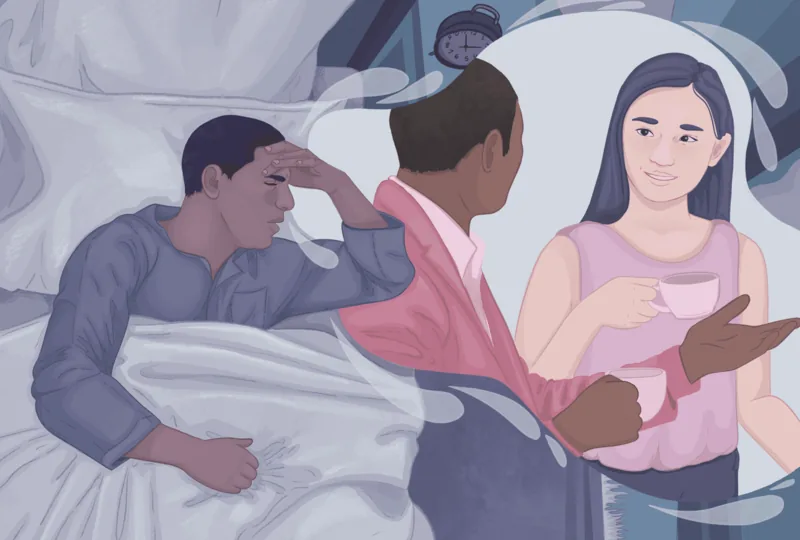
Picture this: You’re at a networking event, meeting a flurry of new faces. One conversation, brief but genuinely engaging, stands out. Later that week, you find yourself recalling details from a presentation you attended right after that interaction, memories that would typically fade. Why do some moments stick, while others vanish? The answer lies in the fascinating way our brains are wired, and recent research reveals exactly how social encounters prime our brains to remember.
It’s not just strong emotions or familiar scents that etch experiences into our minds. Our social interactions, particularly novel ones, play a surprisingly powerful role in memory formation. These moments create a temporary "window of opportunity" where the brain becomes exceptionally receptive to storing new information, making subsequent experiences more vivid and lasting (Harvard Medical School, 2024). This phenomenon suggests that connecting with others does more than just enrich our lives; it fundamentally shapes our capacity for recall.
“Remembrance of things past is not necessarily the remembrance of things as they were.” –Marcel Proust
Proust famously described how the smell and taste of a madeleine flooded him with memory, a testament to the power of sensory triggers.
The Social Spark: How Novelty Boosts Memory
The profound impact of social interactions on memory has been illuminated by scientific studies. One notable experiment involved mice that had a brief, five-minute encounter with an unfamiliar juvenile mouse. Half an hour later, these mice were tasked with learning to avoid a mild foot shock. The short social meeting significantly strengthened their fear association, a memory typically quite fragile under these conditions, making it persist much longer than usual. Interestingly, meeting a familiar cage-mate didn't yield the same effect, and delaying the learning task by an hour after the social interaction negated the memory boost (PNAS, 2025).
This finding underscores a critical insight: there's a specific, narrow window during which social novelty prepares the brain to store subsequent information more firmly. Researchers pinpointed this memory enhancement to intricate signaling pathways between two distinct brain regions. One area, the hippocampal CA2, is heavily involved in recognizing social situations, while the adjacent CA1 region plays a crucial role in capturing the detailed specifics of events. When the CA2 region's activity was suppressed, or its outgoing signals interrupted, the memory-boosting effect vanished, demonstrating the direct link between social processing and memory potentiation.
Consider a scenario where you're introduced to a new colleague just before an important training session. That brief, novel social interaction, by activating specific neural pathways, can subtly enhance your brain's readiness to absorb and retain the complex information presented during the training. This highlights understanding how social encounters prime the brain for enhanced learning and recall, especially when novelty is involved.
Weaving Memories: Beyond Single Events
Memory rarely functions as a collection of isolated facts; instead, our brains are adept at weaving separate experiences into a coherent narrative. The power of social engagement extends beyond merely stabilizing a single weak memory. It creates optimal conditions for linking multiple, distinct experiences together, especially if they occur in close temporal proximity. In situations with minimal social engagement, different memories might compete for neural resources, leading to weaker recall. However, under conditions of stronger social engagement, these memories appear to cooperate, forming interconnected neural networks that enhance overall retention.
This mechanism, illustrating how social encounters prime the brain, means that a sufficiently meaningful social moment can serve as a cognitive glue, helping the brain forge connections between events that might otherwise be forgotten. For instance, imagine a lively family dinner where you discuss upcoming vacation plans, followed by a separate conversation about a new household budget. The warm, engaging social context of the dinner can help your brain link these distinct topics, making both the vacation details and the budget figures more memorable and interconnected.
Similarly, a friendly, empathetic conversation with a therapist before delving into a challenging emotional topic can prime your brain to process and integrate those difficult insights more effectively. The social connection provides a supportive framework, allowing the therapeutic experience to be more deeply embedded and recalled. This innate ability of the brain to connect information is significantly tuned by positive social experiences, transforming disparate pieces of information into a richer, more cohesive mental tapestry (Mayo Clinic, 2023).
Practical Applications and Future Insights
The implications of these findings are far-reaching, offering tangible strategies for enhancing learning, therapy, and daily well-being. The insight that a socially engaging start can help new skills and safety behaviors take root within a roughly 30-minute window, fading after an hour, provides actionable guidance. Imagine classrooms designed to begin with brief, collaborative social activities, or rehabilitation routines incorporating friendly interactions before complex exercises. These simple adjustments could significantly improve the retention of new information and the acquisition of new skills.
Beyond educational and therapeutic settings, understanding how social encounters prime our cognitive functions holds promise for addressing memory challenges associated with aging and neurological conditions. Many memory problems involve disruptions in communication between different brain areas. By exploring ways to strengthen the timing and coordination of these social-memory signals, researchers may one day develop interventions to help individuals retain crucial information more effectively. While any future strategies will require rigorous study, the path forward is becoming clearer: supporting the right emotional and social context at the opportune moment can make a significant difference.
Social interactions are far more than mere pleasantries; they are fundamental to our cognitive architecture. They don't just add color to our daily lives; they actively set the brain's readiness to learn, remember, and connect. The interplay between the brain's social processing centers and its memory-encoding regions creates a powerful, albeit temporary, window where everyday moments can transition from fleeting to lasting. Harnessing this understanding brings us closer to practical methods for building better habits, instilling safer behaviors, and forging stronger, more meaningful memories, one genuine conversation at a time.