Who matters more to teenagers: their friends or their parents? If you're like most people, your gut reaction screams 'friends!' We've been conditioned to believe adolescence is the grand exit from parental influence, a head-first dive into the world of peer validation. And if you've ever felt like your teenager's eyes glaze over when you speak, or that their phone is permanently fused to their hand, it's easy to feel like you've been relegated to the background. But here's the thing: that widely accepted narrative, while partially true in some contexts, is profoundly incomplete and, in many parts of the world, even misleading. Our latest research, focusing on adolescents in West Africa, challenges this Western-centric view, **rethinking the power of peers** and revealing a powerful, often overlooked, protective factor: parental support.
The Western Lens: A Limited View
Most of what we understand about adolescent development springs from studies conducted in what researchers call WEIRD societies: Western, Educated, Industrialized, Rich, and Democratic. Think about it: in these cultures, values like autonomy and fierce independence are celebrated. Adolescence is often framed as a necessary emotional separation from parents, a time when peers naturally step into the spotlight as the primary source of emotional support and validation (Global Mental Health Journal, 2024).
This perspective isn't inherently wrong, but it's not the whole story. What most people don't realize is how deeply this Western-centric view has shaped everything from psychological theories to anti-bullying programs. These initiatives often focus almost exclusively on peer relationships--encouraging friendship building, peer mentoring, and social skills--while family involvement is often treated as a secondary consideration.
The Surprising Power of Parental Connection
But here's where things get interesting. Our research team took a different approach, examining data from over 2,500 adolescents in Benin, West Africa. We wanted to see whether peer or parental support mattered more when these young people experienced stressors like bullying. The findings were genuinely surprising and offer a crucial perspective on **rethinking the power of peers**.
As expected, adolescents who faced bullying were indeed more vulnerable to mental health challenges, such as feelings of loneliness and even suicidal ideation. However, the protective factor wasn't what most would assume. We anticipated that support from friends would buffer these negative effects, but it didn't. Instead, parental support emerged as the critical shield. Adolescents who felt more supported by their parents reported significantly fewer mental health problems, even when they were experiencing bullying (African Youth Research Institute, 2023).
Think about a teenager in a collectivist community facing exclusion from a friend group. While a Western-centric view might suggest they'd turn to other peers, in many African societies, a child might first seek comfort and guidance from an elder or parent, trusting their wisdom and family bond to navigate the social challenge. This highlights how cultural context profoundly influences where young people seek and find their strength.
Rethinking Intervention and Parenting Strategies
Our findings don't suggest that peers don't matter at all. Of course, they do. But they powerfully underscore the limitations of a one-size-fits-all approach to adolescent mental health. The idea that parents naturally become less important during adolescence is challenged; instead, their vital role often depends heavily on cultural context. In societies like Benin, which emphasize collectivist and family-centered values, adolescents' emotional well-being is often more strongly shaped by parental involvement than by peer dynamics (Cultural Psychology Review, 2022).
This has profound implications for how we tackle issues like bullying. Strategies focused solely on peer interactions may be insufficient. Imagine a school in a culturally diverse urban area. If their anti-bullying program only focuses on peer mediation, it might miss the mark for students whose family structure is their primary source of resilience. A more effective approach might actively engage parents and families, reinforcing open communication, supportive supervision, and strong emotional bonds.
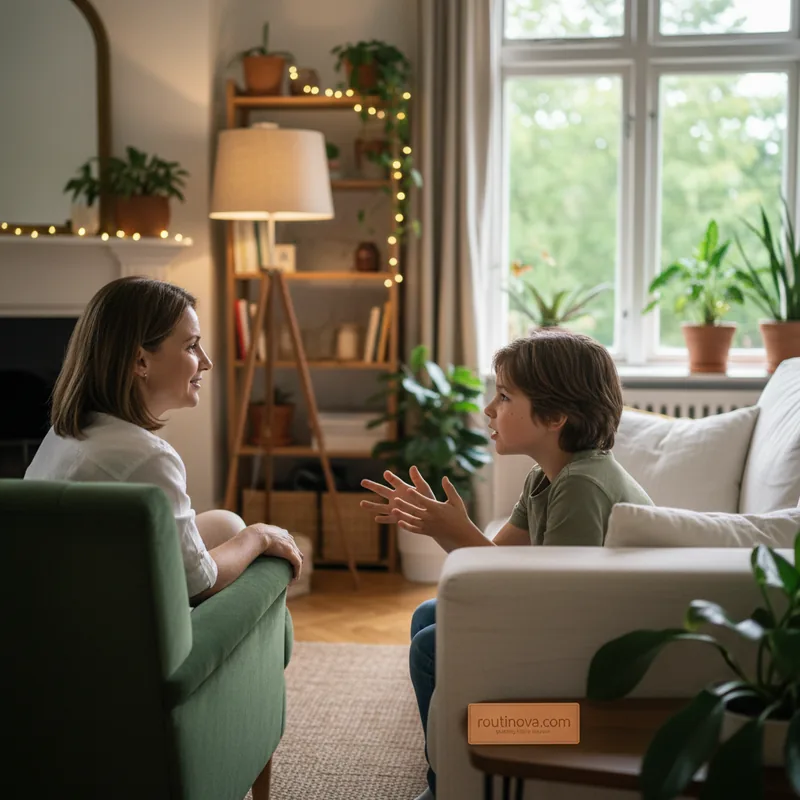
For parents: Your role does not disappear during adolescence, even if your teenager seems withdrawn or peer-focused. Your emotional availability, warmth, and consistent presence can be profoundly protective. Perhaps your teen isn't confiding in you about every social drama, but knowing you are a stable, loving presence in the background can be the anchor they need when a friendship crisis hits. This is truly **rethinking the power of peers** and understanding the deeper impact of family.
For educators and schools: Anti-bullying efforts should extend beyond just peers and school grounds. Programs that involve families and strengthen parent-adolescent relationships may be far more effective than peer-only approaches, particularly in diverse cultural settings. It's about building a holistic support system, where the home is recognized as a powerful sanctuary and source of strength.