Have you ever looked at your dog and wondered if they possess a hidden genius, understanding more than you realize? While many believe certain breeds are inherently smarter, the reality of canine cognition is far more nuanced.
The question of whether genius dogs or not? truly exists often sparks debate. While breed differences in temperament and motivation are significant, their core cognitive abilities are surprisingly similar across the board. However, a select few dogs exhibit a remarkable talent that sets them apart: the ability to learn object names. These exceptional canines, often dubbed "label learners," demonstrate a profound understanding of language that challenges our perception of animal intelligence.
The Phenomenon of Label Learners
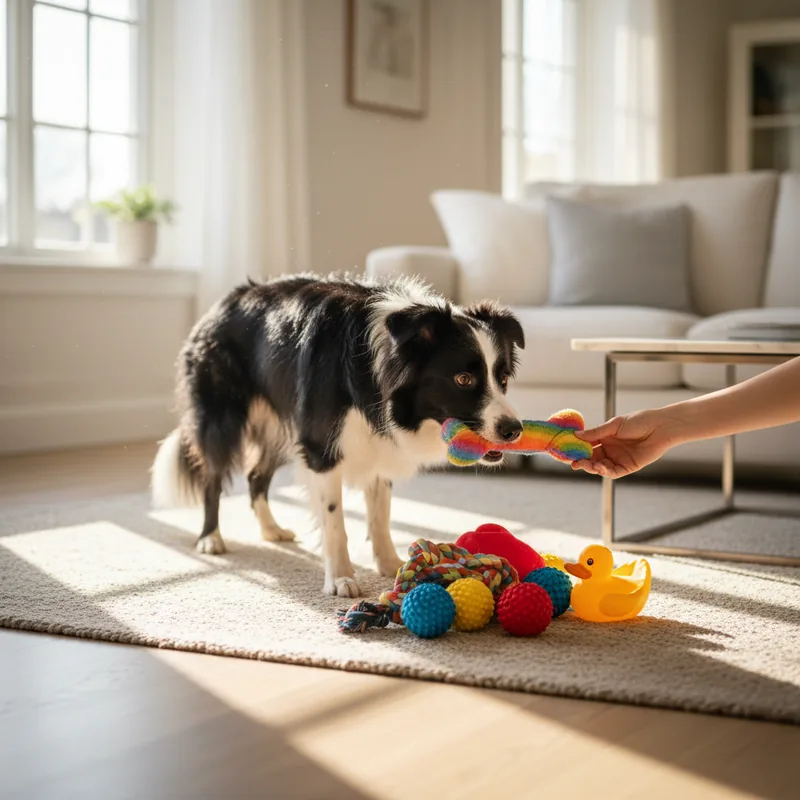
For years, the prevailing scientific view suggested that dogs, while adept at reading human cues, did not truly grasp the concept of object-label association in the way young children do. This changed with the groundbreaking discovery of Rico, a Border Collie who astounded researchers by recognizing over 200 objects by name. His owner claimed Rico could fetch specific toys when asked, a feat that piqued the interest of scientists like Juliane Kaminski.
Kaminski's research confirmed Rico's extraordinary ability. In controlled experiments, Rico was tasked with retrieving named toys from another room, proving he wasn't simply responding to subtle cues. The most astonishing revelation came when Rico demonstrated "fast mapping," a learning process previously thought unique to human toddlers. Presented with a new toy and an unfamiliar name, Rico correctly associated the new word with the novel object, deducing its name based on the names of his known toys.
This ability suggests a sophisticated reasoning process: "I know the names of all these other toys, so this new word must refer to this new object." This discovery, published in 2004, opened a new chapter in understanding canine cognition and questioned the boundaries of language acquisition in non-human animals. The idea of genius dogs or not? began to shift from a playful question to a serious scientific inquiry.
What Makes These Dogs Special?
While Rico was the first widely recognized label learner, research has since identified other dogs with similar, remarkable vocabulary skills. These dogs can learn hundreds of object names and even develop biases for associating words with an object's shape or texture, much like human infants (Fugazza et al., 2024). They can also generalize these labels to items with shared functional properties and even understand commands associated with iconic signs, such as replicas or photographs of objects (Kaminski et al., 2009).
A recent study revisited this phenomenon, revealing that some label learners can acquire new words simply by overhearing human conversations. When a new toy was introduced and its name spoken between family members, the dogs later demonstrated they had learned the label, even without direct training. This ability to learn indirectly through eavesdropping mirrors the learning strategies of 1.5-year-old infants (Dror et al., 2026).
But what truly distinguishes these dogs? Is it breed, as many assume? While Border Collies are frequently represented among label learners, a Pug named Barnaby has also shown this talent. Research comparing label learners with typical dogs, matched for age and breed, has identified three key traits: enhanced curiosity, a focused interest in specific objects, and greater self-control (Kaminski et al., 2025). These characteristics likely contribute to their exceptional learning capabilities, making the question of genius dogs or not? more about individual differences than breed predispositions.
Beyond the Label: Exploring Canine Intelligence
The existence of label learners doesn't diminish the intelligence of other dogs. Every dog possesses unique cognitive strengths. For instance, many dogs excel at complex social cognition, understanding human emotions and intentions with impressive accuracy. A Labrador named Buster, for example, consistently differentiates between his owner's happy and sad tones, responding with comfort during sad moments and playful engagement when his owner is happy. This emotional attunement is a profound form of intelligence.
Consider also the problem-solving skills demonstrated by many breeds. A Jack Russell Terrier named Pip is known for figuring out how to open various cabinets and drawers in his home to access his favorite treats. This isn't just random trial and error; it involves understanding cause and effect and adapting strategies based on previous attempts. These everyday examples highlight the diverse ways dogs demonstrate intelligence, even if they aren't "label learners." Therefore, when we ask, are there genius dogs or not?, it's important to recognize that intelligence manifests in many forms.
The study of label learners offers a fascinating glimpse into the potential of canine minds. While not all dogs will learn hundreds of words, their capacity for learning, understanding, and forming complex associations is undeniable. The key lies in recognizing and appreciating the unique cognitive profiles of each individual dog. The debate about genius dogs or not? ultimately reveals more about our evolving understanding of animal cognition than about a dog's inherent smarts.