Research shows that children who witness aggression in their environment are 50% more likely to replicate those behaviors within minutes of observation. This startling statistic lies at the heart of one of psychology's most influential studies.
What bobo doll experiment revealed fundamentally changed how we understand the development of aggressive behavior in children. Conducted in the 1960s by psychologist Albert Bandura, this landmark research demonstrated that violence isn't just innate--it can be learned simply by watching others.
The Experiment Setup
The study involved 72 children aged 3 to 6 years from Stanford University's Nursery School. Researchers carefully divided participants into three groups to isolate the effects of observation on behavior.
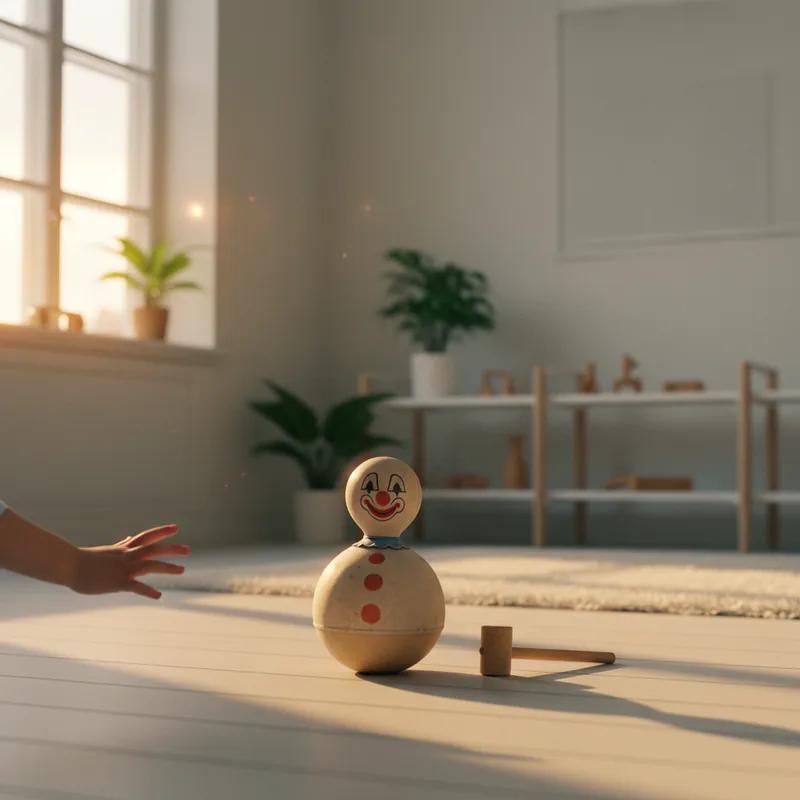
In the first group, children witnessed an adult acting aggressively toward a large inflatable Bobo doll. The adult would punch the doll, strike it with a mallet, and shout aggressive phrases like "Kick him!" and "Pow!"
The second group observed the same adult behaving peacefully--playing with toys and ignoring the Bobo doll entirely. The third group served as a control, with no adult model present at all.
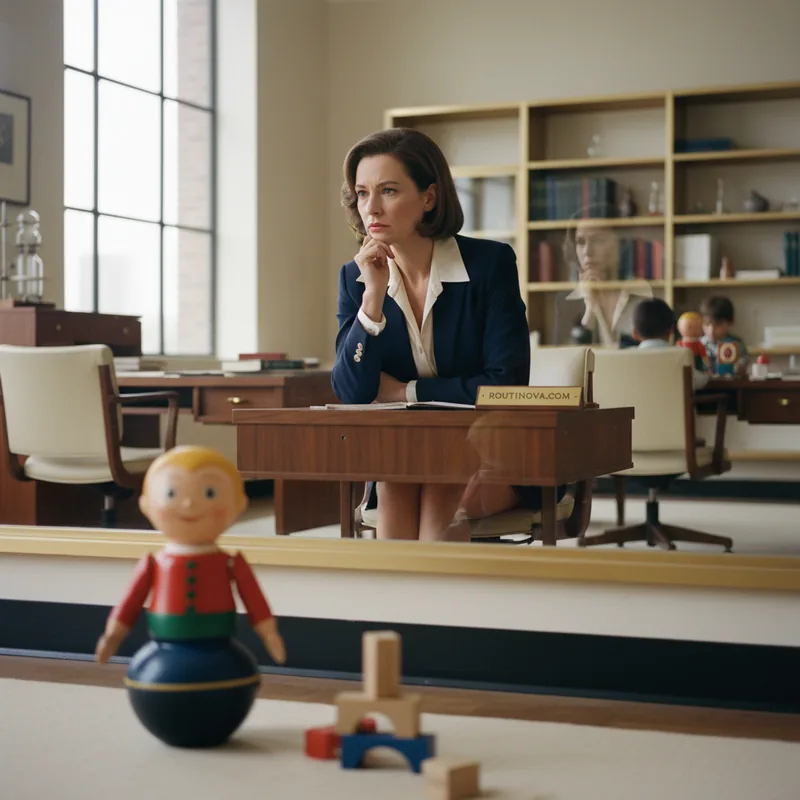
Each child experienced the test individually to prevent peer influence. Researchers used a sophisticated one-way mirror system to observe behavior without interfering with natural responses.
Building Frustration and Testing Observation
After the initial observation period, researchers introduced a deliberate frustration element. Children were shown enticing toys--dolls, fire trucks, airplanes--then told they couldn't play with them.
This carefully calculated step created what psychologists call an "aggression-compatible situation." When frustrated children entered the final playroom, they faced choices about how to express their feelings.
The final room contained both aggressive toys (mallets, dart guns, the Bobo doll) and non-aggressive options (crayons, plastic animals, trucks). Researchers observed each child for 20 minutes, documenting every aggressive act.
Surprising Results and Gender Differences
The findings revealed complex patterns that challenged initial assumptions. Children who witnessed aggression were significantly more likely to imitate those exact behaviors--even when the adult model was no longer present.
Boys demonstrated physical aggression at rates more than double that of girls, echoing societal patterns we observe in the real world. However, the gender dynamics proved even more nuanced.
When children observed same-sex models, they imitated more readily. Boys who watched aggressive men replicated physical violence, while girls who observed aggressive women were more likely to copy verbal aggression.
One unexpected finding emerged: boys who saw non-aggressive female models actually showed more aggression than the control group. This suggested that gender expectations play powerful roles in how children interpret and respond to observed behaviors.
Connection to Social Learning Theory
These results provided crucial evidence for Bandura's social learning theory, which posits that humans acquire behaviors through observation, imitation, and modeling. The theory suggests that we don't just learn from direct experience--we constantly absorb and replicate the actions of those around us.
Think of it like a mirror reflecting social behavior. When children see adults solve problems through aggression, they internalize this as an acceptable strategy. This extends far beyond the laboratory into everyday life.
Consider a child watching a parent slam doors during arguments. Later, that same child might mimic the behavior when frustrated with a sibling. The mechanism is identical to what researchers observed in the Bobo doll experiment.
Real-World Applications and Modern Context
The implications extend into multiple domains of modern life. Understanding what bobo doll experiment teaches us helps explain why workplace bullying persists when leadership fails to intervene.
When managers ignore aggressive behavior, they inadvertently signal that such actions are acceptable. Employees observe this tolerance and replicate the behavior, creating toxic cultures that echo through organizational hierarchies.
Domestic violence research reveals similar patterns. Adolescents who witness abuse at home are significantly more likely to display violent behavior in their own relationships. They've learned that aggression is a legitimate problem-solving tool.
The gaming industry debate also connects to this research. While the direct link between violent games and real-world violence remains complex, Bandura's work reminds us that repeated exposure to aggressive models--whether digital or human--shapes our behavioral repertoire.
Modern parenting practices have evolved accordingly. Many parents now consciously model emotional regulation, knowing their children are constantly absorbing behavioral cues. This represents a direct application of what the Bobo doll experiment revealed.
Ethical and Methodological Criticisms
Despite its influence, the experiment has faced substantial criticism over decades. The most significant concerns center on ecological validity--does hitting a doll truly predict violence against people?
Critics argue that laboratory aggression toward an inflatable object differs fundamentally from real-world violence. The doll was designed to be hit, and children understood this. They weren't truly harming anyone.
Some researchers questioned whether children were actually aggressive or simply performing what they believed adults wanted. The artificial setting might have created demand characteristics, where participants behave in ways they think researchers expect.
Additionally, the study's sample lacked diversity. All participants came from similar socioeconomic and racial backgrounds at a prestigious university, limiting generalizability to broader populations.
Perhaps most concerning from an ethical standpoint, researchers deliberately frustrated children to provoke aggression. Modern ethical standards would heavily scrutinize such intentional distress induction in young participants.
Enduring Legacy and Key Takeaways
What bobo doll experiment ultimately demonstrates is that aggression is learned, not predetermined. This insight has transformed how we approach child development, media influence, and social policy.
The study proved that children can learn positive behaviors just as readily as negative ones. Follow-up research showed that when aggressive models were punished, children were far less likely to imitate them. This offers hope: consequences matter.
For parents, educators, and leaders, the message is clear: we are all models. Every action we take becomes part of someone else's behavioral vocabulary. The responsibility extends beyond our own behavior to how we respond to aggression in our environments.
Whether in homes, schools, workplaces, or media, the principles remain constant. What we tolerate, we teach. What we model, we multiply. Understanding this mechanism empowers us to create healthier, more peaceful communities through conscious modeling of the behaviors we wish to see.