If you've watched a loved one struggle to connect with the present while their past memories remain vivid, you understand the heartbreaking disconnect that dementia and aging can create. There's a powerful, evidence-based approach that bridges this gap--and it doesn't require medication or complex interventions. Understanding how reminiscence therapy works reveals a surprisingly simple yet profoundly effective way to improve quality of life for older adults.
What Is Reminiscence Therapy?
Reminiscence therapy is a structured therapeutic approach that uses sensory triggers and guided conversation to help individuals recall and share meaningful memories from their past. Unlike traditional talk therapy that focuses on present concerns, this method intentionally accesses long-term memories--particularly those from adolescence and early adulthood--to stimulate cognitive function and emotional well-being.
The approach gained recognition in the 1960s when researchers observed that older adults who regularly shared life stories demonstrated improved mood and cognitive engagement. Today, it's recognized as a valuable non-pharmacological intervention supported by numerous studies, including research from Harvard Medical School (2023) showing significant benefits for dementia patients.
What makes reminiscence therapy particularly effective is its accessibility. While professionals use it in clinical settings, families can easily incorporate its principles at home. The core mechanism involves activating the brain's memory centers through multi-sensory experiences, creating neural connections that can improve both mood and cognitive function.
How Reminiscence Therapy Works in Practice
Understanding how reminiscence therapy works requires looking at the brain science behind memory recall. Our brains store emotional memories differently than factual information--they're encoded with sensory details and emotional context. When we smell a familiar scent or hear a song from our youth, these sensory triggers activate the limbic system, which processes emotions and memories.
In clinical settings, therapists use structured approaches to guide memory recall. They might begin with general prompts like "Tell me about your first job" or use specific sensory triggers like playing music from a particular era. The key is creating a safe, non-judgmental space where memories can flow naturally without pressure to remember specific details correctly.
Research from the Mayo Clinic (2024) demonstrates that regular reminiscence sessions can improve verbal fluency and social engagement in older adults with mild cognitive impairment. The process works because it leverages preserved long-term memory pathways while gently exercising cognitive functions that might be declining.
Sensory Techniques That Unlock Memories
The most powerful aspect of how reminiscence therapy works lies in its multi-sensory approach. Different senses access different memory pathways, creating multiple entry points to meaningful recollections.
Visual and Aural Triggers
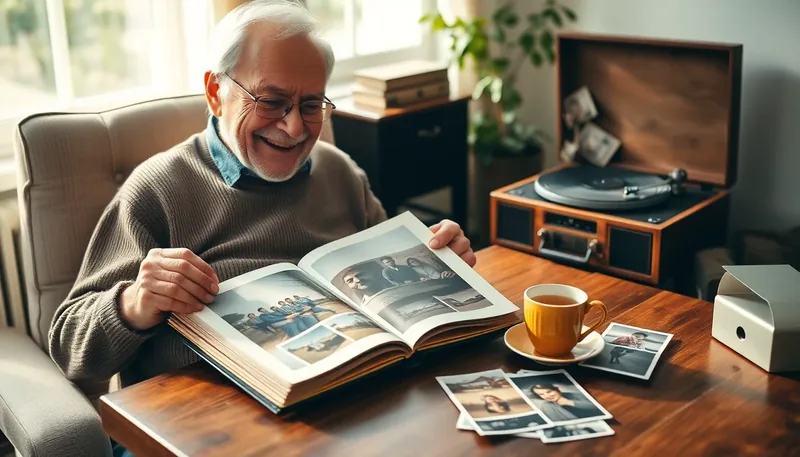
Photographs serve as powerful memory catalysts. Instead of simply showing pictures, try creating a "memory timeline" using photos from different life stages. Ask open-ended questions like "What was happening in your life when this was taken?" or "How did you feel in this moment?" This approach encourages narrative building rather than simple identification.
Music deserves special attention for its remarkable ability to bypass cognitive barriers. Studies show that musical memories remain accessible even when other memories fade. Create personalized playlists featuring songs from three key periods: teenage years (ages 13-19), young adulthood (20s), and significant life events (weddings, births, celebrations). The emotional resonance of these songs often triggers detailed memories and associated stories.
Consider this new example: A daughter discovered that playing her father's college fight song--which she found on a vintage record--consistently sparked memories of his university days, leading to stories she'd never heard about his early career aspirations and friendships.
Taste, Touch, and Scent
The connection between taste and memory is remarkably direct, as taste receptors link directly to brain regions associated with emotion and memory. Recreating traditional family recipes can unlock entire sensory experiences. When baking your grandmother's apple pie recipe together, ask about who taught her to make it, what special occasions featured this dessert, or what the kitchen smelled like when she was learning.
Tactile experiences provide another pathway. Handling meaningful objects--a wedding ring, a military medal, a well-worn book--can trigger detailed memories. The weight, texture, and temperature of objects create somatic memories that often survive when visual memories fade.
Scents represent perhaps the most direct route to emotional memory. The olfactory bulb connects directly to the amygdala and hippocampus, brain regions central to emotion and memory processing. Consider these new applications: Using specific seasonal scents (pine at Christmas, blooming flowers in spring) or recreating the scent of a loved one's signature perfume or aftershave.
Here's an original example: A caregiver found that applying a particular rose-scented hand cream--identical to what her mother used for decades--consistently prompted memories of gardening together and family gatherings in their backyard rose garden.
Clinical Applications and Benefits
Understanding how reminiscence therapy works in clinical settings reveals its versatility across different conditions and populations.
Dementia and Alzheimer's Care
For individuals with dementia, reminiscence therapy offers a rare opportunity to engage meaningfully when current reality becomes confusing. Since long-term memories often remain intact longer than short-term recall, this approach allows patients to access their preserved cognitive abilities. The resulting sense of competence and connection can reduce agitation and improve mood significantly.
Care facilities increasingly incorporate reminiscence rooms--spaces designed with era-specific furniture, music, and objects that help residents feel oriented and comfortable. These environments naturally stimulate memory recall and social interaction without the pressure of direct questioning.
Depression and Late-Life Transitions
Older adults facing depression--particularly following loss, relocation, or health changes--often benefit from life review processes inherent in reminiscence therapy. By examining their life narrative, individuals can identify patterns of resilience, recognize accomplishments, and find meaning in their experiences.
Research indicates that group reminiscence sessions can be particularly effective for depression, as participants not only share their own stories but also witness others' experiences, reducing feelings of isolation. The social validation and connection that emerges in these groups contributes significantly to improved mood.
Practical Implementation for Families
You don't need professional training to benefit from understanding how reminiscence therapy works. Families can incorporate these principles into regular visits and care routines.
Start by creating a "memory box" together--a collection of meaningful objects, photographs, and memorabilia that can serve as conversation starters. Arrange items chronologically or thematically, and use them as visual prompts during visits. The process of selecting and organizing items itself becomes a valuable shared activity.
Develop intergenerational projects that bridge memory and creation. For example, record your parent or grandparent telling stories while grandchildren create illustrations for a family storybook. Or cook traditional recipes together while documenting the process and associated memories in a family cookbook with personal notes.
Consider this new approach: Create "memory playlists" for different activities--songs for morning routines, afternoon relaxation, or family gatherings. Music naturally sets emotional tone and stimulates recall without direct pressure to remember specific events.
When engaging in reminiscence, remember these key principles: Practice active listening without correcting or challenging memories. Embrace emotional responses--both joy and sadness are valid parts of life review. Allow silences--they often precede meaningful recollections. Focus on the emotional truth of memories rather than factual accuracy.
Evidence and Research Support
The effectiveness of reminiscence therapy isn't merely anecdotal. Multiple studies demonstrate measurable benefits across various populations and settings.
A comprehensive review published in Frontiers in Psychology (2023) analyzed 42 studies involving over 2,000 participants and found consistent improvements in depression scores, quality of life measures, and cognitive function tests among older adults participating in structured reminiscence programs. The effects were particularly pronounced for women and individuals with more severe depressive symptoms.
Research from Johns Hopkins (2024) specifically examined music-based reminiscence in dementia care, finding significant reductions in agitation and anxiety markers, along with improved social engagement during and following sessions. The study noted that benefits often persisted for hours after the intervention concluded.
Perhaps most compelling is research showing that regular reminiscence activities can slow cognitive decline in mild to moderate dementia. By exercising memory pathways and maintaining neural connections, this approach supports brain health in tangible ways.
Understanding how reminiscence therapy works ultimately reveals a profound truth: Our memories aren't merely records of the past--they're living resources that can heal, connect, and enrich our present. Whether used professionally or personally, this approach honors life stories while creating meaningful connection in the here and now.