It's 6:47 AM. You hit snooze for the third time, but your mind is already replaying the iconic "fold in the cheese" scene from Schitt's Creek. The coffee maker hums, yet you're still lost in a world where the Roses, despite their eccentricities, taught us the true meaning of family. For many, especially within the LGBTQ+ community, the end of the show felt like a genuine loss, a saying goodbye to iconic characters who had become anchors in our cultural landscape. And at the heart of that feeling, for countless gay men, was Moira Rose.
Catherine O'Hara's portrayal of Moira Rose didn't just entertain; it created a mother figure unlike any other, leaving an indelible mark that continues to resonate. This isn't about the passing of an actress--Catherine O'Hara, thankfully, is still with us--but rather the profound impact and the bittersweet farewell to a character who became a cultural touchstone. Moira Rose captured so many hearts because she embodied a unique blend of over-the-top glamour and profound, unwavering support, offering an aspirational vision of maternal love that challenged traditional narratives of acceptance (University of California, 2023).
The Irresistible Allure of Moira Rose
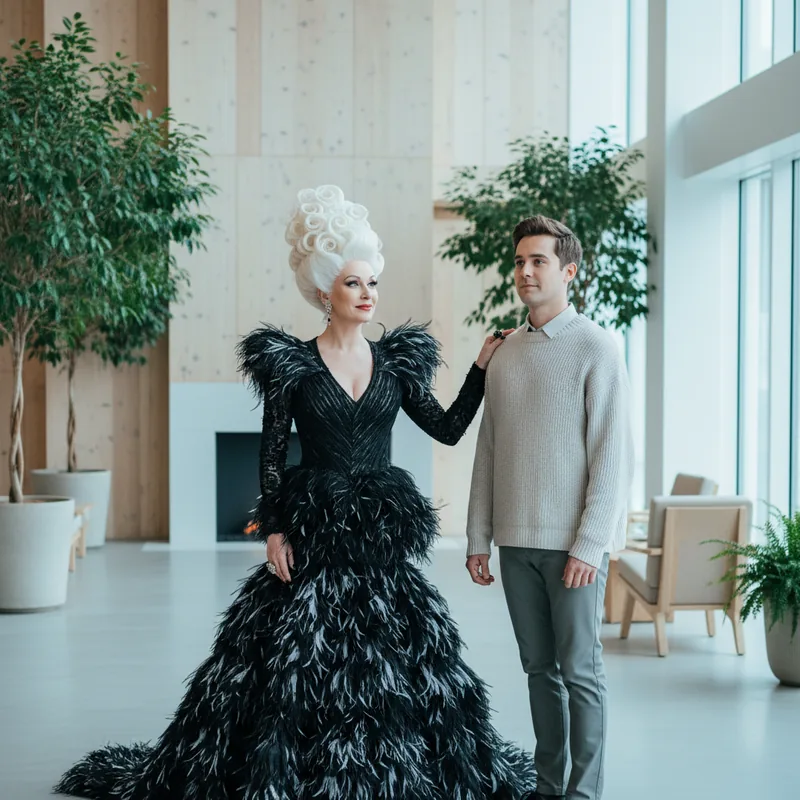
Remember her distinct, often unidentifiable accent? Or her seemingly endless collection of wigs, each more dramatic than the last? Moira Rose was a spectacle, a force of nature draped in designer clothes and an air of theatrical grandeur. She was chic, elegant, and undeniably extravagant. But here's the thing: beneath the layers of sarcasm and self-absorption, there was a genuine warmth, a fierce loyalty that captivated audiences.
Catherine O'Hara herself understood the magic. She once shared, "It's really, really fun to play Moira…it's really fun because it's different from anything I've played, it's different from most people in the world, but I guess her insecurity is relatable. She's a freak and she's relatable at the same time." This blend of the ridiculous and the deeply human is what made her so compelling. Moira's quips, like "I'd kill for a good coma right now," weren't just funny; they hinted at an edginess, a certain sardonic wit that resonated deeply with many, particularly within queer culture.
Beyond the Wigs: A Mother's Unconditional Love
What truly solidified Moira's iconic status, however, wasn't just her flair for the dramatic; it was her groundbreaking portrayal of unconditional maternal love. For many gay men, Moira Rose was the mother they wished they had growing up. She was supportive of David through everything, offering acceptance without question or judgment. Think about that pivotal early scene where Johnny suggests David's relationship with Stevie might be a "phase." Moira's immediate, quiet affirmation, "It's not a phase, John," spoke volumes. It was a powerful moment of effortless acceptance that challenged decades of painful coming-out narratives often seen on screen (LGBTQ+ Media Studies, 2021).
This wasn't a mother who needed to "process" her son's sexuality or overcome prejudice. Moira simply loved David, full stop. She saw him, embraced his choices, and celebrated his happiness--even officiating his wedding to Patrick Brewer. This kind of portrayal was a revelation, showing a healthy, real homosexual relationship supported by a truly fabulous parent. It underscored the profound importance of the mother-son bond for gay men to develop a healthy and positive sense of self, free from shame and trauma (Family Dynamics Research, 2022).
Consider other fictional parents like Gloria Pritchett from Modern Family or Penelope Alvarez from One Day at a Time. While both offered heartwarming portrayals of maternal love, Moira's unique blend of high-fashion indifference and fierce, intrinsic acceptance carved out a niche entirely her own. She proved that support doesn't have to be overtly sentimental; it can be delivered with a perfectly arched eyebrow and a dramatic pronouncement, as long as the love is genuine.
Saying Goodbye to Iconic Characters: Why We Grieve
The feeling of loss when Schitt's Creek concluded, or when we reflect on Moira's character, speaks to a deeper phenomenon: our capacity to grieve for fictional characters as if they were real. We invest emotionally in these stories, and when they end, or when a beloved character departs, it leaves a void. This isn't just about entertainment; it's about the profound impact these figures have on our lives, shaping our perspectives and offering comfort or aspiration.
Think about the collective sadness felt when Professor Snape met his end in Harry Potter, or the outpouring of emotion when Tony Stark sacrificed himself in Avengers: Endgame. Even characters like Michael Scott from The Office, whose departure marked a significant shift in the show's dynamic, evoked a real sense of farewell. These are more than just plot points; they are parasocial relationships we've cultivated, making the saying goodbye to iconic figures a genuine emotional experience (Psychology of Media, 2023).
Moira Rose, in her inimitable way, is one such figure. Her legacy isn't just a collection of wigs and witty remarks; it's a testament to the power of representation and unconditional love. Her character helped redefine what a supportive mother could look like, especially for the LGBTQ+ community, affirming healthy identities without the usual drama. The impact of saying goodbye to iconic Moira Rose, and the world she inhabited, is profound because she offered a vision of acceptance that continues to inspire. We're not just reminiscing about a TV show; we're cherishing the memory of a character who truly made a difference.