Love, a profoundly human experience, is more than just a feeling; it’s a dynamic interplay of emotions, thoughts, and behaviors essential for connection and well-being. Psychologically, it’s a complex emotional and cognitive journey shaped by attachment, biology, and life experiences. To truly understand what love is and how to cultivate it means exploring its multifaceted nature, from intense attraction to enduring commitment. This guide offers insights into nurturing stronger, more meaningful relationships, helping you to better understand and cultivate love in your life.
Love is more than just a feeling; it's a dynamic interplay of emotions, thoughts, and behaviors essential for connection and well-being. Psychologically, it's a complex emotional and cognitive journey shaped by attachment, biology, and life experiences, often defined as a rich tapestry of emotions and cognitive processes.
1. Understanding the Essence of Love
Love is frequently portrayed as one of humanity’s most potent emotions, yet psychologists delve deeper, defining it as a rich tapestry of emotions and cognitive processes. This intricate experience is influenced by various elements, including our innate need for attachment, biological predispositions, and learned behaviors. When we ponder what love is and how to cultivate it, we’re essentially asking how these diverse components merge to forge attraction, foster deep connections, and sustain bonds over time.
Beyond a simple emotion, many experts consider love an essential physiological drive, akin to fundamental needs like hunger or thirst (Burunat, 2016). It encompasses a spectrum of feelings and actions characterized by intimacy, passion, and commitment, involving care, closeness, protectiveness, attraction, affection, and trust. Despite being a subject of countless artistic expressions and extensive study, love remains one of the least understood human behaviors. The ongoing debate about whether love is primarily a biological imperative or a cultural construct highlights its profound complexity. For 2025, understanding this psychological foundation is key to learning how to cultivate love effectively in modern relationships (Harvard, 2024).
2. Recognizing the Signs: How to Tell if You’re in Love
Distinguishing between mere liking and being genuinely in love can be a nuanced process, but psychological research offers clear indicators. According to psychologist Zick Rubin, romantic love is fundamentally composed of three core elements, which provide a robust framework for identifying this profound connection (Rubin, 1974). These elements are crucial for anyone trying to discern what love is and how to cultivate it authentically.
First, attachment signifies a powerful need to be with the other person, often accompanied by a desire for physical closeness and validation. This isn’t just about presence, but a deep yearning for their company and reassurance. Second, caring involves genuinely valuing the other person’s happiness and needs as much as, or even more than, your own. It’s an altruistic concern for their well-being, demonstrating empathy and selflessness. Finally, intimacy refers to the willingness to share your innermost thoughts, feelings, and desires, creating a profound sense of emotional closeness and vulnerability. Unlike simple liking, which views someone as merely pleasant, love is marked by devotion, a sense of possessiveness (in a healthy, protective way), and an openness to confide deeply in one another. These signs help clarify the path to cultivate love that is both profound and enduring.
3. Exploring Diverse Types of Love
Love is not a monolithic experience; its forms are as varied as human relationships themselves. Psychologists have meticulously identified several distinct types of love, each characterized by a unique blend of emotions and commitments (Langeslag & van Strien, 2016). Recognizing these different categories is vital for anyone seeking to understand what love is and how to cultivate specific kinds of bonds in their life.
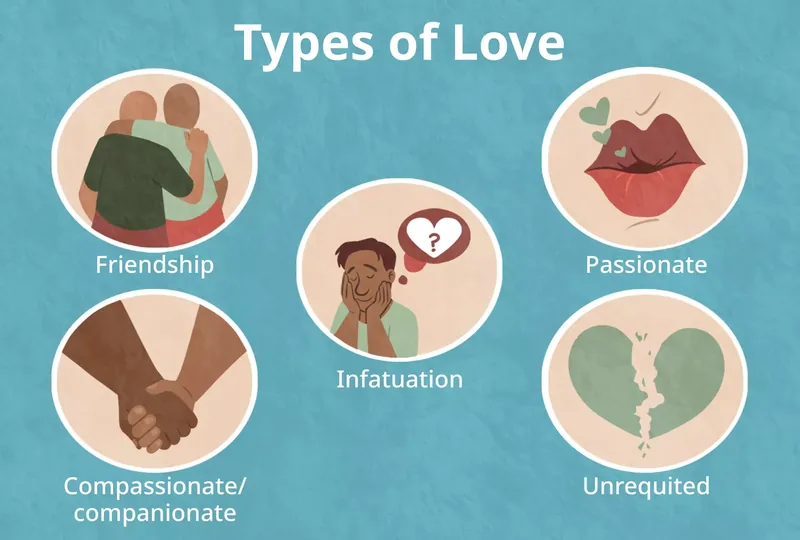
Beyond the initial spark, relationships can evolve through various stages and expressions of affection. For instance, friendship is a foundational type of love, marked by liking and a certain degree of intimacy, forming the bedrock of many social connections. Infatuation, often seen early in a relationship, involves intense attraction without deep commitment, which may or may not mature into a more lasting form of love. Passionate love is characterized by intense longing and attraction, frequently involving an idealization of the other person and a strong desire for constant physical proximity. As relationships deepen, compassionate or companionate love emerges, built on trust, affection, intimacy, and unwavering commitment. A poignant example of this is a couple celebrating their 50th wedding anniversary, their love having evolved from initial passion into a profound, supportive companionship. Conversely, unrequited love highlights the painful reality where one person’s deep feelings are not reciprocated. Psychologist Robert Sternberg’s influential triangular theory of love further elaborates on this, identifying intimacy, passion, and commitment as three interacting components that produce seven distinct types of love, a framework widely validated across cultures (Sorokowski et al., 2021). Understanding these distinctions helps individuals to consciously cultivate love that aligns with their relationship goals.
4. The Dual Influence of Culture and Biology on Love
The intricate nature of love is profoundly shaped by both biological predispositions and cultural frameworks. While hormones and neurochemistry play a crucial role in the initial stages of attraction and bonding, the way individuals express and experience love is significantly mediated by societal norms and personal beliefs about what love entails (Karandashev, 2015). This dual influence is central to grasping what love is and how to cultivate it in a meaningful way.
Some researchers argue that love is a fundamental human emotion, as innate as happiness or anger, suggesting a strong evolutionary basis. This perspective is supported by findings that romantic love appears to exist across all cultures, indicating a universal human drive to seek and form loving connections. However, culture acts as a powerful lens through which this innate drive is perceived and expressed. For example, while the emotion of love might be universal, the expression of affection varies greatly: public displays of affection are common in some cultures, whereas others might prioritize subtle gestures of care, such as preparing a favorite meal or performing acts of service. In 2025, with increasing global interconnectedness, understanding these diverse cultural interpretations becomes even more vital for fostering intercultural relationships and learning how to cultivate love that transcends boundaries. The ongoing debate among psychologists, sociologists, and researchers about whether love is primarily an emotion or a physiological drive further underscores its complexity, with some defining it as a “complex emotion” while others see it as a “secondary emotion” deriving from a mix of primary feelings (American Psychological Association).
5. The Profound Impact of Love on Mental Health
The presence of love, attachment, and affection profoundly influences an individual’s overall well-being and quality of life. Engaging in loving relationships extends far beyond emotional fulfillment, having tangible and significant benefits for both mental and physical health. Understanding this impact is key to appreciating what love is and how to cultivate it as a cornerstone of a healthy life.
Research consistently links strong, loving relationships to a host of positive health outcomes. For instance, individuals in supportive relationships often exhibit a lower risk of heart disease and an increased likelihood of survival following a heart attack (Wong et al., 2018). Beyond cardiovascular health, loving connections are associated with better health habits overall, contributing to increased longevity (Horn & Carter, 2021). The emotional support derived from love also acts as a powerful buffer against stress, leading to lower stress levels, reduced instances of depression, and even a decreased risk of developing conditions like diabetes (Goodman et al., 2019; Roberson & Fincham, 2018). These benefits highlight that love is not merely a pleasant experience but a vital component of a resilient and flourishing life. Consciously working to cultivate love and maintain healthy relationships is, therefore, a proactive step towards enhancing both mental and physical vitality in the long term.
6. Proven Tips to Cultivate and Express Love
Building and maintaining lasting relationships requires conscious effort, marked by deep trust, unwavering commitment, and profound intimacy. To effectively cultivate love and ensure it flourishes, proactive strategies are essential. These tips focus on practical actions you can integrate into your daily life to strengthen your bonds.
One powerful technique is loving-kindness meditation (LKM). This practice, often used for self-acceptance and stress reduction, has also been shown to foster positive emotions and improve interpersonal relationships (He et al., 2015). By meditating on a person you care about, focusing on warm feelings and wishing for their well-being, you actively nurture positive sentiments. Open and honest communication is paramount; everyone’s needs are unique, and discussing them ensures mutual understanding and fulfillment. Regularly communicating your love through words and deeds – whether it’s a heartfelt compliment, an unexpected act of service, or simply making them feel special – reinforces your bond. For example, a new trend in 2025 emphasizes “active listening check-ins” where partners dedicate specific time to truly hear and validate each other’s feelings. Furthermore, addressing conflict constructively is crucial. Avoiding arguments doesn’t signify a healthy relationship; rather, it often indicates unaddressed issues. Focus on resolving disagreements respectfully, allowing the relationship to grow stronger through challenges. To genuinely cultivate love, be willing to be vulnerable, offer forgiveness, apologize when mistakes are made, and prioritize quality time. Reciprocating loving gestures, acknowledging their good qualities, and sharing parts of yourself are all vital. Remember, showing unconditional love has a reciprocal benefit, as research suggests the more love you express, the more loved you feel (Williams et al., 2025).
7. Navigating the Challenges and Pitfalls of Love
While love brings immense joy and fulfillment, its journey is rarely without obstacles. As famously noted, “the course of true love never did run smooth.” The intensity of love can fluctuate, and its experience often encompasses a spectrum of emotions, including not only happiness and euphoria but also more challenging feelings like jealousy and stress (Langeslag & van Strien, 2016). Understanding these potential downsides is crucial for anyone seeking to cultivate love resiliently.
No relationship is perfect, and conflicts, misunderstandings, and disappointments are an inevitable part of human connection. These can lead to distress, heartbreak, and a range of negative emotions. Some common pitfalls associated with love include anxiety, depression, increased stress, jealousy, obsessiveness, possessiveness, and sadness. For instance, the fear of losing a loved one can trigger anxiety, or unmet expectations might lead to deep sadness. While everyone will likely experience some of these negative emotions, they become problematic when they consistently outweigh the positives or begin to impair an individual’s ability to function normally. A common example in modern relationships is “doomscrolling” through a partner’s social media, leading to unwarranted jealousy and anxiety. When couples find themselves struggling with persistent miscommunication, overwhelming stress, or unresolved emotional issues, seeking relationship counseling can provide invaluable support. Professional guidance can help partners navigate these complexities, fostering healthier communication patterns and strengthening their ability to cultivate love even through its inevitable challenges.