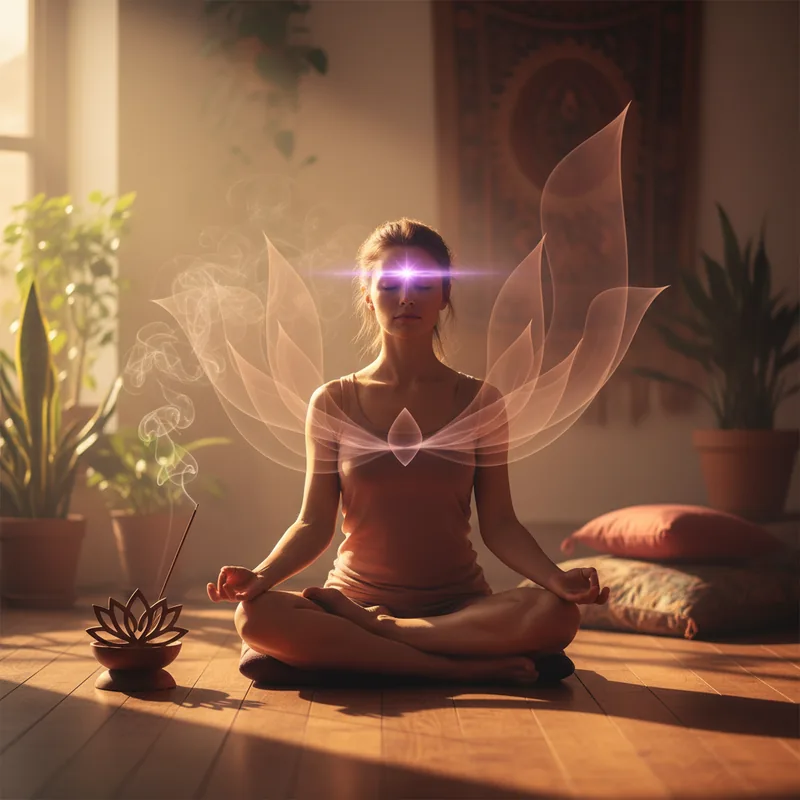
Elara had always prided herself on being logical, grounded. Yet, lately, a persistent unease nagged at her, a feeling that she was missing something crucial, an unspoken language of her own soul. Decisions felt heavy, intuition a whispered rumor she couldn't quite decipher. One evening, scrolling through a meditation app, she stumbled upon a guided practice focused on the 'third eye.' Skeptical but desperate for clarity, she closed her eyes. As the soothing voice guided her to visualize a gentle light between her brows, a warmth bloomed, a subtle tingling sensation she’d never experienced before. That night, her dreams were unusually vivid, almost prophetic, and the next morning, a clear path forward for a long-standing dilemma simply appeared in her mind. It was as if a veil had lifted, revealing a deeper layer of understanding she hadn't known existed.
What Exactly is the Third Eye?
The 'third eye,' often called the 'Seat of the Soul,' isn't a physical organ in the conventional sense. Instead, it’s an energetic center, typically visualized between your eyebrows, deeply rooted in spiritual traditions like Taoism, Buddhism, and Hinduism. It's considered the sixth primary chakra in Hinduism, often represented by the tilaka, and for Buddhists, it symbolizes mindfulness and awakening. This isn't about gaining a literal extra eye; it’s about accessing a profound source of inner wisdom and intuition that can transform your spiritual journey. Many believe that activating this energy center, particularly through its connection to the pineal gland, is key to unlocking heightened perception and a deeper connection to the universe.
While the concept isn't validated by modern scientific evidence, its presence in millennia-old spiritual and religious traditions speaks to its enduring significance. The pineal gland, a tiny endocrine gland near the center of the brain, is often linked to the third eye. It produces melatonin, regulating our sleep cycles, and has a long history in spiritual discourse (Gheban et al., 2019). Holistic practitioners believe that stimulating this gland can lead to a heightened sense of intuition, clarity of thought, and increased awareness (Rodriguez, Astrologer).
Some theories even suggest the pineal gland might secrete N,N-dimethyltryptamine (DMT) during dreaming or near-death experiences, though research on its psychoactive effects from this source is inconclusive (Nichols, 2018). Regardless of the scientific debate, the spiritual understanding of this center persists as a powerful metaphor for inner awakening (Savva & Turner, 2022).
Why Cultivating Your Inner Vision Matters for Well-being
Understanding how opening your third eye influences your mental landscape goes beyond just spiritual insight. It’s about enhancing your self-awareness, sharpening your intuition, and deepening your sense of connection to yourself and the world around you. Think about it: when you feel more connected internally, external pressures often feel less overwhelming.
Angel Dawn, an international psychic astrologer, emphasizes its role: “The third eye is a crucial energy center that is vital to strengthening one's intuition and general mental and emotional intelligence. It is also tied to the subconscious and accessing the memories that lie therein.” This access to deeper self-knowledge can be a game-changer for your emotional health.
A Path to Less Anxiety and More Balance
Activating your third eye can promote emotional balance and clarity. When you’re more attuned to your inner self, you might find yourself less swayed by external chaos. People who engage in third eye practices often report feeling more grounded and resilient. Raquel Rodriguez notes that when the pineal gland is activated, it can lead to a heightened sense of intuition and clarity, which in turn “will lead to a decrease in anxiety and depression thus bringing about a sense of inner peace” (Rodriguez, Astrologer).
Consider the executive who, after years of pushing through stress, finally recognized the subtle bodily cues signaling burnout, leading them to prioritize rest and mindfulness. This deeper understanding of self, a hallmark of an awakened inner vision, is precisely what how opening your third eye can offer.
Sparking Creativity and Imagination
Beyond emotional regulation, cultivating your third eye can significantly boost your creative faculties. Griff Williams, founder of MindEasy and a meditation teacher, explains that “opening your third eye can also improve your creativity, imagination, focus, and understanding of yourself.”
Perhaps you've felt stuck on a creative project, only for a brilliant solution to flash into your mind during a quiet moment. This surge of inspiration, a common benefit of how opening your third eye, might feel like a sudden download of ideas. It’s about tapping into a wellspring of innovative thought that often remains dormant.
Practical Methods for Activating Your Third Eye
Unlocking your third eye isn't about force; it's about gentle, consistent practice. Here are a few accessible techniques that can help you begin this journey:
Yoga and Mindful Movement
Yoga is more than just physical exercise; it’s a powerful practice for grounding your body and calming your mind. Specific poses are believed to stimulate the pineal gland and activate the third eye. Rodriguez suggests poses like downward-facing dog or child’s pose can be particularly effective. Incorporating these into your routine can create a welcoming space for inner exploration.
Breathing Practices (Pranayama)
Your breath is a direct link to your inner state. Mindful breathing practices can be incredibly potent for activating your third eye, according to Williams. Techniques like alternate nostril breathing (Nadi Shodhana) or diaphragmatic breathing help to center your energy and quiet the mental chatter, making space for intuition to emerge. Other beneficial methods include coherent breathing, box breathing, and 4-7-8 breathing.
Visualization Techniques
The mind is an incredibly powerful tool. Simply picturing something can evoke its sensation. Rodriguez suggests visualization techniques where you “close your eyes and visualize a glowing, violet light at the center of your forehead. Imagine this light growing brighter and expanding, filling your entire head and body with a sense of awareness and clarity.” This practice helps to focus your intention and open your energetic pathways.
Meditation and Mindfulness
Few practices connect you with your inner self as deeply as meditation. Rodriguez explains, “Meditation is a powerful tool for quieting the mind and gaining a greater sense of awareness.” To specifically target the third eye, she recommends finding a quiet space, focusing on your breath, and imagining “a bright light entering through the top of your head and filling your entire body.” Williams also suggests concentrating directly on the space between your eyebrows or adding that glowing light visualization to this area. The longer you can maintain a consistent meditation practice, the more the third eye strengthens, allowing intuitive gifts to blossom (Dawn, Psychic Astrologer). These practices illustrate how opening your third eye is a journey of self-discovery.
Chanting and Vibration
The act of chanting is a key aspect of many spiritual practices. Reciting specific mantras, like 'Om' or 'Aum,' can resonate with the third eye's vibrational frequency, helping to open and activate it (Williams, Meditation Teacher). The sound creates an internal vibration that can stimulate this energetic center, fostering a sense of inner peace and clarity.
Recognizing the Signs of an Awakened Third Eye
If you're wondering how opening your third eye feels, know that the experience is deeply personal. There's no universal checklist, but common signs often emerge. Some people describe subtle physical sensations, like a tingling, pressure, or a mild vibration at the spot between their eyebrows. It might feel like a gentle hum or a warmth.
Beyond physical sensations, you might notice a shift in your mental and emotional landscape. Dreams can become more vivid, symbolic, or even prophetic. Your intuition, that quiet inner voice, might grow louder and clearer, guiding your decisions with newfound confidence. Think of a time you had a strong gut feeling about a decision, even when logic pointed elsewhere, and it turned out to be spot-on. That's your intuition, your third eye's whisper, guiding you. You might also experience increased clarity of thought, a stronger sense of purpose, or simply feel more connected to the spiritual dimensions of life. This journey of understanding how opening your third eye impacts your life is unique to you, unfolding at its own pace.