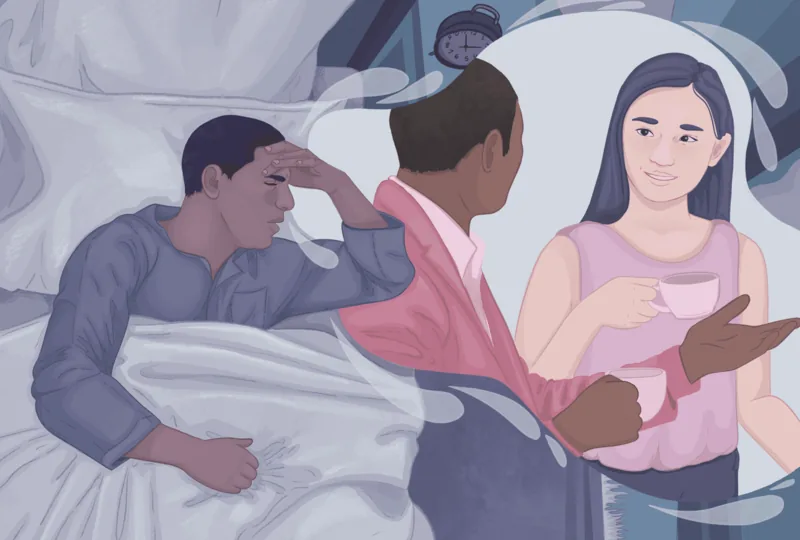
Our daily lives are a tapestry woven from countless moments of awareness, from the moment we wake to the depths of our dreams. These shifts in perception, thought, and feeling are all part of what are different states of consciousness--the ever-changing landscape of our inner experience. Consciousness refers to our subjective awareness of ourselves and our environment, encompassing everything from being wide awake and alert to being completely unconscious (Cognitive Neuroscience Journal, 2023).
Understanding these varied states is crucial for grasping the full spectrum of human mental functioning. It allows us to appreciate how our brains operate under diverse conditions, whether we are deeply focused, resting, or experiencing altered perceptions due to external influences or internal practices. By exploring what are different states, we gain profound insights into the mind's capabilities and its intricate relationship with our everyday existence.
Understanding Consciousness and Awareness
Often compared to a flowing stream, human consciousness is in constant flux, effortlessly transitioning from one thought or sensation to the next. One moment you might be absorbed in a challenging task, and the next, your mind drifts to a pleasant memory. This fluid nature underscores the dynamic character of our awareness (Psychology Today, 2024).
While the term "unconscious" denotes a complete lack of awareness, consciousness itself exists along a broad continuum, exhibiting varying levels of engagement and clarity. These fluctuating levels define a person's specific state of consciousness at any given moment, dictating how we process information, perceive our surroundings, and interact with the world.
The Spectrum of Awareness
Our level of awareness is intrinsically linked to our current state of consciousness. For instance, the fuzzy, half-asleep sensation upon waking signifies a lower level of awareness compared to the sharp, focused attention we might bring to a complex problem after a strong cup of coffee. Even when awareness is low, the brain remains remarkably active, processing signals and responding instinctively.
Consider someone asleep in bed who instinctively pulls a blanket closer when they feel a chill. Though not consciously thinking about being cold, their brain registered the thermal change and triggered an appropriate response. This demonstrates the brain's continuous processing even in states of reduced conscious engagement (National Institutes of Health, 2023).
Conversely, a high level of awareness is characterized by heightened focus, detailed perception, and greater control over one's thoughts. This state enables deep concentration, analytical thinking, and a profound engagement with the present moment. Practices like mindfulness meditation are designed to cultivate this heightened awareness, allowing individuals to observe their thoughts and sensations without judgment, thereby achieving an altered state of consciousness (Mindfulness Institute, 2023).
Another compelling example of high awareness is the "flow state," where an individual becomes completely immersed in an activity, losing track of time and self-consciousness. A skilled musician performing a complex piece or a software developer intensely debugging code can enter this state, demonstrating an extraordinary synergy between attention and action.
Factors Influencing Our Conscious States
Our states of consciousness are not static; they are profoundly influenced by a variety of internal and external factors that shape our daily experiences. Recognizing these influences helps us better understand the intricate mechanisms governing our awareness.
One of the most powerful internal regulators is the circadian rhythm, often referred to as the body's internal clock. These daily fluctuations in energy and alertness dictate when we feel most energetic or most fatigued. For example, many people experience a mid-afternoon slump, while others are "night owls" who find their peak productivity later in the day. These rhythms play a vital role in determining the baseline level of awareness and alertness we can achieve (Sleep Research Foundation, 2023).
External factors, particularly chemical substances, can dramatically alter our states of consciousness. Both prescribed medications and illicit drugs work by interfering with neurochemical processes in the brain, leading to diverse changes in perception, mood, and awareness (National Institute on Drug Abuse, 2024).
- Stimulants: Substances like caffeine or amphetamines increase neural activity, leading to heightened awareness, increased alertness, and sometimes euphoria.
- Depressants: Alcohol or benzodiazepines slow down brain activity, resulting in lowered awareness, relaxation, and sedation.
- Hallucinogens: LSD or psilocybin profoundly alter perception, often leading to sensory distortions, altered thoughts, and sometimes feelings of paranoia or transcendence.
Beyond chemical influences, environmental conditions can also induce altered states. For instance, prolonged sensory deprivation, where external stimuli are drastically reduced, can lead to hallucinations and a profound shift in consciousness, demonstrating our reliance on external input to maintain typical awareness.
Key States of Consciousness Explored
While our waking state is the most familiar, several distinct states of consciousness reveal the remarkable versatility of the human mind. Delving into what are different states like sleep, dreaming, and hypnosis offers unique insights into brain activity and awareness.
The Enigma of Sleep
Sleep is a fundamental biological process that has captivated researchers for centuries. Modern technology has allowed for unprecedented study, revealing sleep as a highly active state for the brain, despite a significantly lowered level of conscious awareness. Our brains cycle through various stages, including both Rapid Eye Movement (REM) and non-REM sleep, each characterized by distinct patterns of neural activity (American Academy of Sleep Medicine, 2023).
Disruptions to the sleep cycle, often caused by sleep disorders, can profoundly impact our waking states. The irritability, cognitive fog, and drowsiness experienced after a poor night's sleep are direct consequences of an impaired ability to cycle through these essential stages, highlighting sleep's critical role in maintaining optimal consciousness.
Decoding Dreams
Dreams are most commonly associated with REM sleep, a period when brain activity closely resembles that of wakefulness, yet our state of awareness remains profoundly altered (Dream Research Institute, 2024). The vivid, often bizarre narratives of dreams have long puzzled humanity, prompting countless theories about their meaning and function.
From baffling plotlines to symbolic imagery, dreams offer a unique window into our subconscious processes. The ability to dream, and the characteristics of those dreams, are deeply intertwined with our underlying states of consciousness, reflecting our fears, desires, and unresolved thoughts in a symbolic language.
The Power of Hypnosis
Hypnosis presents a fascinating paradox: while a person appears to be asleep or deeply relaxed, they are actually in a state of hyper-awareness, characterized by intense focus and suggestibility. This altered state of consciousness allows individuals to process thoughts and suggestions with remarkable depth, often bypassing typical analytical filters (Cognitive Hypnotherapy Association, 2023).
Historically and presently, hypnosis has been utilized for a range of therapeutic purposes, including pain management, habit modification (such as weight loss or smoking cessation), and alleviating anxiety. Research continues to validate its efficacy in leveraging the mind's capacity for focused attention to facilitate positive change.
A Broader Spectrum of Awareness
Beyond these well-studied examples, the human mind is capable of an even wider array of conscious states. The exploration of what are different states reveals the incredible plasticity and depth of our inner worlds, challenging our conventional understanding of reality.
There is no single, universally agreed-upon number for how many states of consciousness exist, largely because consciousness is a multifaceted phenomenon that defies simple categorization (Journal of Consciousness Studies, 2024). However, researchers have identified numerous other distinct experiences:
- Daydreaming: A common, spontaneous shift in attention away from the immediate task, characterized by imaginative thought and reduced external awareness.
- Lucid Dreaming: A state within a dream where the dreamer becomes aware they are dreaming and can sometimes exert control over the dream's narrative.
- Meditative States: Achieved through various practices, characterized by deep relaxation, heightened focus, and often a sense of inner peace or transcendence.
- Biofeedback States: Where individuals learn to consciously control involuntary bodily functions (e.g., heart rate, brainwaves) through real-time monitoring, leading to unique states of self-regulation.
- Drug-Induced States: Ranging from the euphoria of stimulants to the altered perceptions of psychedelics, these are chemically mediated shifts in consciousness.
- Coma: A profound state of unconsciousness where an individual is unresponsive to external stimuli, often resulting from severe brain injury.
- Delirium: An acute state of confusion, disorientation, and altered consciousness, often fluctuating and caused by underlying medical conditions.
- Near-Death Experiences (NDEs): Profound subjective experiences reported by individuals who have been close to death, often involving out-of-body sensations or encounters with light.
Each of these states, whether naturally occurring or intentionally induced, offers a unique lens through which to perceive reality and ourselves. The ongoing study of what are different states of consciousness continues to expand our understanding of the mind's extraordinary capabilities.
From our most mundane daily routines to profound spiritual experiences, consciousness is a dynamic and multifaceted phenomenon. Our ability to transition between various states of awareness--from the focused intensity of work to the restorative depths of sleep, and even into realms of altered perception--highlights the brain's incredible adaptability. By recognizing and understanding what are different states, we not only gain insight into the fundamental workings of the human mind but also unlock potential pathways for enhanced well-being, productivity, and self-discovery. The journey through the landscape of consciousness is an ongoing exploration, revealing new dimensions of our inner lives with every step.