The global wearable technology market is projected to exceed $150 billion by 2027, underscoring a relentless drive for innovation in personal health (TechInsights, 2024). At CES 2026, the world's premier tech showcase, the biggest fitness trends at the forefront were undoubtedly the proliferation of advanced screenless smart bands, a surge in versatile smart rings, and the surprising emergence of consumer-grade exoskeletons. While familiar fitness watches saw incremental updates, the real excitement lay in these novel form factors and groundbreaking assistive technologies, promising to redefine how we monitor and enhance our well-being.
The Rise of Next-Gen Smart Bands
The landscape of screenless fitness trackers has expanded dramatically, moving beyond single-player dominance. What began as a niche trend in 2025 has truly blossomed, with several compelling alternatives to established brands now entering the market. These sleek, unobtrusive devices offer continuous health monitoring without the distraction of a screen, focusing purely on data collection and insightful analytics.
Among the most anticipated new entrants is the Luna Band, poised to ship within the coming months. Priced at $149 with no subscription required, it integrates seamlessly with an existing health ecosystem, leveraging advanced sensor technology for precise data capture. Its manufacturer, Noise, a leading smartwatch brand in India, is making a significant push into the U.S. wearables market, bringing a fresh perspective to personal health tracking.
A notable software innovation accompanying the Luna Band is an upcoming feature allowing users to input voice notes to contextualize their health data. Imagine telling the app you enjoyed a few glasses of wine; it then intelligently correlates this input with subsequent sleep quality, offering tailored advice like hydration reminders instead of generic nap suggestions. This intelligent contextualization promises a more personalized and actionable health experience.
Another intriguing development comes from Speediance, which showcased its new Speediance Strap prototypes. While further from market, this strap aims to provide comprehensive sleep and recovery data, with core metrics accessible without a subscription. More advanced analytics, however, will be reserved for a premium tier, reflecting a common industry model for monetizing deeper insights.
Beyond these, a new concept, the BioSense Patch, was also previewed. This ultra-thin, adhesive patch, designed for short-term, intensive monitoring (e.g., during athletic training or recovery from illness), offers hyper-accurate biometric data, including lactate levels and specific electrolyte balances, directly to a paired app. While not a permanent wearable, its specialized application highlights a trend towards targeted, high-fidelity data collection.
Smart Rings: A Growing Ecosystem
Once a novel concept, smart rings are rapidly becoming a ubiquitous presence in the wearable tech space. The market, previously dominated by a few key players, is now experiencing an explosion of innovation, with rings offering a diverse range of functionalities beyond traditional fitness tracking. From NFC payments and AI voice processing to haptic alerts, these discreet devices are packing powerful technology into a minimalist form factor.
Several brands are vying for attention, including the charmingly simple Pebble Ring ($75), which prioritizes ease of use. More feature-rich options include the Evie Ring ($323), the Circular Ring, and the Ultrahuman Ring Air, each pushing the boundaries of what a finger-worn device can achieve. This diversification underscores a consumer demand for unobtrusive yet powerful health and convenience tools.
RingConn unveiled its third-generation smart ring, integrating ambitious new features such as blood pressure insights - a claim that warrants careful scrutiny given the challenges of wrist-based blood pressure monitoring (Harvard Health, 2023). More intriguingly, the new RingConn model includes haptic alerts, enabling smart alarms that gently buzz to wake users at optimal points in their sleep cycle. This blend of health monitoring and practical utility positions smart rings as a compelling alternative to traditional wristwear.
Another innovative concept spotted was the AuraLink Ring, designed specifically for stress management. This ring continuously monitors heart rate variability and skin conductance, providing real-time haptic feedback when stress levels elevate, prompting users to engage in guided breathing exercises via a companion app. Its focus on mental well-being represents a significant expansion of the smart ring's utility.
The Evolution of Smartwatches and Beyond
While the biggest fitness trends at CES 2026 primarily revolved around newer form factors, smartwatches continue their steady, albeit less revolutionary, evolution. Major players often operate on independent release cycles, meaning CES isn't always the stage for their biggest announcements. However, brands like Amazfit did introduce refinements, such as the new Amazfit Active Edge ($169), focusing on enhanced durability and updated software features rather than radical hardware overhauls.
The relative stagnation in smartwatch innovation stems from a maturity in their core functionalities. Most fitness and health tracking needs are already well-covered, leading to incremental improvements in battery life or the addition of secondary features like flashlights or microphones. As one expert noted, "tech launches don't feel magical anymore, partly because we don't have many problems left that consumer tech can easily solve" (Johnson, 2024). This sentiment highlights a shift from hardware-centric innovation to service-based value propositions.
Companies like Garmin are increasingly focusing on enriching their subscription services, as evidenced by the expansion of its Connect+ subscription to include advanced nutrition tracking. Similarly, Oura is rolling out its promised blood biomarker analysis, and Ultrahuman announced a limited-time free tier for its comprehensive biomarker testing, offering 20+ markers. These developments signify a pivot towards deeper, personalized insights derived from data, rather than solely relying on new device capabilities.
The integration of artificial intelligence (AI) was, predictably, a pervasive theme, though rarely the headline feature. Companies generally understand that while AI enhances user experience--such as identifying foods from photos (Garmin, Amazfit) or finding patterns in health data--users purchase devices for their tangible benefits, not just the underlying AI algorithms. A promising, yet unseen, innovation was Merach's AI-powered personal trainer device, which unfortunately wasn't available for demonstration.
A speculative but exciting development in this space is the concept of Adaptive Biometric Fabrics. Imagine workout gear embedded with micro-sensors that dynamically adjust compression or temperature based on real-time biometric feedback during exercise, providing optimal support and recovery. This seamless integration of tech into everyday apparel represents a future where wearables are truly invisible.
Exoskeletons: A Futuristic Stride
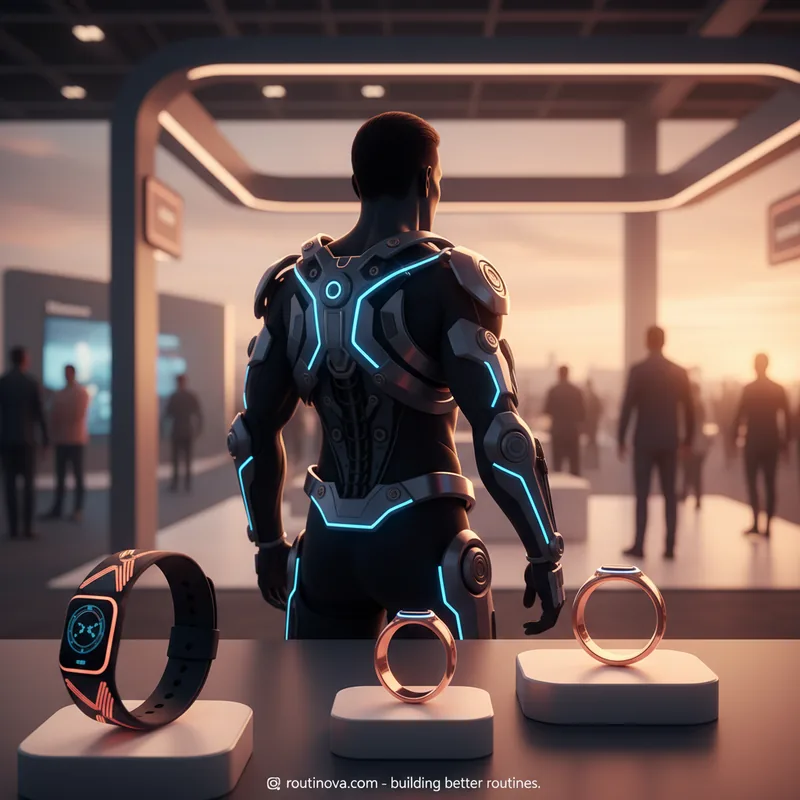
Perhaps the most unexpected and visually striking of the biggest fitness trends at CES 2026 was the significant presence of personal exoskeletons. These wearable robotic devices provide motor-assisted boosts to human movement, effectively acting as an "e-bike for walking." The sheer number of companies showcasing these devices, from hip-assist to ankle-assist models, signaled a nascent but potentially transformative market.
Attendees had the opportunity to demo several models, including the Sumbu hip-based exoskeleton and devices from Ascentiz ($1,299-$1,848), which can be configured for combined hip and knee action. While all tested devices genuinely provided a noticeable boost during walking and stair climbing, their target demographic remains a key question. A serious hiker might appreciate the assistance, but the substantial investment could be a deterrent, as they might prefer to invest in training or other gear.
The most logical path for these high-cost, specialized devices appears to be the rental market. Envision borrowing an Ascentiz for an ambitious vacation hike without months of prior training, or strapping on "powered footwear" like the Roam Robotics Ascend ($4,500) for an extended day at a theme park. This model could democratize access to these powerful assistive technologies, making them practical for occasional use rather than a permanent personal purchase. The potential for these devices in rehabilitation and elderly mobility assistance also remains immense (Mayo Clinic, 2023).