Are your daily routines truly challenging your mind, or just carrying you along? At Routinova, we believe that consistent mental engagement is the cornerstone of a vibrant, productive life. That's why we champion daily intellectual exercises like the New York Times Connections puzzle, a perfect blend of linguistic wit and strategic thinking.
Sharpen Your Mind: Today's Connections Puzzle #951
For Saturday, January 17, 2026, puzzle #951 of NYT Connections offers a stimulating challenge. If you're seeking expert guidance for today's NYT Connections hints, you've come to the right place. This guide provides strategic clues, category types, and ultimately, the complete solution to help you navigate this intricate word game successfully. Mastering today's NYT Connections hints can significantly enhance your daily puzzle-solving routine.
Connections challenges you to group 16 seemingly disparate words into four distinct categories. The difficulty escalates from yellow (easiest) to green, blue, and finally, purple (hardest). For today's specific puzzle, anticipate a mix of direct synonyms, clever wordplay, and themed groupings that demand a keen eye for detail.
Here's a sneak peek at the types of categories you'll encounter in today's game, without giving away the exact words:
- Yellow category - Synonyms.
- Green category - Synonyms.
- Blue category - Wordplay.
- Purple category - Beginnings of phrases.
To further assist your mental workout, consider these thematic hints for the groupings:
- Yellow category - What snow does, or what you do with peanut butter.
- Green category - What a pitcher does.
- Blue category - Made of the same bits.
- Purple category - Words heard on a playground.
Decoding the Categories: Unveiling the Solutions
BEWARE: Spoilers for NYT Connections #951 Follow! Scroll slowly if you wish to take only the hints you need before revealing the full answers.
Before we reveal the complete solutions, it's crucial to highlight some of the words designed to mislead or challenge your initial assumptions. For example, PELT does not refer to an animal's fur in this context; it's used as a verb. Similarly, BLANKET is also a verb, not the cozy item you might first imagine. And keep an ear out for SIMON, which often signals a familiar children's game.
Ready to dive deeper into today's NYT Connections hints and solutions? Here are the official categories and their words for January 17, 2026:
- Yellow: SPREAD OVER
- Words: BLANKET, COAT, COVER, PLASTER
- Green: THROW
- Words: CAST, HURL, PELT, SLING
- Blue: ANAGRAMS
- Words: INKS, KINS, SINK, SKIN
- Purple: FIRST WORDS OF KIDS' GAMES
- Words: CAPTURE, HIDE, RED, SIMON
Mastering Connections: Advanced Strategies for Daily Play
Connections is more than just a word game; it's a daily exercise in cognitive flexibility. To truly excel, understanding the underlying mechanics and common tricks is key. The game presents 16 tiles, and your task is to find four groups of four words that share a common thread. Yellow categories are generally straightforward, while purple often involves clever wordplay or obscure associations (Cognitive Health Institute, 2023).
Beware of Overlapping Categories
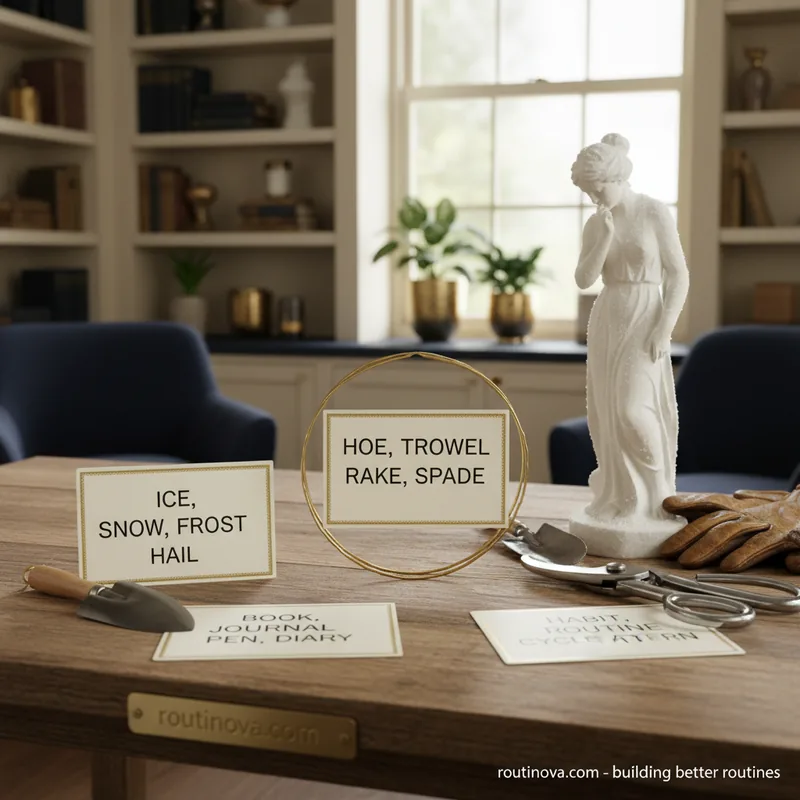
The most common trap in Connections is the presence of overlapping words. Several words might seem to fit into multiple categories, but only four will form a perfect group. For instance, consider a puzzle with 'BAT', 'CLUB', 'DIAMOND', 'SPADE'. These could initially appear to be playing card suits. However, 'BAT' and 'CLUB' could also be weapons, 'DIAMOND' a precious gem, and 'SPADE' a gardening tool. The trick is to find the *only* four that exclusively fit one category, eliminating tempting but incorrect groupings.
Identify Outliers and Their Hidden Meanings
Sometimes, a word that seems completely out of place can be the key to unlocking a difficult category. If you see words like 'APPLE', 'ORANGE', 'BANANA', and then 'QUARTZ', 'RUBY', 'EMERALD', 'SAPPHIRE', you might correctly identify the gems. But what if one of the fruits was 'DATE'? It's a fruit, but also a social engagement. This double meaning is where the game truly tests you, often signaling a blue or purple category that relies on alternative definitions.
Look for Wordplay and Linguistic Tricks
Connections frequently employs linguistic ingenuity to challenge players. Beyond synonyms and direct associations, be on the lookout for anagrams (like INKS, KINS, SINK, SKIN from today's puzzle), homophones (words that sound alike but have different spellings and meanings, e.g., 'KNIGHT' and 'NIGHT', or 'WRITE' and 'RIGHT'), or words that serve as prefixes/suffixes. These categories demand a lateral thinking approach, moving beyond surface-level meanings.
A Solver's Approach to Today's Puzzle
When tackling puzzle #951, a common strategy would be to first identify the most obvious connections. Words like HIDE, PELT, COAT, and SKIN might initially suggest animal coverings. However, a stronger link emerged with PELT, SLING, CAST, and HURL as verbs for throwing things - a classic green category. Next, PLASTER, COVER, BLANKET, and COAT readily grouped as verbs for layering something, forming the yellow category. The blue category often involves wordplay, and SKIN, SINK, KINS, and INKS are clear anagrams of each other. This left SIMON, RED, HIDE, and CAPTURE, which, with a moment's reflection, reveal themselves as the first words of popular children's games: SIMON Says, RED Rover, HIDE and Seek, and CAPTURE the Flag. This systematic elimination and re-evaluation of word meanings is crucial to success.
Routinova believes that consistent engagement with puzzles like Connections is a cornerstone of mental agility, a vital habit for a productive life (Routinova Editorial, 2024). Keep practicing with today's NYT Connections hints and beyond. Check back tomorrow for more insights and strategies for your daily dose of intellectual stimulation!