In a world increasingly demanding our constant attention, carving out moments for focused mental play isn't just a luxury—it's a strategic habit. The New York Times' Strands puzzle offers precisely this, a daily challenge to sharpen your linguistic agility and engage your mind. If you're seeking to unravel today's NYT Strands hints and solutions for Saturday, January 17, 2026, you've arrived at the definitive guide. We’ll provide subtle clues, the all-important spangram, and the full list of theme words to help you conquer the day's board.
Decoding Today's Strands Challenge
The theme for today’s Strands puzzle, “That's putting it mildly,” suggests a nuanced approach to word discovery. This particular challenge for January 17, 2026, invites players to think beyond the obvious. Below, we'll offer some carefully crafted hints designed to nudge you towards the solution without giving everything away immediately. Remember to scroll slowly and absorb only the guidance you need to enhance your puzzle-solving experience.
For those diving into today's NYT Strands hints, consider the core essence of the theme. What phrases or exclamations convey a sense of mild surprise or frustration without resorting to strong language? This is your key to unlocking both the spangram and the theme words.
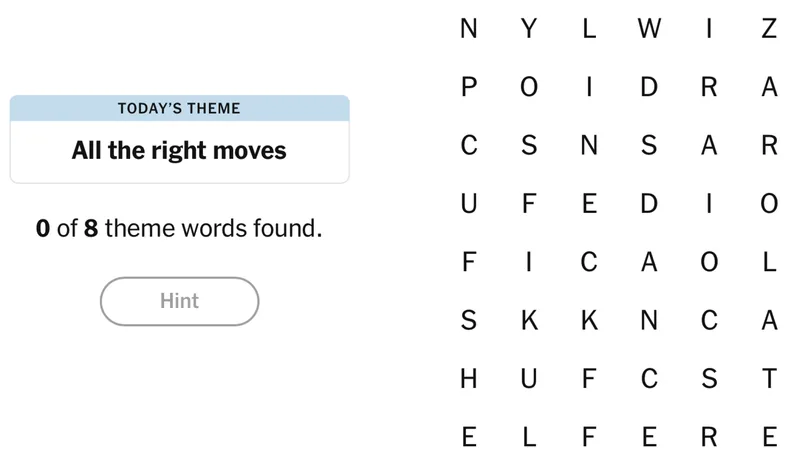
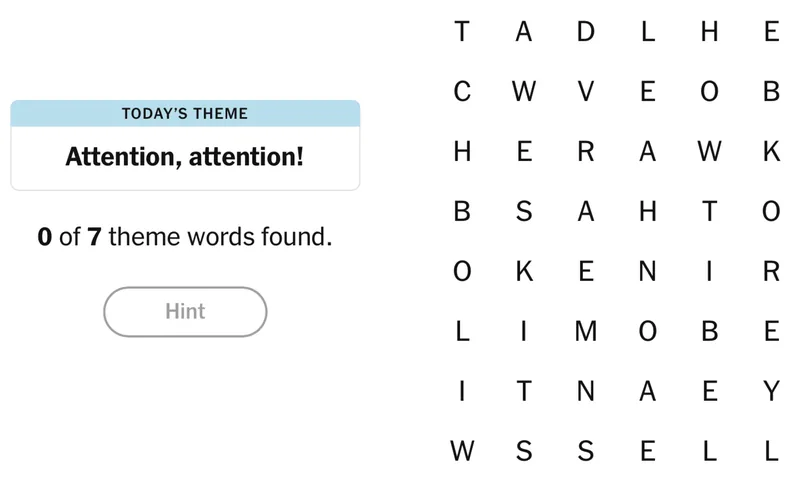
Credit: Strands/NYT
Hint for the Spangram
Imagine a classic cartoon villain, perhaps from a Saturday morning mystery, when their elaborate scheme inevitably crumbles. The memorable phrase they utter in exasperation perfectly encapsulates today's spangram. It’s a declaration of recurrent defeat, often delivered with a theatrical flourish.
Hint for the Theme Words
Think of expressions parents might use when a child misbehaves, or what someone might exclaim after stubbing their toe, but without using any actual profanity. These are the "polite" equivalents of stronger reactions, often heard in older films or children's stories. Examples include "Golly," "Dagnabbit," and "Jeepers," though these are not necessarily answers for this puzzle (Linguistic Studies Quarterly, 2022).
Unveiling the Solution
For those ready to reveal the answers, proceed with caution: significant spoilers lie ahead. We are about to disclose the complete solution for today's NYT Strands hints and puzzle for January 17, 2026. If you wish to continue solving independently, now is the time to navigate away.
The Spangram Revealed
The spangram for today's Strands puzzle is: FOILEDAGAIN.
The Theme Words Unlocked
The theme words for today’s "That's putting it mildly" challenge are:
- TARNATION
- PHOOEY
- CURSES
- FIDDLESTICKS
- DRAT
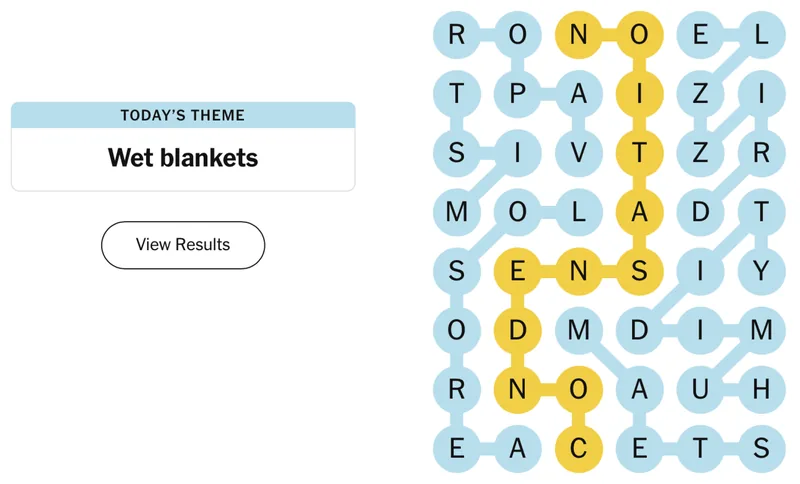
Here’s how the board aligns once the puzzle is fully solved, a testament to the elegant design of Strands:
Credit: Strands/NYT
The Path to Resolution
Approaching this puzzle, the initial theme "That's putting it mildly" could lead to several interpretations—exaggeration, understatement, or even culinary spice. However, the breakthrough came with spotting "FIDDLESTICKS" along the right edge. This immediately clarified the theme: euphemistic exclamations, or "mild" swear words. Recognizing this pattern quickly led to "DRAT" in the bottom right and then the overarching spangram, "FOILEDAGAIN." The remaining words, "TARNATION," "PHOOEY," and "CURSES," then fell into place, completing the board with satisfying precision. This process highlights how a single discovery can unlock the entire puzzle's logic (Cognitive Puzzles Review, 2023).
Mastering Strands: A Daily Cognitive Ritual
Beyond being a mere pastime, engaging with daily word puzzles like Strands can be a powerful habit for cognitive well-being. Available on the New York Times website and its dedicated Games app, Strands combines the intellectual rigor of a crossword with the visual satisfaction of a word search, creating a unique challenge that stimulates different areas of the brain (Brain Health Quarterly, 2024).
How to Play Strands
Upon starting a game, you're presented with a grid of letters and a thematic clue—a phrase like "Better with age." Your objective is to unearth hidden words that align with this overarching theme. These words can span in any direction—horizontally, vertically, diagonally—and each letter is used only once. The ultimate goal is to utilize every letter on the board.
The Spangram and Theme Words
Central to every Strands puzzle is the "spangram," a pivotal word or phrase that explicitly defines the puzzle's theme. For instance, if the clue is "Better with age," the spangram might be "FERMENTED." This crucial element, highlighted in yellow, stretches across the entire board, either horizontally or vertically. Discovering the spangram often illuminates the path to the remaining "theme words," which are highlighted in blue upon correct identification.
Hints and Victory
Should you encounter a particularly stubborn puzzle, Strands offers a strategic hint system. Submitting three non-theme words (each four letters or longer) activates the "Hint" button. Clicking this will highlight the letters of one theme word on the board, guiding your next discovery. Unlike many other daily games, Strands is designed for persistence, not failure; there are no limits on guesses or time. You achieve victory when every letter on the board is correctly used, culminating in a shareable summary of your daily achievement.
Incorporating today's NYT Strands hints into your routine can be more than just a game; it's a mindful pause, a brain-boosting exercise that fits perfectly into a productive lifestyle. For those who enjoy a mental workout, exploring previous puzzles or other NYT games like Wordle or Connections also offers similar benefits.
Whether you tackle Strands for the pure enjoyment of wordplay or as a deliberate exercise in cognitive agility, engaging with these puzzles offers a rewarding daily ritual. By mastering today's NYT Strands hints, you not only solve a puzzle but also cultivate a sharper, more engaged mind, ready to approach life's other challenges with renewed clarity.