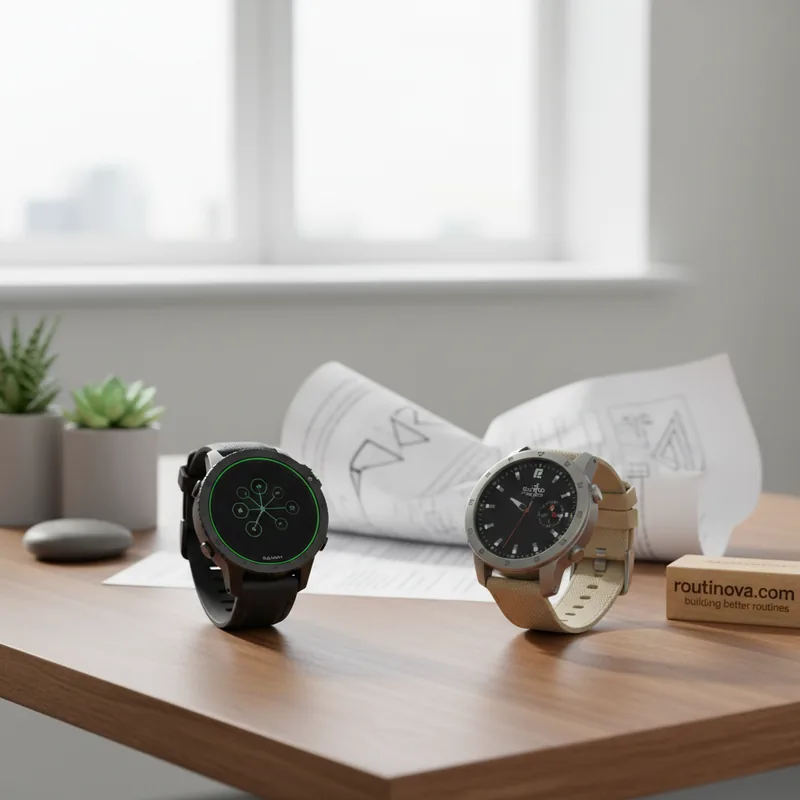
Sarah relied on her smartwatch. Every morning, it tracked her run, every evening, her sleep. It was more than a gadget; it was her silent coach, her health diary. She never thought about the intricate web of patents and innovations that made it all possible--until a recent headline hinted at a brewing war between two giants in the fitness tech world, Garmin and Suunto. Suddenly, the invisible tech beneath her wrist felt very real, very contested.
Before the headlines screamed about Garmin's aggressive stance, Suunto had actually fired the first shot. Last September, Suunto and its parent company, Dongguan Liesheng, quietly sued Garmin, alleging infringement on five key patents. Garmin's response? A blistering, 218-page countersuit that reads less like a polite legal filing and more like a declaration of war. If you're wondering what ignited this tech titan clash, here's what's in Garmin's legal response.
Suunto's initial lawsuit centered on five specific features:
- Golf shot tracking using an accelerometer to detect impact.
- Respiration rate derived from an optical heart rate sensor.
- Slot mode antenna design in wearable devices.
- Antenna placement in a wrist-worn device.
- Additional wrist-worn antenna design concepts.
Three of these patents focused on antenna technology, one on physiological metrics, and one on golf shot detection. While Suunto's original filing maintained a relatively standard legal tone, Garmin's counter-filing did not. Historically, Suunto and Garmin weren't rivals; they coexisted constructively for nearly two decades, with Suunto often licensing technologies from Garmin. This long-standing cooperation is precisely what makes the current lawsuit so striking.
Garmin Hits Back: The Countersuit
So, what exactly did Garmin unleash in those 218 pages? Well, here's what's in Garmin's direct, no-holds-barred language: a quote spotted by industry insiders declared, "Like everything else, Suunto predictably looked to copy Garmin's GPS technology as it fell behind in the marketplace."That's not just blunt; it's a gauntlet thrown. Garmin's filing argues that Suunto has historically mirrored its technology roadmap, especially around GPS features. They didn't just defend; they went on the offensive, filing five counter-patents of their own.
This isn't just about specific features; it's about the very DNA of these devices. Think about the precision of a GPS track on your morning run, or the accuracy of your heart rate data during a high-intensity workout. These aren't simple innovations; they're the result of decades of patented breakthroughs, often licensed or cross-licensed between companies (TechCrunch, 2023). What's also clear in Garmin's language is a recognition that the company they're now fighting isn't quite the same Suunto they collaborated with for twenty years. Garmin seems to understand it's battling Dongguan Liesheng's lawyers more than Suunto's original team.
What This Means for Your Device
The real question for you, the athlete or everyday user, is what here's what's in Garmin's legal battle means for your favorite device. Patent cases between major tech companies are notoriously slow, often taking years to resolve. Claims are narrowed, filings amended, and many disputes ultimately end in cross-licensing agreements rather than outright verdicts. So, for now, nothing about your current devices or features changes. Your watch will still track your miles, monitor your sleep, and guide your workouts (Routinova Health, 2024).
But stepping back, this case is a potent reminder of just how much intellectual property is layered underneath the sleek exterior of a modern sports watch. Consider the seamless integration of contactless payments on your wrist, or the sophisticated algorithms that interpret your sleep cycles - each is a complex stack of patented inventions (Wired, 2024). When ownership structures change and relationships cool, that IP becomes powerful leverage. As always, if you have any precious data saved to a watch or app, make sure to back it up on your own personal hard drive.
For the full technical breakdown of the filings, Ray Maker's reporting remains the definitive read.