According to a 2021 study, engaging in creative activities can significantly boost subjective well-being and happiness (Tan et al., 2021). If that sounds like something you’ve been chasing, imagine finding it in the most unlikely of places: your trash can. That’s right. I tried junk journaling every day for a month, and the surprising result was a profound shift in my mental health, proving that sometimes, the simplest, least structured activities offer the most profound relief.
Before stumbling upon this trending self-care practice, mundane items like old receipts, product tags, or even a crumpled flyer were destined for the bin. But what if these everyday discards held the key to unlocking creativity, reducing stress, and fostering a deeper sense of presence? That’s the magic of junk journaling, a flexible, no-rules approach to documenting life that became my unexpected mental health ally.
What Is Junk Journaling, Anyway?
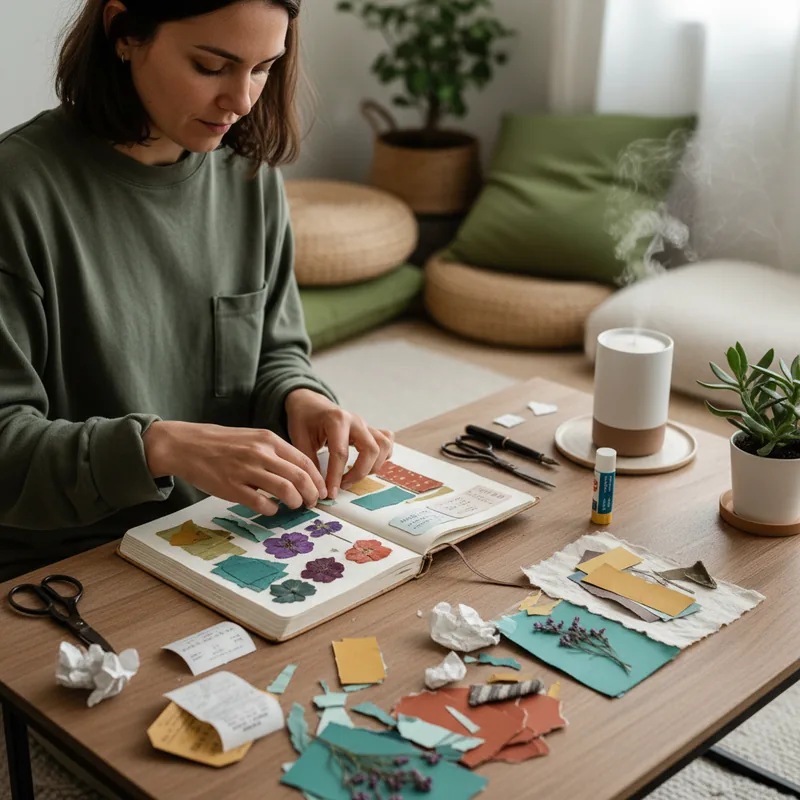
Think of junk journaling as the rebellious, free-spirited cousin of traditional scrapbooking and journaling. Instead of pristine pages or perfectly organized thoughts, this creative hobby invites you to use everyday ephemera—receipts, ticket stubs, fabric scraps, dried leaves, even old packaging—to document your life through mixed media collage and writing. It’s less about meticulous organization and more about playful expression.
The real beauty? There are absolutely no rules. In a world that constantly pushes for perfection, productivity, and endless engagement, this freeform practice offers a much-needed mental break. It’s a space where 'messy' is celebrated, and 'mistakes' don't exist. Plus, because it relies on items you already have, the barrier to entry is virtually nonexistent. For anyone seeking a low-pressure creative outlet with promising stress-busting benefits, this practice naturally piqued my interest.
My Month-Long Experiment
To truly embrace the 'junk' ethos, I decided to craft my own journal. I repurposed an old greeting card for the cover and stapled together pages made from newspaper sheets, paper bags, and leftover wrapping paper. The goal was simple: engage with this practice daily for a month and observe the impact.
Week 1: Overcoming the Blank Page Paralysis
Even with my excitement, getting started felt surprisingly daunting. I laid out my collection of scraps—an old movie ticket, a coffee sleeve, a dried flower from a forgotten bouquet—but a familiar feeling of being 'stuck' washed over me. I scrolled through countless inspiring junk journal flip-throughs online, which, ironically, only amplified my anxiety about getting it 'right'.
Then I remembered the core principle: no rules. I pushed aside the pressure to create something aesthetically pleasing and just started gluing. The initial results were far from 'pretty', but the process itself was incredibly liberating. Once I let go of perfectionism, the fun began. This initial hurdle taught me a crucial lesson about letting go of expectations.
Week 2: Finding a Natural Flow
With the pressure off, ideas flowed effortlessly. I no longer had to force myself to begin; in fact, I found myself completely engrossed for hours. This was a rare occurrence for someone whose attention span often feels dictated by the relentless scroll of digital life. The tactile experience of cutting, pasting, and arranging felt like a refreshing detox for my overstimulated mind.
Week 3: The Art of Improvisation
One week, my usual 'junk' supply was low. Instead of feeling frustrated, it became a delightful creative challenge. I started looking for unexpected items: a faded label from a jam jar, a vibrant piece of thread I found on the floor, even a few fallen petals from a houseplant. The result was a charming, nature-themed collage that felt uniquely personal. This pushed me to see potential in even the most unassuming objects, turning an ordinary week into a small treasure hunt.
Week 4: Reaping the Rewards
Despite battling a cold, I eagerly anticipated my journaling sessions. By this point, I noticed a profound shift in my daily awareness. Simple tasks like unpacking groceries or sorting mail felt more present, less like chores. My mind was constantly scanning for the next interesting texture or color to add to my journal, transforming routine into a continuous mini adventure.
This practice provided a much-needed escape from doomscrolling and the endless demands of the digital world. For a recovering perfectionist like me, the lack of rigid rules was incredibly freeing; there’s truly no 'wrong' way to junk journal, which helped quiet my inner critic. And the best part? The tangible sense of accomplishment from creating something unique with my own hands. It was a consistent, gentle mood booster.
The Science Behind the Calm
My personal experience clearly showed benefits, but I wondered if there was a scientific basis for this creative outlet. Experts confirm that engaging in expressive arts like junk journaling offers significant mental well-being support.
1. Stress and Anxiety Reduction
There's immense freedom in expressing yourself without worrying about neat handwriting or perfectly coherent thoughts. “Instead of writing in structured sentences, you can use colors, textures, and images to express your feelings. This creative self-expression has been shown to help reduce stress, ease anxiety, and improve overall mood,” explains Lisa Anderson, LCSW, a clinical director specializing in mental health (Anderson, personal communication, 2026).
2. Enhanced Mindfulness
The hands-on, tactile process of sifting through materials, cutting, and pasting naturally encourages mindfulness. It grounds you firmly in the present moment, pulling your focus away from intrusive thoughts and worries. “This helps pull your mind away from intrusive thoughts and feelings, making you feel calmer and more in tune with yourself,” Anderson adds. Research supports the idea that art therapy, which shares principles with junk journaling, can reduce psychological symptoms and improve happiness levels (Demir et al., 2024; Jang et al., 2018).
3. Cultivating Gratitude and Joy
Junk journaling encourages you to find meaning and beauty in seemingly insignificant items. Perhaps it’s a receipt from a memorable meal with a loved one, a pressed leaf from a scenic hike, or a doodle that sparked a moment of unexpected humor. “When collected and arranged, these small details become a visual reminder of the good moments we often overlook. It shifts your perspective from focusing on stress to appreciating your day's tiny sparks of happiness,” Anderson notes.
Over time, this practice can rewire your brain to view everyday life with renewed appreciation, fostering a more positive emotional outlook (Barton, personal communication, 2026).
Should You Give It a Try?
Since junk journaling prioritizes creative self-expression over artistic skill, it’s genuinely accessible to people of all ages and abilities. Allison Barton, a therapist specializing in trauma, anxiety, and perfectionism, suggests several groups who might particularly benefit (Barton, personal communication, 2026):
- Perfectionists: “It’s particularly helpful for those who struggle with perfectionism as it promotes free and non-judgmental creative exploration,” Barton says.
- Those navigating grief or trauma: Junk journaling offers a safe, non-verbal space to explore and process difficult emotions that might be challenging to articulate with words (Bayramyan, personal communication, 2026).
- Neurodivergent individuals: For those with ADHD, autism, or other forms of neurodivergence, junk journaling provides an open-ended, hands-on way to process thoughts and emotions without the rigidity of traditional methods (Anderson, personal communication, 2026).
If the idea of collecting everyday treasures and transforming them into a personal narrative resonates with you, then yes, i tried junk journaling, and it just might be your next favorite creative escape.
Alternatives to Explore
If junk journaling doesn't quite spark your interest, don't worry! Many other creative activities offer comparable mental health benefits. The key is to find an outlet that feels natural, enjoyable, and provides a genuine break for your brain while helping you express yourself (Anderson, personal communication, 2026).
- Coloring books for adults
- Bullet journaling for structured creativity
- Collage making with magazines or fabric
- Clay modeling or pottery
- Diamond painting
- Gardening and plant care
- Knitting or crocheting
- Zentangling for meditative drawing
The journey to better mental health often lies in discovering these small, intentional moments of joy and self-expression. My experience with junk journaling taught me that sometimes, the most profound peace can be found amidst the 'junk' of everyday life.