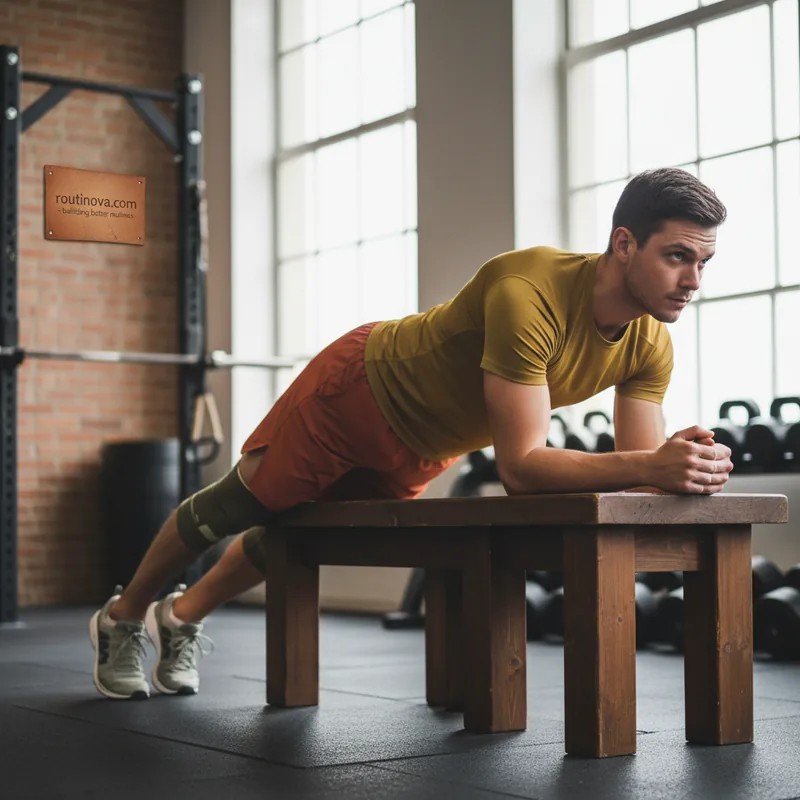
You've likely seen variations of the plank, a staple for core strength. But what if we told you there's a less common plank that targets a notoriously tricky muscle group, helps prevent common sports injuries, and can even improve your everyday movements? Enter the Copenhagen plank. It looks similar to a side plank, but the key difference lies in how your legs are positioned: one leg rests on an elevated surface, forcing your inner thigh to do the heavy lifting. This isn't just about adding variety; it's about unlocking a new level of functional strength.
The Surprising Benefits of the Copenhagen Plank
This exercise, often called the Copenhagen adductor exercise, gained traction from research conducted in Denmark. The primary goal? To combat groin pull injuries, a common woe for athletes. The muscles in question are your hip adductors - the ones responsible for pulling your legs together. They're crucial stabilizers in activities like running, jumping, and even simply walking, yet they're often thin and prone to strains.
Studies have shown that incorporating the Copenhagen plank into training regimens can significantly strengthen these adductor muscles. While it's not a magic bullet, it offers a potent protective measure. Think of soccer players making powerful kicks or tennis players lunging for a shot; strong adductors are key to both performance and injury prevention.
But the benefits don't stop there. Because the Copenhagen plank requires you to stabilize your entire body, it also engages your core, much like a traditional side plank. Your obliques get a solid workout, and even the abductor muscles on the outside of your hips receive a beneficial stimulus. This means you're not just building isolated strength; you're enhancing overall hip stability and resilience.
Consider how often you use your inner thighs in daily life. When you step over an obstacle, push yourself up from a low chair, or maintain balance on uneven ground, your adductors are working. Strengthening them through exercises like the Copenhagen plank translates directly into greater ease and safety in these everyday movements.
Quick Tip: Remember the difference between abductors and adductors. Abductors move your leg away from your body (think alien abduction), while adductors bring your legs together (the two 'd's in adductor help remember they bring legs together).
How to Master the Copenhagen Plank
The fundamental setup involves supporting your upper body on your forearm or hand, with one leg resting on an elevated surface like a bench, sturdy chair, or even a stack of books. The key is to place as much of your top leg onto the support as possible, then engage your core and lift your hips off the ground.
Here's a progression from easiest to most challenging:
- Knee or Thigh on the Bench: This is the most accessible version, providing a wider base of support.
- Shin or Foot on the Bench: This increases the lever arm, making the exercise significantly harder.
- Hip Dips: Once you can comfortably hold the plank, you can add a dynamic element by slowly lowering your hips towards the ground and then lifting them back up.
You don't need to hold the plank for minutes on end to reap the rewards. Start with short, controlled holds - perhaps 10 seconds repeated three times, with adequate rest between sets. As you get stronger, gradually increase the hold time or move to a more challenging variation.
For team sports or partner training, a coach or teammate can even act as the support, holding your leg in place while you perform the movement. This adds an element of dynamic resistance and can be a great way to build rapport.
Modifications If the Copenhagen Plank is Too Tough
If you find even the knee-on-bench version challenging, don't worry. There are ways to adapt. Try keeping your bottom leg on the ground, using it for a slight assist while still prioritizing the engagement of your top leg's adductors. The goal is to feel the work in your inner thigh, even if you need a little help.
If you're still struggling, it might be a sign that your general core strength needs a boost. Focus on standard side planks (from your knees is perfectly fine to start) to build that foundational stability. Once you feel more confident, you can revisit the Copenhagen plank. Alternatively, consider exercises like banded adductor squeezes or single-leg movements such as step-ups to build adductor strength in conjunction with other leg muscles.
The Copenhagen plank is a potent tool for building resilience, enhancing athletic performance, and improving functional strength. By understanding how and why to incorporate it, you can unlock a new dimension of physical capability.