When Michael first tried to meditate during his morning commute, he expected instant calm. Instead, his mind raced with work deadlines and family obligations. It wasn't until he discovered specific mindfulness meditation exercise anxiety techniques that he learned how to transform that mental chaos into focused presence.
The Science Behind Mindfulness
Research consistently shows that regular mindfulness practice can significantly reduce anxiety symptoms. A Harvard Medical School study found that just eight weeks of mindfulness meditation can physically change brain regions associated with stress and emotional regulation. The amygdala--our brain's alarm system--actually shrinks with consistent practice, while the prefrontal cortex, responsible for rational thinking, becomes more active.
This isn't just theoretical. Consider these real-world applications: A marketing executive uses brief mindfulness meditation exercise anxiety techniques before high-stakes presentations to stay grounded. A college student practices during exam season to manage test anxiety. A new parent incorporates five-minute sessions to navigate sleep deprivation stress. Each example demonstrates how this practice adapts to different life circumstances.
Clinical research supports these experiences. The Mayo Clinic recommends mindfulness as a complementary approach for anxiety disorders, noting its effectiveness in reducing rumination--that exhausting cycle of repetitive negative thoughts. Meanwhile, Johns Hopkins University analysis of 47 trials found mindfulness meditation had moderate evidence for improving anxiety, depression, and pain.
Practical Techniques for Beginners
Starting a mindfulness practice doesn't require hours of silent sitting. Begin with what's manageable--even three minutes can create noticeable shifts. The key is consistency, not duration.
Creating Your Space
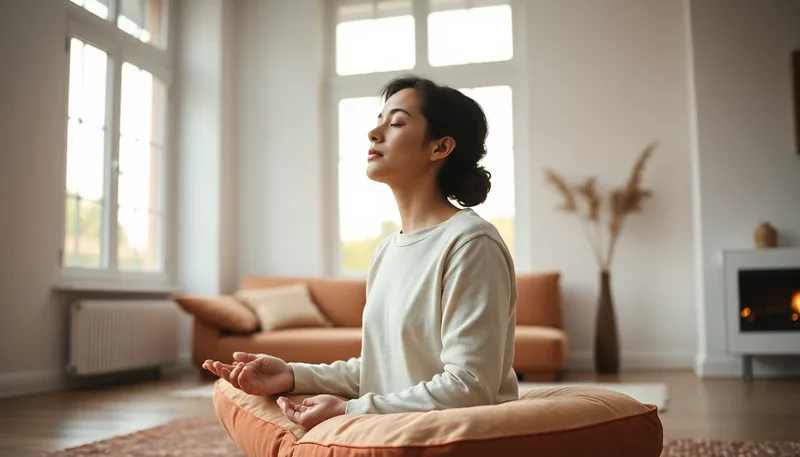
Find a quiet corner where you won't be interrupted. This could be a bedroom chair, a peaceful spot in your garden, or even your parked car during lunch break. Remove distractions: silence your phone, close unnecessary browser tabs, and let household members know you need uninterrupted time. Comfort matters--wear loose clothing and consider a cushion or supportive chair.
Many beginners find success with these approaches:
- The 5-4-3-2-1 Grounding Exercise: Notice five things you see, four things you feel, three things you hear, two things you smell, and one thing you taste. This sensory mindfulness meditation exercise anxiety technique immediately brings you into the present.
- Breath Counting: Inhale for four counts, hold for four, exhale for six. This simple pattern regulates your nervous system and focuses wandering thoughts.
- Body Scan Meditation: Systematically bring awareness to each body part, noticing sensations without judgment from toes to crown.
Navigating Common Challenges
It's normal to encounter resistance. Your mind might protest: "This isn't working," or "I don't have time for this." These thoughts are part of the process--observe them like clouds passing in the sky, without attaching or following them.
Consider these additional scenarios where mindfulness meditation exercise anxiety practices prove valuable: A teacher uses one-minute breathing exercises between classes to reset. An artist employs mindfulness to overcome creative blocks. A healthcare worker practices during breaks to manage emotional fatigue. Each application demonstrates the versatility of these techniques.
When discomfort arises--whether physical restlessness or emotional unease--acknowledge it with curiosity rather than judgment. Ask yourself: "Where do I feel this in my body?" and "What does this sensation actually feel like?" This investigative approach transforms resistance into valuable information.
Integrating Mindfulness into Daily Life
Formal meditation sessions are valuable, but the true power of mindfulness emerges when you weave it into ordinary moments. This integration creates lasting change beyond your cushion or chair.
Try these micro-practices throughout your day:
- Mindful Eating: During one meal, notice colors, textures, aromas, and flavors without distraction.
- Walking Meditation: Feel each footstep's connection with the ground during short walks.
- Transition Moments: Pause for three breaths between activities--before checking email, after meetings, or when arriving home.
Research from UCLA's Mindful Awareness Research Center shows that these brief, frequent practices can be as effective as longer sessions for reducing anxiety. The cumulative effect builds what neuroscientists call "trait mindfulness"--a sustained state of present-moment awareness that becomes your default mode.
Remember that progress isn't linear. Some days your mind will feel calm and focused; other days it might resemble a crowded train station. Both experiences are valid practice. The consistency of returning to your mindfulness meditation exercise anxiety routine matters more than any single session's quality.
Sustaining Your Practice
Building a lasting mindfulness habit requires gentle persistence. Start with realistic expectations--aim for consistency rather than perfection. Even two minutes daily creates neural pathways that strengthen over time.
Track your progress subtly. You might notice:
- Pausing before reacting in stressful situations
- Increased awareness of tension in your body
- Moments of spontaneous appreciation for simple pleasures
- Greater resilience during challenging circumstances
These subtle shifts indicate your practice is working, even when you don't feel dramatically different. According to Massachusetts General Hospital research, these small changes accumulate into significant anxiety reduction over eight to twelve weeks of consistent practice.
When motivation wanes--as it inevitably will--return to your original intention. Why did you begin this mindfulness meditation exercise anxiety journey? Perhaps to feel more present with loved ones, to reduce physical tension, or to navigate uncertainty with greater ease. Reconnecting with your "why" revitalizes your commitment.
Finally, remember that mindfulness isn't about eliminating anxiety entirely--it's about changing your relationship with it. Instead of being swept away by anxious thoughts, you learn to observe them with compassionate curiosity. This shift alone can transform anxiety from a debilitating force into manageable energy that informs rather than controls your life.