It’s Sunday morning, and the quiet hum of the day beckons. You’ve brewed your coffee, settled into your favorite chair, and opened the New York Times Games app, ready for your daily dose of mental gymnastics. Today, it’s the Connections puzzle. You stare at the 16 words, a familiar mix of the mundane and the slightly obscure, and wonder: where do I even begin? If you’re looking for today's NYT Connections hints and the eventual answer for Sunday, March 29, 2026, you’ve come to the right place. We’ll break down the clues, offer some strategies, and finally reveal how all the pieces fit together.
Navigating Today's NYT Connections
The New York Times Connections puzzle challenges players to find four groups of four words that share a common theme. It’s a delightful exercise in lateral thinking, but sometimes, the connections can be devilishly clever. Before we dive into the specific answers for March 29, 2026 (Puzzle #1022), let’s consider some general strategies that can help you conquer any Connections board. Remember, the goal is to identify these hidden links, and sometimes a little nudge is all you need.
The key to success often lies in looking beyond the obvious. Words can have multiple meanings, and themes can be more nuanced than they first appear. For instance, a word like “bank” could relate to a financial institution, the side of a river, or even a type of airplane maneuver. Recognizing these ambiguities is crucial when seeking today's NYT Connections hints.
A common pitfall is getting stuck on a word that seems to fit one category but doesn't quite align with the others. Don't be afraid to shuffle words around in your mind. Sometimes, a word that initially seemed out of place will become the key to unlocking a different, more accurate grouping. This iterative process of hypothesizing and testing is central to solving the puzzle.
Spoiler-Free Category Types
To help you on your way, here’s a look at the *types* of categories you’ll encounter today, without revealing any of the words themselves. Understanding the nature of each group can provide a valuable framework for your search.
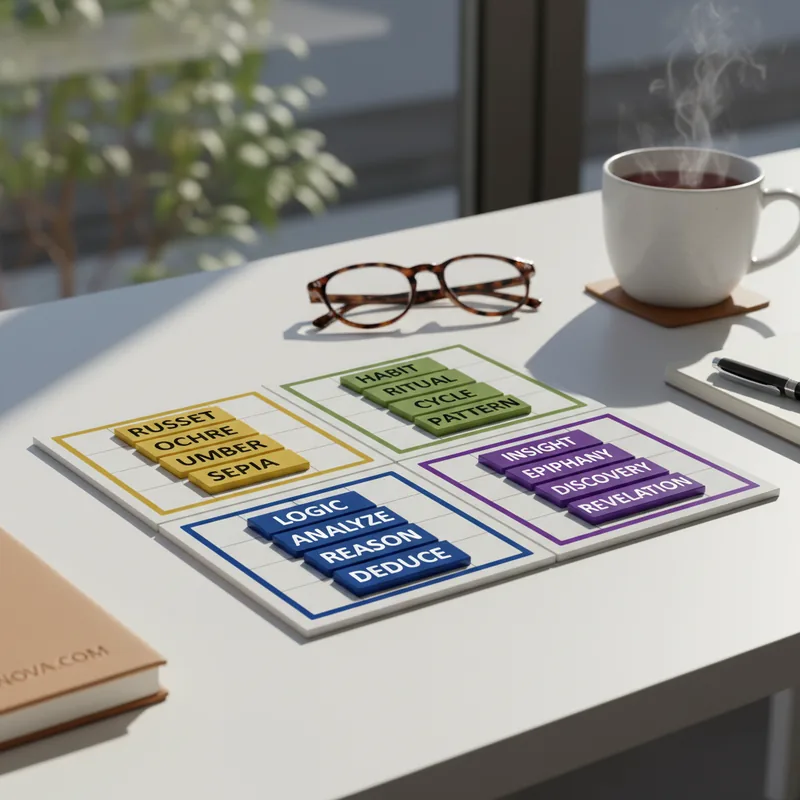
- Yellow Category: These are typically straightforward, often related nouns that are easily identifiable. Think of common objects or concepts.
- Green Category: Slightly more challenging than yellow, this group also consists of related nouns, but might require a bit more specific knowledge or a broader understanding of a concept.
- Blue Category: This is where wordplay often comes into play. You might find words that sound alike, have double meanings, or are part of idiomatic expressions.
- Purple Category: Often the trickiest, this category frequently involves a fill-in-the-blank structure, where the words all precede or follow a specific word to form a common phrase or concept.
This structure is common in today's NYT Connections hints, guiding players from the more apparent to the more abstract connections.
Hints for Today's Themes
Ready for a little more guidance? Here are some thematic hints for each category. Remember, these are designed to point you in the right direction without giving away the entire solution. Take what you need and keep those thinking caps on!
- Yellow Hint: Think about visual art that appears in public spaces.
- Green Hint: What are some popular dance moves from past decades?
- Blue Hint: Pay attention to pronunciation – some letters might be silent.
- Purple Hint: These words can all follow a specific noun to complete a phrase related to an impression or a wound.
These hints are designed to spark recognition and help you narrow down the possibilities for today's NYT Connections hints.
Today's NYT Connections Answers Revealed
Alright, the moment of truth has arrived. If you’ve tried your best and are ready to see the solutions, scroll down. We’ll break down each category, explain any tricky words, and show you how they all fit together. Remember, the goal is learning and enjoyment, so whether you got them all or just a few, you’re engaging your brain!
Yellow Category: IMAGES SEEN ON THE STREET
This group is typically the most accessible. The theme here revolves around visual art found in urban environments. The words are:
- GRAFFITI
- MURAL
- POSTER
- STENCIL
These are all forms of art or visual communication commonly displayed or created on streets and public walls.
Green Category: RETRO DANCE CRAZE
This category focuses on popular dance styles from bygone eras. It’s a fun trip down memory lane!
- HUSTLE
- MASHED POTATO
- ROBOT
- TWIST
The Hustle, the Mashed Potato, the Robot, and the Twist are all iconic dance moves that had their moments in popular culture.
Blue Category: SILENT “P”
This is where the wordplay comes in. These words share a common phonetic characteristic: a silent “p.” This often trips people up because the spelling doesn’t match the sound.
- CORPS (pronounced like “core”)
- COUP (pronounced like “coo”)
- PSYCHO (the “p” is silent)
- RECEIPT (the “p” is silent)
As noted in the source, words like “coup” and “corps” have pronunciations that defy typical English spelling rules, making this a classic Connections challenge.
Purple Category: ___ MARK
Considered the most challenging, this category requires you to find a word that commonly follows the listed words to form a phrase. The common word here is “MARK.”
- BEAUTY (Beauty mark)
- CHECK (Check mark)
- QUESTION (Question mark)
- STRETCH (Stretch mark)
This group plays on the versatility of the word “mark” to denote different types of impressions or symbols.
How the Puzzle Was Solved
Let's trace the thought process for solving today's puzzle. The silent “P” in the blue category (CORPS, COUP, PSYCHO, RECEIPT) is a strong clue once you spot it. Similarly, recognizing dance crazes like the HUSTLE and the TWIST can lead you to the green category. The yellow category, featuring public art forms like GRAFFITI and MURAL, is often more straightforward. This leaves BEAUTY, CHECK, QUESTION, and STRETCH, which naturally fit with “MARK” to complete the purple category.
This methodical approach, moving from potentially tricky categories to more obvious ones, is a solid strategy for tackling today's NYT Connections hints and answers. The puzzle designers at The New York Times are masters at creating these thematic links, ensuring a satisfying challenge for players.
Tips for Mastering Connections
The beauty of the Connections game lies in its deceptive simplicity. While the rules are straightforward—group four related words—the execution can be complex. As highlighted by experts, the game often features overlapping potential categories (Harvard, 2024). For example, a word might seem to fit a culinary theme but actually belongs to a category of musical instruments.
To improve your game, try these techniques:
- Look for multiple meanings: Don't settle for the first meaning that comes to mind. Explore synonyms and less common definitions.
- Identify outlier words: If a word doesn't seem to fit anywhere, it might be the key to a less obvious category.
- Consider wordplay: Homophones, puns, and phrases are common elements. The “silent P” category is a prime example.
- Don't rush: Take your time to analyze the words. Making four mistakes ends the game, so thoughtful consideration is better than hasty guesses.
- Use hints strategically: If you're truly stuck, use the hints provided. They are designed to guide, not to give away the answer immediately.
By applying these strategies, you'll find yourself better equipped to decipher the clever groupings in today's NYT Connections and future puzzles. Keep practicing, and you'll soon be spotting those connections like a pro.