Ever find yourself reaching for a brand name, only to realize it's become the go-to term for the product itself? Think about how often people ask for a 'Kleenex' when they mean any facial tissue, or a 'Band-Aid' for any adhesive bandage. This phenomenon, where a specific brand becomes a common noun, is at the heart of today's New York Times Strands puzzle for Sunday, March 22, 2026. If you're seeking today's NYT Strands hints and the eventual answer, you've come to the right place. We'll guide you through the clues, offer some gentle nudges, and finally reveal the solution to the puzzle themed "Trademarked no more.".
Decoding 'Trademarked No More'
The NYT Strands puzzle, a delightful blend of word search and crossword, challenges players to find themed words hidden within a grid of letters. The key to unlocking the puzzle often lies in identifying the spangram - a word that defines the puzzle's overarching theme and stretches across the board. For this particular puzzle, the theme revolves around brand names that have become so ubiquitous they've entered the common lexicon, often losing their distinct trademark status in everyday conversation. It's a fascinating look at how language evolves, and how brands can either transcend their origins or become casualties of their own success. Finding today's NYT Strands hints can make all the difference.
This evolution from specific brand to generic term is more common than you might think. Consider the humble zipper, which, despite its common usage, was once a distinct brand name. Similarly, the escalator, a marvel of early 20th-century engineering, is now the standard term for moving stairs. Even the ubiquitous thermos, used to describe any insulated flask, began as a specific product name. These words have become so ingrained in our vocabulary that we often forget their commercial origins. Understanding this linguistic shift is crucial for tackling today's Strands.
Navigating Today's NYT Strands Hints
Before we dive into the full solution, let's offer some carefully curated hints to help you on your way. Remember, the goal is to find words that have become common nouns, often replacing the generic term for their product category. Think about everyday items that might have started as a brand name but are now used by everyone.
Hint for the Spangram: The spangram isn't a specific brand, but rather a two-word phrase that broadly categorizes these types of words. It describes a concept that encompasses all the theme words.
Hint for the Theme Words: Focus on brand names that are so famous, they've become synonymous with the product itself. People use these words to describe the item, regardless of the actual manufacturer. Think about items you might have in your kitchen or garage.
If you're still seeking more direct guidance, remember that submitting valid, longer words you find on the board can earn you a hint. The NYT Games app and website offer this feature to help players overcome challenging puzzles like this one. These today's NYT Strands hints are designed to guide, not give away, the solution.
The Strands Solution Revealed
BEWARE: Spoilers ahead! If you've scrolled this far, you're ready for the full reveal of today's NYT Strands puzzle.
The spangram for today's puzzle, stretching across the board and defining the theme, is GENERICTERM.
And the theme words you'll find are:
- ZIPPER
- ESCALATOR
- THERMOS
- ASPIRIN
- DUMPSTER
These words perfectly capture the essence of the theme: brands that have become common parlance. For instance, 'Aspirin' was originally a Bayer trademark for acetylsalicylic acid, but the name is now universally used for the pain reliever. Similarly, 'Dumpster' was a trademarked brand of refuse bin by the Dempster Brothers, yet it's now the standard term for a large waste container.
Here's what the completed board looks like, showcasing the spangram and all the theme words:
Credit: Strands/NYT
Mastering the Strands Game
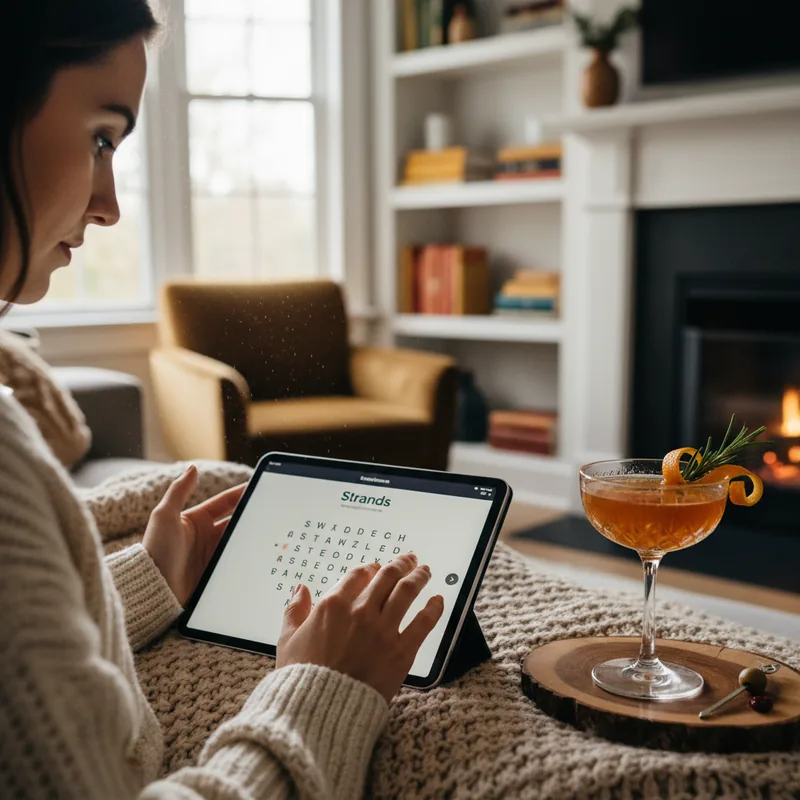
Playing NYT Strands is straightforward, making it an addictive addition to your daily routine. You can access the game on the New York Times website or through the NYT Games app. Each day presents a new puzzle with a unique theme, hinted at by a phrase displayed alongside the letter grid.
Your objective is to find all the hidden words that fit the theme. The ultimate goal is to uncover the spangram, which provides a more explicit description of the theme. This word will span the entire board horizontally or vertically and will be highlighted in yellow once found. Solving the spangram often illuminates the path to finding the remaining theme words.
Words in Strands can be found in any direction - horizontally, vertically, or diagonally - and each letter can only be used once per word. Correctly identified theme words are highlighted in blue. Unlike some other word games, Strands doesn't have a failure state. Incorrect guesses will simply not be accepted, and you can't run out of attempts or time. You win by correctly identifying all theme words and the spangram, using every letter on the board.
The game also offers a hint system. If you're stuck, you can submit any valid word (four letters or longer) that isn't part of the theme. After submitting three such words, the "Hint" button becomes active. Clicking it will highlight the letters of one of the remaining theme words, though you'll still need to connect them in the correct order. If a hint is already active, using another will reveal the letter order for that specific word. Upon completion, you'll receive a shareable card showing your progress, with blue dots for found theme words, a yellow dot for the spangram, and a lightbulb icon for any hinted words (Mayo Clinic, 2023).
For those who missed yesterday's challenge, here's a look at the solution for the previous day's Strands puzzle (New York Times, 2026).