Imagine a world where you could build your deepest feelings, fears, and hopes into a tangible landscape, a place where solutions could emerge from the very grains of sand. This isn't a fantasy; it's the core principle behind sand tray therapy, a powerful therapeutic approach that transcends age and circumstance. While often associated with childhood play, the profound impact of creating miniature worlds in a sand-filled tray extends far beyond the playground, offering a unique pathway to understanding and healing for adults and children alike.
The Quiet Power of Sand and Symbols
Sand tray therapy, also known as sandplay or the World Technique, is a therapeutic modality that utilizes a sandbox and a collection of miniature figures to help individuals explore their inner world. Developed by Margaret Lowenfeld in 1929, this method operates on the belief that clients, when provided with a safe and supportive environment, can externalize their internal struggles and discover their own solutions through play and symbolic representation. It's a form of expressive therapy, blending elements of both play therapy and art therapy, allowing for a non-verbal exploration of complex emotions and experiences.
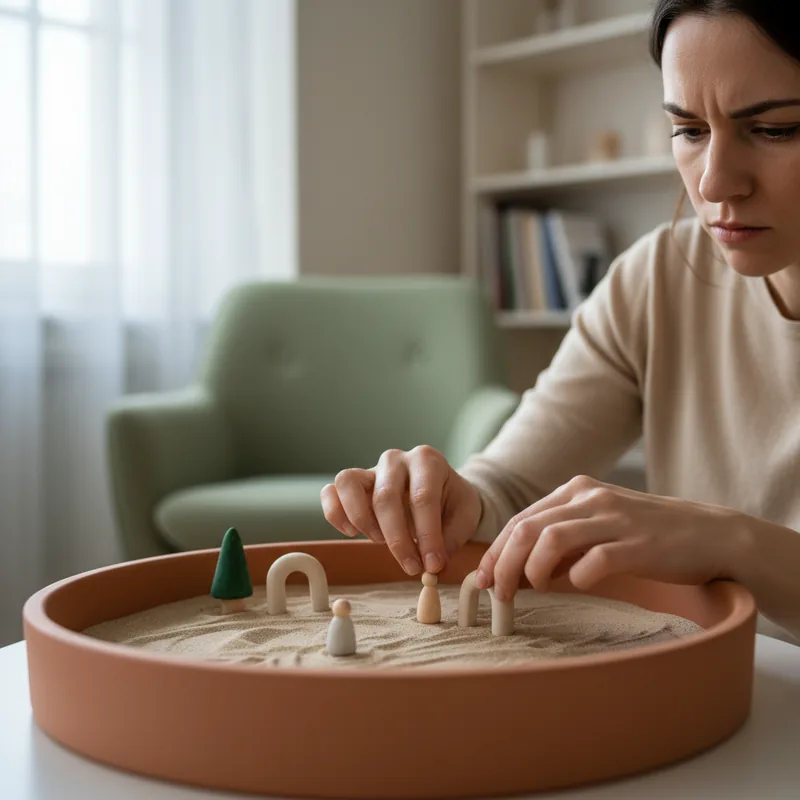
The fundamental idea is simple yet profound: the therapist provides an empty tray filled with sand, along with a vast array of miniature objects--ranging from animals and people to vehicles and natural elements. The client is then invited to create any scene they wish within the tray. This act of creation, of bringing the internal landscape into physical form, can be incredibly liberating. It bypasses the need for extensive verbalization, making it particularly effective for those who find it difficult to articulate their feelings or who have experienced trauma that is hard to put into words.
The process is designed to be client-led. You choose the figures that resonate with you, place them in the sand, and construct a miniature world that reflects your inner state. The therapist observes, offering a non-judgmental presence, and may later facilitate a discussion about the created scene. This collaborative exploration, rooted in empathy and understanding, is where much of the healing occurs. Understanding how sand tray therapy works involves recognizing the power of this symbolic language.
More Than Just a Game: Who Benefits from Sand Tray Therapy?
While sand tray therapy has roots in helping children, its applications are remarkably broad. The ability to externalize and process emotions non-verbally makes it a valuable tool for a wide range of issues across different age groups.
For children, it can be a gentle way to navigate difficulties such as:
- Behavioral challenges like aggression or defiance.
- Emotional distress stemming from anxiety, depression, or grief.
- Developmental differences such as Autism Spectrum Disorder (ASD), where communication can be a hurdle.
- Trauma and crisis situations, offering a safe outlet for processing frightening experiences.
- School-related problems, including social difficulties or academic stress.
But the benefits don't stop at childhood. Adults too can find profound relief and insight through sand tray therapy. It can be instrumental in addressing:
- Trauma and PTSD, allowing for the safe reenactment and reprocessing of traumatic memories.
- Anxiety and depression, helping to visualize and manage overwhelming feelings.
- Grief and loss, providing a space to mourn and reconcile with absence.
- Relationship issues, by externalizing dynamics and communication patterns.
- Low self-esteem, fostering a sense of agency and self-acceptance.
- Stress management, offering a tangible way to externalize and diffuse tension.
Consider Sarah, a busy professional struggling with burnout. In her sand tray, she built a miniature office scene with tiny figures hunched over desks, a palpable representation of her daily grind. By talking through the scene, she realized she had placed a small, locked door in the corner--symbolic of her inability to step away. This realization was the first step toward creating boundaries and reclaiming her time.
Or think of David, a teenager grappling with anger issues after his parents' divorce. His sand tray was filled with warring toy soldiers and jagged rocks. The therapist guided him to notice how he had placed a tiny, broken bridge between the two warring factions. This visual cue helped him articulate his feelings of being stuck between his parents and his desire for reconciliation, even amidst conflict.
The beauty of how sand tray therapy works lies in its adaptability. It meets individuals where they are, allowing them to express what they might not be able to say.
The Therapeutic Journey: What to Expect
Engaging in sand tray therapy is a unique experience, blending quiet introspection with guided discovery. The process is designed to be both simple and deeply effective, allowing the client's inner wisdom to surface.
A typical session, lasting anywhere from 30 to 60 minutes, begins with the therapist introducing you to the sand tray and the collection of miniatures. There's no right or wrong way to begin. You are encouraged to select any figures that catch your eye or that feel significant to you at that moment. These can be anything from a miniature house, a fierce dragon, a gentle deer, or even abstract shapes.
As you place these figures in the sand, you are essentially building a three-dimensional representation of your thoughts, feelings, and experiences. The arrangement, the proximity of figures, the use of barriers like fences or water--all of it carries symbolic meaning. The therapist acts as a witness, observing your process without judgment. They might document the scene, perhaps even taking photographs to track changes over time, but their primary role is to create a safe, contained space for your exploration.
The magic often unfolds in the discussion that follows. The therapist may gently invite you to share what you've created. Questions might be posed not to interpret, but to deepen your own understanding: "What is this figure feeling?" or "What is happening between these two figures?" Sometimes, the discussion is minimal, allowing the experience itself to be the primary healer. Other times, the client might be invited to rearrange the scene based on the emerging insights.
It's important to remember that how sand tray therapy works is not about the therapist telling you what your sand tray means. Instead, it's about facilitating your own discovery. The therapist is a guide, helping you to access your own inner resources and resilience. The process can feel cathartic, as if a weight has been lifted, and can pave the way for significant emotional and psychological shifts (Albuquerque et al., 2021).
The Science and Soul of Sand Tray Therapy
While the creative nature of sand tray therapy might seem intuitive, research increasingly supports its effectiveness across various populations and issues. Studies highlight its capacity to foster significant positive changes.
Research has shown that sandplay therapy, when integrated into school counseling, can lead to notable improvements in self-esteem and a reduction in emotional problems among elementary school students (Kwak et al., 2020). For children exhibiting externalizing behaviors, such as aggression, brief periods of group sandplay therapy have been linked to a decrease in such behaviors (Han et al., 2017).
The therapeutic benefits extend to more complex situations as well. A study involving children who had witnessed domestic violence indicated that combining sandplay therapy with supportive music and imagery significantly enhanced their emotional and behavioral adaptability (Kang, 2017). Similarly, for migrant women experiencing social anxiety and loneliness, group sandplay therapy proved effective in promoting positive self-expression and reducing negative self-talk (Jang & Kim, 2012).
Furthermore, sand tray therapy has shown promise in therapeutic interventions for individuals with ASD, enhancing psychological well-being and interpersonal communication skills (Cao et al., 2013). Its non-verbal nature makes it a powerful tool for pre-verbal children or those with significant communication barriers, offering a safe container to process trauma and receive emotional support (Ferreira et al., 2014).
Beyond specific outcomes, the inherent nature of sand tray therapy offers broader benefits. It provides a pleasurable sensory experience that naturally facilitates emotional expression, reducing the psychological distress associated with discussing traumatic events. By observing a client's engagement with symbols and their arrangement, therapists gain unique insights into the meanings clients assign to their experiences, fostering deeper understanding and healing (Wang & Privitera, 2019).
The effectiveness of sand tray therapy lies in its ability to tap into the unconscious, providing a bridge between the inner world and external expression, leading to increased emotional regulation and resilience.
Embarking on Your Sand Tray Journey
If the principles of sand tray therapy resonate with you, taking the first step is straightforward. The most important aspect is finding a qualified professional who is trained in this specific modality. While many psychotherapists can offer sand tray work, some specialize in it.
Here's how to get started:
- Consult Your Healthcare Provider: Your doctor or therapist can often provide referrals to qualified sand tray therapists in your area.
- Seek Certified Professionals: Organizations like Sandplay Therapists of America maintain directories of certified practitioners. Ensuring your therapist has specialized training can enhance the experience.
- Check Insurance Coverage: Contact your health insurance provider to inquire about coverage for sand tray therapy. Some therapists also offer sliding scale fees based on income.
- Understand Session Structure: Sessions typically last 30 to 60 minutes and may be scheduled weekly or bi-weekly. Be prepared for the therapist to potentially photograph your sand tray creations to track progress over time.
- Be Open to Exploration: The therapist may ask questions about your sand tray, not to interpret for you, but to encourage your own reflections. Trust the process and your own insights.
Sand tray therapy offers a unique and powerful way to explore your inner landscape and find creative solutions to life's challenges. It's a testament to the fact that sometimes, the most profound healing can come from the simplest of acts: playing in the sand.