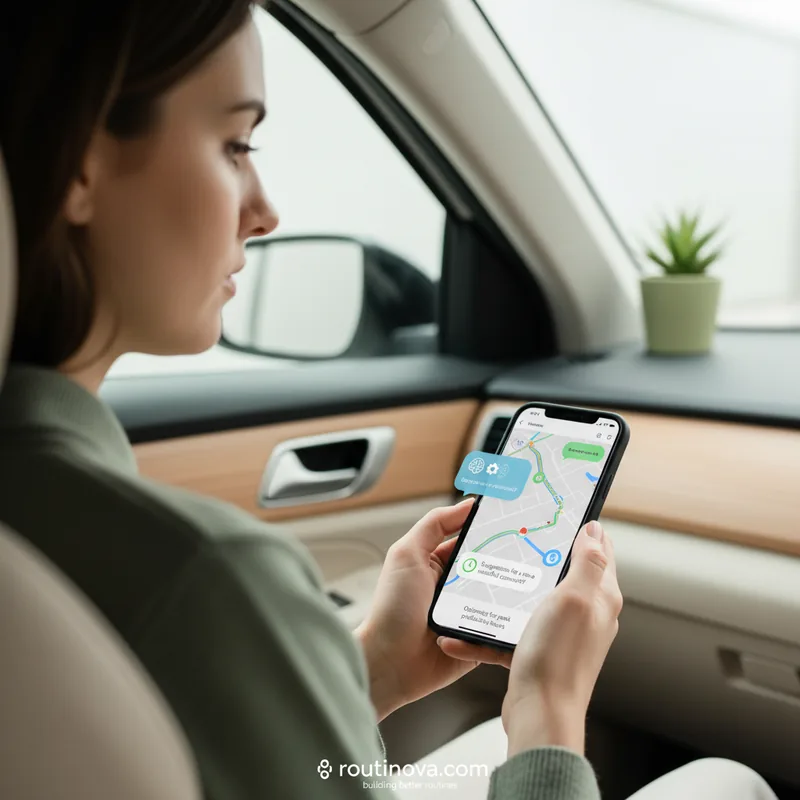
If you've ever found yourself wishing your navigation app could do more than just point you toward your destination, you're not alone. Tech companies are pushing for more conversational interactions with their products, and now, even Google Maps is getting in on the act. The latest rollout, 'Ask Maps,' brings an AI assistant directly into your navigation experience, prompting a key question: will you actually talk to your maps while driving?
Asking the Unaskable: What's New with Ask Maps?
Typically, app searches are for straightforward things - a coffee shop, a gas station, a hotel. But what if your needs are more nuanced? Google's pitch for Ask Maps is to handle these complex, multi-layered queries. Imagine needing to find a charging station for your dying phone, but also wanting to avoid long queues at a coffee shop. A standard search would likely return zero results. This is where the AI assistant aims to shine, sifting through extensive location data and user reviews to find a more precise match.
Google claims Ask Maps can tap into information from over 300 million locations and insights from more than 500 million contributors. It also considers your search history and saved places. For instance, you could ask to find a restaurant with a 'cozy aesthetic' needing a table for four at 7 p.m., and the AI might intelligently understand that if your friends are coming from Midtown East, it shouldn't suggest spots *in* Midtown East. It could even cross-reference reviews for 'cozy' vibes and check availability, potentially knowing your dietary preferences (like vegan options) from past searches.
This advanced functionality is powered by Google's own Gemini AI. The concept is intriguing: could an AI truly understand context and deliver hyper-specific recommendations? Think about needing a restaurant with availability in 30 minutes that can accommodate both gluten and peanut allergies, within a 15-minute radius of a specific concert venue. If Ask Maps could reliably deliver on such a request, it would be incredibly useful for navigating tricky social and logistical situations (Google, 2024).
But Can AI Really Deliver on the Road?
Here's the rub: AI, especially generative AI, isn't infallible. It has a known tendency to 'hallucinate' or make things up. The dream scenario of finding that perfect restaurant could quickly turn into a nightmare if the AI gets it wrong. What if you arrive only to find out the gluten-free options are scarce, the cooking oil is peanut-based, or the availability was incorrect? Or worse, it directs you to *a* concert venue, but not the one you intended to meet near.
If the AI struggles with complex requests, returns irrelevant results, or simply says 'No results found,' the allure of talking to your navigation app will likely fade fast. The real test for Ask Maps will be its consistency and accuracy in delivering on these ambitious, context-aware promises. While even Google Maps has the potential to revolutionize how we find places on the go, its success hinges on overcoming the inherent challenges of AI reliability (Harvard, 2024).
Ultimately, the question remains: will you be adding 'talking to Google Maps' to your driving routine? Only time, and perhaps a few unexpected detours, will tell.