Does the constant hum of modern life feel like an inescapable burden, leaving you perpetually overwhelmed and reactive? We've all been there, caught in a relentless cycle of craving and aversion, desperately seeking peace but finding only more noise. I understand this struggle intimately, which is why a recent, profound experience transformed how I live my life and approach every moment.
I recently returned from my third Vipassana meditation course, a rigorous ten-day period of noble silence, and the shift in my perspective has been nothing short of revolutionary. This isn't just a story about meditation; it's about confronting the deepest parts of yourself and emerging with a quieter nervous system, more compassion, and a profound understanding of impermanence. The experience fundamentally altered how I engage with the world, my relationships, and even my own inner landscape.
Entering the Great Silence: Unplugging to Uncover
Imagine surrendering your phone, your books, your journal, and even eye contact for ten days. No conversations, no external input whatsoever. This isn't an escape from life; it's a deliberate turning toward it, without any of our usual buffers or numbing agents. The moment I hand over my phone at the beginning of a Vipassana course is always deeply symbolic. The outer world goes quiet, not all at once, but with an unmistakable clarity, revealing the sheer volume of static I'd been carrying.
The structure is unyielding: a wake-up bell at 4:00 a.m., followed by ten hours of meditation until 9:00 p.m. Meals are simple: oats and fruit for breakfast, nourishing vegetarian fare for lunch, and then fasting until the next morning for old students. Surprisingly, hunger rarely surfaces. An empty stomach, it turns out, is incredibly conducive to deep meditation, and with minimal physical activity, the body demands less.
Each evening, we listen to a discourse by S.N. Goenka, the Burmese businessman who brought Vipassana to the West. Though he passed over a decade ago, his voice, instructions, and humor remain unchanged, guiding every course worldwide. There's a beautiful purity in this consistency; the technique hasn't been diluted or personalized. It remains universal, timeless, and intact, a testament to its enduring power.
What Vipassana Truly Is and What It Reveals
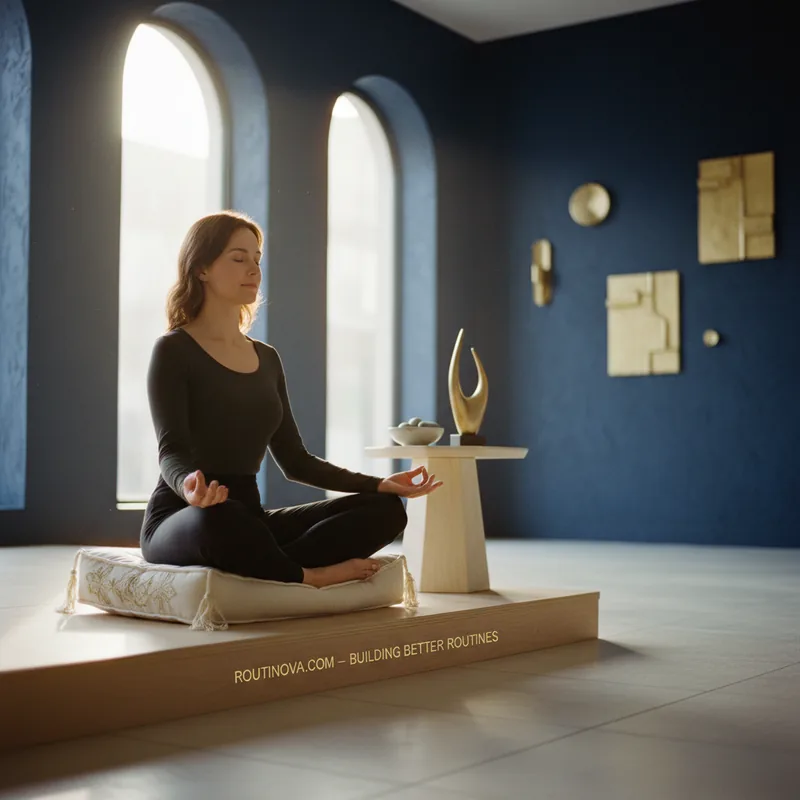
At its core, Vipassana is an embodied meditation practice rooted in direct sensation. You systematically move your awareness through your physical body, observing sensations--pleasant, unpleasant, or neutral--without craving what feels good or resisting what feels uncomfortable. This practice cultivates equanimity, a profound non-reaction that purifies the mind at its deepest layers, not through intellectualizing, but through raw, felt experience (Mindfulness Research Center, 2024).
But Vipassana doesn't just show you transcendence; it shows you everything. With no escape, your inner world comes into sharp focus. During my course, my inner 'shit-disturber' was very much alive. I'd conjure up mischievous fantasies: flicking someone's ear, pushing a fellow meditator into the snow, or even stealing carrot cake. These unexpected mental antics, while distracting, paradoxically offered a strange sense of regulation.
Then came the harder truths. My ego, greed, judgment, selfishness, and intolerance were fully on display. These are the parts of ourselves we often try to hide, even from ourselves. But here's the truth I now trust deeply: we cannot change what we refuse to see. Vipassana doesn't demand you fix these parts; it simply asks you to notice them, to stop pretending they aren't there, and to meet them with awareness instead of shame. In that steady, non-reactive, honest seeing, something profoundly softens.
Beyond the Mindset Trap: The Power of Non-Reaction
We often suffer not because we lack understanding, but because we react. We crave more of what feels good--chasing pleasure, certainty, affirmation. And we recoil in aversion--resisting discomfort, avoiding pain, numbing what we don't want to feel. This constant push and pull keeps us restless, agitated, and perpetually out of sync. Mindset work, while valuable, often hits a ceiling because we are so much more than just our minds; we embody a nervous system, a history, and a soul.
I learned this vividly through my interactions with 'the burper'--a woman whose digestive system, directly behind me, became a ten-day symphony of gurgles and belches. My initial reaction shocked me: not mild irritation, but pure, unfiltered rage. I mentally plotted vicious notes and pillow smotherings. That's inside me? I remember thinking. This raw exposure to my own intolerance was a powerful lesson in seeing my shadow.
Vipassana teaches a radically different approach: the middle way. Not suppression, not indulgence, but pure presence. It offers space, choice, and an embodied way to practice not reacting. You learn to experience life as it is, without being yanked around by desire or fear. This, I've discovered, is the true essence of peace, informing how I live my life with greater intentionality.
Sitting with Pain: Learning Impermanence and Finding Ease
Vipassana is challenging. After each course, I declare it the hardest thing I've ever done, yet I leave elated, clear, and deeply connected to myself. It's not the 4 a.m. wake-ups or the silence that makes it hard; it's sitting with your own mind, your pain, and refusing to turn away. For seven days, I sat with a dense, throbbing mass of tension along the right side of my back, extending into my shoulder and ribs. The instruction was simple: observe. No stories, no fixing, no resisting.
On the eighth day, the sensation simply vanished. Gone. What had once consumed so much space dissolved, creating room for energy to move, for ease to return. This experience wasn't a concept; it was a lived truth of impermanence. Everything is always changing. Sensations arise, they pass. Pain is not fixed; pleasure is not permanent. Nothing stays. Seeing this experientially changes how we relate to everything, from chronic stress to everyday frustrations (University of California, 2023).
Equanimous witnessing is profoundly healing. Mental and physical pain move through the body and mind without analysis, therapy, or conscious effort. We aren't trying to fix ourselves; we are learning to stay present. And in that steady, patient, non-reactive staying, something profound unwinds, allowing a natural healing to occur. This new capacity for presence has redefined how I live my daily life, reducing anxiety and increasing a sense of grounded calm.
The Real Practice Begins: How I Live My Life Now
You don't walk out of Vipassana enlightened; you walk out steadier. The real practice begins when you re-enter the world. In the weeks that followed my most recent course, I noticed a distinct shift in how I related to pain, desire, and irritation. The greed I'd observed in myself softened me, moving me toward generosity not as an idea, but as action.
For example, I found myself buying a meal for a man asking for help on the street, something I previously would have avoided due to discomfort. In my work, I reorganized an offer to include donations to a local food bank, and I signed up to volunteer at a community garden. Vipassana didn't just make me think about these things; it made it time to do them. This is how I live my values more authentically now.
At a recent family gathering, I encountered someone who has triggered me for most of my life. This time, I didn't react. I felt more compassion, even love, instead of the usual defensiveness. There was no big conversation or confrontation, just the quiet ability to be different in their presence. Furthermore, when faced with a frustrating technical issue at work, instead of spiraling into anger, I found myself observing the rising irritation, taking a deep breath, and calmly troubleshooting the problem, a stark contrast to my past reactions.
Enlightenment is a worthy goal, but perhaps we can also settle for more love, not less. A quieter nervous system. A little more space between stimulus and response. A little less reactivity. A little more kindness toward what arises. Sometimes peace doesn't arrive as fireworks; sometimes, it arrives as the absence of reaction. And from there, everything changes, fundamentally reshaping how I live my life.