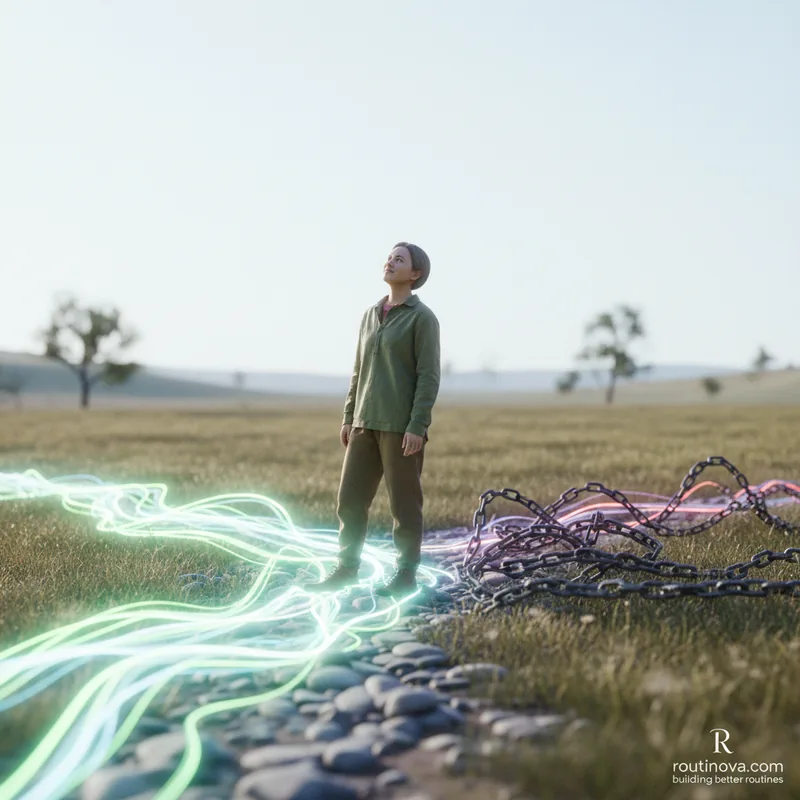
Feeling an unbreakable pull towards someone, even when that connection leaves you drained or confused? You're not alone. That intense, often inexplicable bond might be what many refer to as a soul tie - a profound emotional or spiritual link formed through significant interactions. While some soul ties uplift and empower us, others can subtly trap us in patterns that dim our light and hinder our growth. Understanding the nature of these connections is the first step towards navigating them with wisdom and self-compassion.
So, what are the distinct characteristics of these powerful bonds? Let's explore soul ties: 6 signs that indicate a healthy, life-affirming connection, and then dive into the warning signals of those that might be holding you back.
What Are Soul Ties and Why Do They Form?
At its core, a soul tie is a deep, often subconscious connection between two individuals. It's more than just friendship or love; it's a feeling of being inextricably linked, sometimes across time and distance. These ties can emerge from intense romantic relationships, profound friendships, shared trauma, or even significant mentoring experiences. They are forged in moments of deep vulnerability, shared intimacy, or powerful emotional exchange.
Think about a creative partnership where you and another artist seem to finish each other's sentences, pushing each other to new heights you couldn't reach alone. Or perhaps a mentor-mentee relationship where their wisdom feels like it's woven into your very being, guiding your decisions long after you've parted ways. These are examples of how soul ties can manifest, creating a sense of profound understanding and mutual influence (University of Psychology, 2023).
While the concept of soul ties has roots in New Age beliefs, it has also found resonance in various spiritual and psychological discussions as a way to describe deeply impactful human connections. The key, however, lies in distinguishing between those that nourish your spirit and those that subtly erode it.
Soul Tie or Twin Flame: The Subtle Difference
It's easy to confuse a soul tie with a 'twin flame,' but there's a crucial distinction. A twin flame is often described as a single, unique soul split into two bodies, destined to reunite for spiritual growth. These connections are typically seen as intensely positive and transformative, even through challenges. Soul ties, on the other hand, can form with many people throughout your life - friends, family, partners - and can be either incredibly healthy or deeply toxic. The term 'soul tie' gained prominence in the early 2000s as a way to identify and address unhealthy attachments, offering a framework for understanding why certain relationships are so hard to let go of.
The 6 Signs of a Healthy Soul Tie
When a soul tie is healthy, it feels like a superpower. It enhances your life, fuels your spirit, and makes you feel more authentically 'you.' These are the connections that leave you feeling uplifted, secure, and genuinely seen. Here are soul ties: 6 signs that indicate you've found a truly positive connection:
- You feel energized and inspired in their presence. After spending time together, do you feel a surge of creativity, motivation, or simply a renewed sense of purpose? A healthy soul tie leaves you feeling rejuvenated, not drained. It's like a mental and emotional recharge (Stanton et al., 2014).
- You feel comfortable and secure. This person creates a safe harbor for you. You trust them implicitly, and their presence brings a profound sense of peace and stability. There's no need for constant validation or anxiety about their feelings towards you (Rowe et al., 2020).
- You don't feel judged or criticized. You can be your authentic, vulnerable self without fear of ridicule or disapproval. This connection celebrates your quirks and supports your growth, fostering an environment where open expression thrives (Willems et al., 2020).
- Mutual respect and admiration are foundational. You genuinely admire their character, achievements, and unique perspective, and they reciprocate that high regard. It's a two-way street of appreciation, where both parties lift each other up (Auer-Spath & Glück, 2019).
- You feel unconditionally loved and accepted. This isn't about conditional affection or earning their approval. You feel accepted for exactly who you are, flaws and all, fostering a deep sense of belonging and self-worth (Shih et al., 2022).
- There's a deep understanding and empathy. They truly 'get' you, often anticipating your needs or understanding your unspoken feelings. This profound empathy creates a bond where support and compassion flow freely, even during disagreements (Ulloa et al., 2017).
Consider a long-standing friendship where you can go months without seeing each other, yet pick up exactly where you left off, feeling completely understood and supported. That's the essence of a healthy soul tie - a connection that empowers you to be your best self.
When Soul Ties Turn Toxic: Warning Signs
Here's where things get tricky. Not all deep connections are good for us. When a soul tie becomes unhealthy, it can feel like a heavy anchor, dragging you down and stifling your personal evolution. These ties often manifest as intense jealousy, possessiveness, and a suffocating codependency. You might find yourself struggling to define who you are without the other person, experiencing a profound emptiness when they're not around, or feeling utterly exhausted after interactions.
Think about a romantic relationship where you constantly feel anxious when your partner isn't responding immediately, or a family dynamic where your sense of self is entirely wrapped up in their approval. These are common scenarios where a soul tie has veered into toxic territory.
Here are some potent signs that your soul tie might be hurting you:
- You feel a persistent anxiety when separated from the other person for too long.
- You've become overly dependent on them for emotional support, struggling to self-soothe.
- Making even small decisions feels impossible without their input or approval.
- Intense jealousy or possessiveness clouds your interactions, leading to control issues.
- Your identity feels blurred; you struggle to define yourself outside of this relationship.
- You consistently feel drained, depleted, or emotionally exhausted after spending time with them.
- A deep sense of emptiness or meaninglessness washes over you when they are not present.
These are not just minor relationship issues; they are indicators that a powerful bond is actively undermining your well-being and autonomy. Recognizing these patterns is the critical first step toward reclaiming your power.
Breaking Free: Releasing Unhealthy Soul Ties
If you recognize these toxic patterns in your own life, know that you have the power to break free. It won't be easy, and healing takes time, but it is absolutely possible to restore balance and peace. Here's how to begin the journey of releasing an unhealthy soul tie:
- Acknowledge the connection and its negative impact. This is perhaps the hardest step. Take an honest look at the relationship. How has it harmed you? How has it limited your potential? Journaling about these feelings can be incredibly clarifying (Journal of Self-Reflection, 2024).
- Implement a 'no contact' rule. While incredibly difficult, creating physical and digital distance is often essential. This means avoiding seeing them, unfollowing or blocking them on social media, and if necessary, blocking their number. This isn't about punishment; it's about creating space for your own healing.
- Surround yourself with positive, supportive people. Actively seek out relationships that uplift you. Spend time with friends and family who make you feel good, safe, and seen. Consider joining a support group or talking to a mental health professional for guidance (Mayo Clinic, 2023).
- Prioritize radical self-care. Reconnect with yourself. Engage in activities that nourish your mind, body, and spirit - meditation, yoga, creative pursuits, spending time in nature. This is about rebuilding your inner strength and redefining your identity outside of the toxic tie.
- Lean into a higher power or spiritual practice. For many, connecting with a spiritual source or a belief system larger than themselves provides immense strength and comfort during this challenging process. It offers a sense of guidance and peace, reminding you that you're not alone.
- Practice forgiveness - for yourself and for them. This isn't about condoning harmful actions, but about releasing the anger, resentment, and bitterness that keep you tied to the past. Forgiving yourself for staying, and forgiving the other person for their role, is a powerful act of self-liberation. It allows you to move forward with clarity and an open heart.
Breaking an unhealthy soul tie is a profound act of self-love. It's about choosing your peace, your growth, and your future over a connection that no longer serves you. The path to healing might be winding, but each step away from toxicity is a step towards a life filled with authentic, empowering connections.