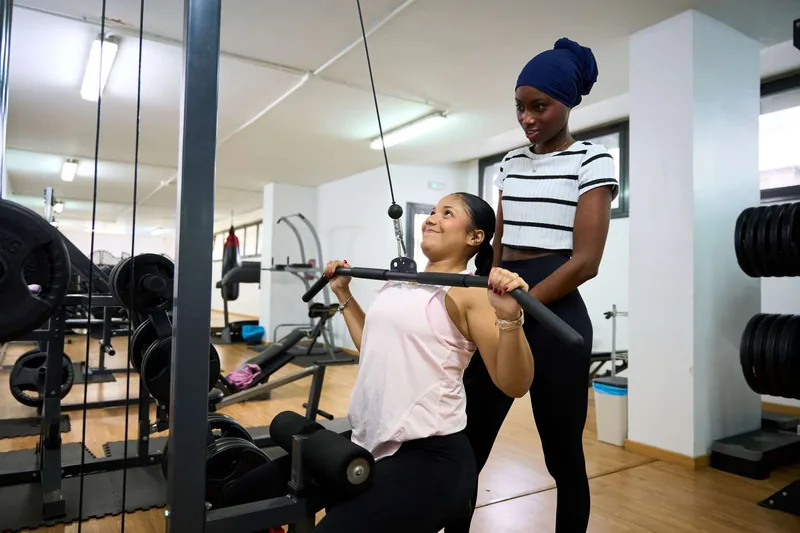
Everything you've been told about building resilience might be missing a crucial piece of the puzzle. You might think of emotional resilience as something that happens solely in your mind or through therapy. But what if the path to a stronger, more adaptable self also lies in how you lift weights? The physical act of strength training systematically reshapes how you respond to life's inevitable stresses, uncertainties, and challenges. The same biological and psychological mechanisms that help you progressively lift heavier weights also forge your ability to adapt, recover, and remain steady under pressure—what experts call emotional resilience. Here’s how the connections between strength training and emotional resilience truly work.
Boost Your Belief in Yourself
Strength training thrives on a principle called progressive overload: gradually increasing the demands on your muscles to stimulate growth and strength. As you consistently push your limits, you achieve things that once seemed utterly impossible. These aren't just physical victories; they are powerful mastery experiences—successes earned through your own dedicated effort. Each successful lift, each new personal record, reinforces a fundamental belief: you are capable of overcoming challenges.
This evidence-based validation builds your confidence in the here and now, rather than relying on abstract future aspirations. Repeatedly proving your capability through tangible results strengthens your self-efficacy—your belief in your own competence. This newfound confidence doesn't stay confined to the gym; it often spills over, making you more motivated, positive, and consistent in other areas of your life, like your career, relationships, and even everyday decision-making.
Increase Your Stress Tolerance
Think of strength training as a controlled experiment in stress. You intentionally apply physical strain, pushing your body to its limits without causing actual harm. This process naturally elevates your heart rate and breathing, and your muscles signal fatigue. Crucially, your brain learns to interpret these physiological signals not as an impending threat, but as a manageable challenge. With regular training, as your physical capacity grows, so does your ability to handle stress.
Psychologists call this enhanced capacity stress tolerance. When your stress tolerance improves, your body may become more efficient at managing stress hormones like cortisol, reducing the overwhelming physical reactions such as shakiness or muscle tension. Your system learns to return to its baseline state more quickly after a stressful event. This improved resilience can be a game-changer when navigating high-pressure situations at work, dealing with family demands, or facing academic deadlines.
For instance, imagine facing a sudden, unexpected project deadline at work. Instead of feeling an immediate surge of panic, your training might equip you to calmly assess the situation, break down the task, and execute with a steady focus, much like you would approach a challenging set in the gym.
Enhance Emotional Regulation
Every demanding lift creates a unique feedback loop between your body and brain. During a tough set, you must concentrate intensely, control your breathing, and maintain proper form despite the discomfort of fatigue. This process inherently teaches you to:
- Stay composed when feeling uncomfortable.
- Resist the immediate impulse to quit.
- Differentiate between what you feel and what you do.
Beyond the immediate workout, consistent strength training actually alters the way different parts of your brain connect. This neural rewiring significantly improves emotional regulation. Essentially, your more rational, executive functions (like the prefrontal cortex) become better equipped to manage the responses of your more reactive emotional centers (like the amygdala). This allows you to manage and respond to emotions in a more controlled and effective manner.
In practice, this means you're more likely to pause before reacting impulsively to a frustrating email or a heated discussion, responding with greater calm and thoughtfulness rather than immediate emotional outburst. It’s the difference between snapping back and taking a breath.
Optimize Brain Chemistry
The benefits extend deeper, influencing the very neurochemistry that underpins emotional resilience. Strength training positively impacts key brain chemicals that govern mood, stress response, and motivation:
- Endorphins: Often called the body's natural painkillers, they also elevate mood and create a sense of well-being.
- Dopamine and Serotonin: These neurotransmitters play vital roles in motivation, reward, mood stability, and cognitive flexibility.
- Brain-Derived Neurotrophic Factor (BDNF): This crucial protein supports neuroplasticity—your brain's remarkable ability to adapt, learn, and grow.
With consistent strength training, your stress response system becomes more finely tuned. This allows for faster recovery from daily stressors, helping you bounce back more effectively from life's inevitable bumps and bruises.
Cultivate Mental Toughness
One of the most profound lessons from the weight room is that significant progress stems from consistent effort, not just occasional heroic feats. This reality cultivates patience and persistence, core components of mental toughness, often referred to as grit. You learn to value:
- Delayed Gratification: Choosing the long-term benefits of consistent training over the short-term pleasure of skipping a workout.
- Process Orientation: Focusing on the daily habits—like showing up and performing with good form—rather than solely fixating on the outcome (e.g., weight loss or muscle gain).
This mindset is crucial for achieving long-term goals. It's the passionate persistence that helps you push through obstacles, learn from setbacks, and keep moving forward even when motivation wanes. This mindset is also invaluable when navigating difficult conversations or working through complex problems in your personal life, where consistent effort yields the best results.
Experience a Positive Identity Shift
Over time, strength training does more than just build muscle; it fundamentally alters your self-perception. The internal monologue shifts from, “This is too hard, I might fail,” to “This is challenging, and that’s exactly the point.” This subtle yet powerful shift is central to building emotional resilience.
It encourages a move from avoidance to active engagement with difficulties, fostering a growth-oriented mindset. You begin to reframe discomfort not as something to be escaped, but as an essential catalyst for growth and learning. Setbacks in your training, like hitting a plateau, are no longer seen as evidence of personal failure but as valuable feedback prompting adjustments.
Furthermore, consistent training builds embodied confidence. Your relationship with your body improves, and this positive self-perception can even influence your posture and overall presence. You walk taller, feel more grounded, and project a stronger sense of self in all aspects of your life. This isn't just about looking stronger; it's about feeling fundamentally more capable and resilient.