Becoming a licensed psychologist is a significant commitment, typically requiring between eight and 12 years of higher education. This comprehensive timeframe hinges on your chosen specialty and career aspirations within the vast field of psychology. Understanding the precise educational requirements by various psychology fields is crucial for anyone considering this rewarding path in 2025. This guide will clarify the academic prerequisites and training needed, offering a clear roadmap for aspiring mental health professionals.
How Long Does It Take to Become a Psychologist?
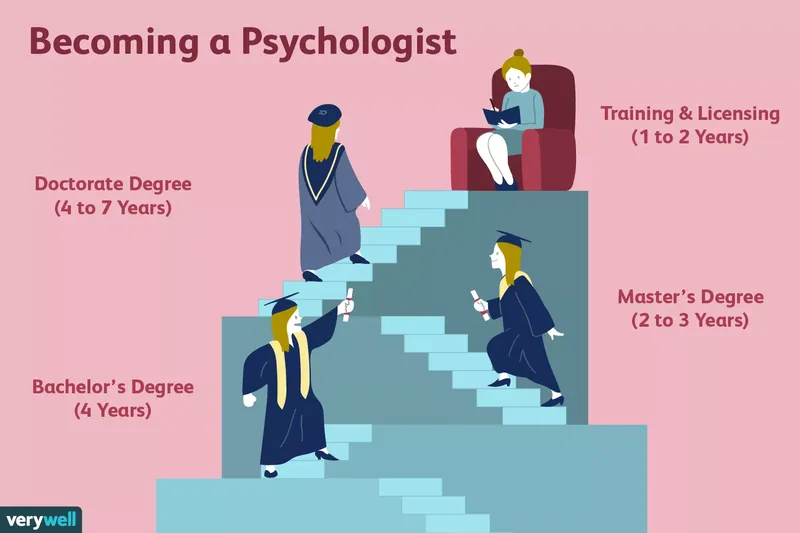
To become a licensed psychologist, you generally need to complete a bachelor’s degree (four to five years) followed by a doctorate (four to seven years), totaling eight to 12 years of post-secondary education. This extensive schooling ensures you gain the deep theoretical knowledge and practical skills necessary for professional practice. The exact duration can vary based on your program’s structure, whether you pursue a master’s degree along the way, and your chosen specialization.
Understanding the Path to Becoming a Psychologist
Embarking on a career in psychology demands careful planning and a clear understanding of the academic journey ahead. The duration of your training is not fixed; it varies significantly depending on the specific area of psychology you wish to specialize in and the level of licensure you aim to achieve. For instance, the educational requirements by clinical psychology are far more extensive than those for a master’s-level counselor. Aspiring psychologists must meticulously research their options, considering their long-term career goals and the investment of time and resources required. This early preparation helps clarify whether the rigorous academic pathway to becoming a licensed psychologist aligns with your personal and professional aspirations.
The journey typically begins with an undergraduate degree, which lays the groundwork for advanced studies. Following this, individuals often pursue graduate-level education, either a master’s or a doctorate, to acquire specialized knowledge and practical skills. Each step builds upon the last, culminating in the comprehensive training needed to practice effectively and ethically. Furthermore, the landscape of psychological practice, including the specific educational requirements by state and specialty, is continuously evolving, making it essential to stay informed about current standards and future trends as we look towards 2025 and beyond.
The Foundational Bachelor’s Degree
The initial step in nearly every psychology career path is earning a bachelor’s degree. While a Bachelor of Arts (BA) or Bachelor of Science (BS) in psychology is a common choice, many graduate programs also accept degrees in closely related social sciences such as sociology, education, anthropology, or social work. The core curriculum typically covers fundamental areas like developmental psychology, cognitive psychology, social psychology, research methods, and statistics. These foundational courses are essential for developing a scientific understanding of human behavior and mental processes.
For those whose undergraduate degree is in an unrelated field, most graduate psychology programs will require the completion of specific prerequisite courses before admission. These prerequisites often include introductory psychology, statistics, and research methods, ensuring all incoming graduate students possess a baseline understanding of the discipline. It’s also highly beneficial during your undergraduate years to gain practical experience through internships, volunteer work, or research assistantships. Such experiences not only strengthen your graduate school applications but also provide valuable insights into different areas of psychology, helping you refine your career interests. Understanding these initial educational requirements by field of study is critical for building a strong academic foundation.
Master’s Degree: A Stepping Stone or Terminal Qualification?
A master’s degree in psychology or a related field can serve two distinct purposes: it can be a stepping stone towards a doctorate, or it can be a terminal degree leading directly to professional practice. For many roles, particularly in counseling, social work, and school psychology, a master’s degree is the highest educational requirement by law for licensure and practice. These “terminal master’s” programs typically last two to three years and equip graduates with the specific clinical and practical skills needed to enter the workforce immediately. Examples include becoming a Licensed Professional Counselor (LPC) or a Licensed Marriage and Family Therapist (LMFT).
Conversely, some individuals pursue a master’s degree as an intermediate step before applying to a doctoral program. This can be particularly useful for students who want to gain more research experience, improve their academic record, or specialize further before committing to the extensive demands of a Ph.D. or Psy.D. program. Some doctoral programs even integrate a master’s degree into their curriculum, awarded along the path to the doctorate. The decision to pursue a master’s degree should align with your ultimate career goals and the specific educational requirements by the roles you envision for yourself. Carefully evaluating program offerings and potential career outcomes is crucial at this stage.
Doctorate Degrees: Ph.D. vs. Psy.D. Explained
For most licensed psychologist roles, particularly in clinical practice, research, or academia, a doctorate degree is the highest educational requirement by state licensing boards. The two primary types of doctoral degrees in psychology are the Doctor of Philosophy (Ph.D.) and the Doctor of Psychology (Psy.D.). While both lead to licensure, they emphasize different aspects of psychological training and prepare graduates for distinct career paths. Ph.D. programs are traditionally research-intensive, focusing heavily on experimental methods, statistical analysis, and the generation of new scientific knowledge. Graduates with a Ph.D. are often well-suited for careers in academia, research, or roles that involve program evaluation and policy development (Harvard, 2024).
In contrast, Psy.D. programs typically place a greater emphasis on professional practice and clinical application. These programs are designed to train practitioners who primarily intend to provide direct client services, such as therapy, assessment, and consultation. While Psy.D. students also engage in research, it is often more focused on applied projects and the practical implications of psychological theories in clinical settings. The choice between a Ph.D. and a Psy.D. should be guided by your career aspirations: if you envision a career heavily involved in scientific inquiry and academic contributions, a Ph.D. might be ideal. If your passion lies in direct patient care and clinical intervention, a Psy.D. may be more appropriate. Both typically require four to seven years of graduate study, depending on prior master’s work and program structure.
Postdoctoral Training and Licensure Requirements
Earning a doctorate is a monumental achievement, but it’s not the final step to becoming a fully licensed psychologist. Every state’s licensing board mandates a period of supervised postdoctoral training, commonly known as a postdoctoral fellowship or internship. This critical phase typically lasts for a year, sometimes two, and provides intensive, supervised clinical experience in a real-world setting. During this time, aspiring psychologists apply their extensive academic knowledge under the guidance of experienced, licensed professionals, honing their diagnostic, therapeutic, and ethical decision-making skills. The specific educational requirements by state for supervised hours can vary, so it’s essential to consult the regulations of the state where you intend to practice.
Beyond postdoctoral training, candidates must also pass a comprehensive examination, most commonly the Examination for Professional Practice in Psychology (EPPP). This standardized test assesses a broad range of psychological knowledge and is a crucial hurdle for licensure across the United States and Canada. Once licensed, psychologists are typically required to complete ongoing continuing education credits to maintain their license and stay abreast of the latest research, ethical guidelines, and clinical techniques. This commitment to lifelong learning ensures that licensed psychologists continue to provide high-quality, evidence-based care.
Specialized Educational Requirements by Psychology Field
The field of psychology is incredibly diverse, offering numerous specialization areas, each with its own set of academic prerequisites and training pathways. Understanding the specific educational requirements by each specialty is paramount for targeted career planning.
- Clinical Psychologist: As discussed, this typically requires a doctorate (Ph.D. or Psy.D.) followed by a postdoctoral fellowship. Clinical psychologists diagnose and treat mental, emotional, and behavioral disorders.
- Counseling Psychologist: Similar to clinical psychology, this path also generally requires a doctorate (Ph.D. or Psy.D.). Counseling psychologists focus on treating emotional, social, vocational, educational, health-related, developmental, and organizational concerns.
- School Psychologist: Educational requirements for school psychologists vary by state but commonly involve a master’s or specialist (Ed.S.) degree, typically two to three years of graduate study, often with an internship. They work in educational settings to support students’ learning and well-being.
- Industrial-Organizational (I-O) Psychologist: A master’s degree (two to three years) is often sufficient for entry-level positions, though a doctorate (Ph.D.) is preferred for advanced research, consulting, or academic roles. I-O psychologists apply psychological principles to workplace issues.
- Forensic Psychologist: While a master’s degree can open some doors, a doctorate (Ph.D. or Psy.D.) with a specialization or postdoctoral training in forensic psychology is highly recommended and often required for advanced roles. They apply psychological principles to legal issues.
- Neuropsychologist: This highly specialized field almost always requires a Ph.D. with extensive training in brain-behavior relationships, often including a two-year postdoctoral fellowship focused on clinical neuropsychology. They assess and treat cognitive and behavioral impairments caused by brain conditions.
- Health Psychologist: A doctorate (Ph.D. or Psy.D.) with a specialization in health psychology is the standard. These professionals focus on how biological, psychological, and social factors influence health and illness.
- Social Psychologist: Typically, a doctoral degree (Ph.D.) is required, focusing on research and theory related to social influence, perception, and interaction. Many work in academia or research.
- Child Psychologist: A doctorate (Ph.D. or Psy.D.) with specialized training in child and adolescent development and psychopathology is essential. They work with children, adolescents, and families.
These examples illustrate the varied educational requirements by different roles, underscoring the importance of early career exploration.
Navigating Accreditation and Program Selection (2025 Context)
Choosing the right graduate program is a pivotal decision in your journey to becoming a psychologist. A critical factor in this selection process is accreditation. The American Psychological Association (APA) is the primary accrediting body for doctoral programs in clinical, counseling, and school psychology. Enrolling in an APA-accredited program is often a prerequisite for state licensure and for securing desirable internships and postdoctoral fellowships. Accreditation provides assurance that a program meets rigorous standards of quality and prepares students effectively for professional practice. As of 2025, the emphasis on quality assurance through accreditation remains a cornerstone of professional psychology education.
Beyond accreditation, prospective students should consider several other factors. Research the program’s faculty and their research interests to ensure alignment with your own. Evaluate the curriculum, noting opportunities for specialized training, practicum experiences, and research involvement. The program’s theoretical orientation, cohort size, and geographical location can also significantly impact your learning experience and career prospects. Additionally, consider the program’s success rates for internship placement, licensure, and post-graduation employment. A strong program will offer robust support services and a clear pathway to achieving your professional goals. Understanding these educational requirements by program quality is vital for making an informed choice. (Harvard, 2024)
Alternative Paths: Careers with Less Extensive Educational Requirements
While becoming a licensed psychologist demands a significant academic investment, many fulfilling careers in mental health and human services require less extensive educational requirements by degree level. These roles are vital to supporting individual and community well-being and often provide quicker entry into the workforce.
- Social Worker: A bachelor’s degree in social work (BSW) can qualify you for entry-level positions. However, a Master of Social Work (MSW), typically a two- to three-year graduate program, is often required for clinical practice (Licensed Clinical Social Worker - LCSW) and more advanced roles. Social workers assist individuals, families, and communities in navigating complex challenges and accessing resources.
- Licensed Professional Counselor (LPC) / Licensed Mental Health Counselor (LMHC): These roles generally require a master’s degree in counseling (two to three years of graduate study), followed by supervised clinical hours and a state-specific licensing exam. Counselors provide therapy and support for a wide range of mental health and life challenges.
- Marriage and Family Therapist (MFT): A master’s degree in marriage and family therapy (two to three years) is the typical educational requirement by state for licensure. MFTs specialize in treating individuals, couples, and families within the context of their relationships.
- Organizational Development Consultant: While some roles may prefer a Ph.D. in I-O psychology, many positions can be secured with a master’s degree in organizational psychology, human resources, or business administration. These professionals help organizations improve effectiveness and solve workplace issues.
- Psychiatric Nurse Practitioner (PMHNP): This role requires a Master of Science in Nursing (MSN) or a Doctor of Nursing Practice (DNP) with a specialization in psychiatric-mental health. PMHNPs can diagnose, treat, and prescribe medication for mental health conditions, offering a distinct and often quicker route to providing direct clinical care compared to a psychologist.
These alternative career paths offer valuable opportunities to make a difference in people’s lives with varied academic commitments. Each profession has its own unique educational requirements by professional board and state, so research is essential.
Final Thoughts
The journey to becoming a psychologist is a substantial commitment, demanding years of rigorous academic study and practical training. However, for those passionate about understanding the human mind and helping others, it offers a profoundly rewarding career. Carefully considering your long-term goals, resources, and the specific educational requirements by your chosen field is crucial before embarking on this path.
Whether you aspire to be a clinical psychologist, a research scientist, or a specialized practitioner, the academic prerequisites are clear. Remember that many other impactful mental health professions exist, some with less extensive schooling. Exploring all your options will help you determine the best fit for your talents and aspirations in the evolving landscape of mental health care. The dedication required is immense, but the opportunity to contribute meaningfully to individual well-being and scientific knowledge is equally vast.