You've probably seen the news: the disappearance of Nancy Guthrie, the subsequent FBI investigation, and the surprising release of doorbell footage from her Google Nest device. If you own a smart home camera, you might have felt a chill. How did the FBI get that footage when reports said her camera was disconnected and she didn't have a subscription? It's a question that cuts to the heart of our digital privacy, and it's completely valid to wonder what this means for your own devices.
The Nest Enigma: How Did the FBI Get the Footage?
The short answer, which we'll unpack, is that the FBI likely recovered the footage from "residual data located in backend systems," according to FBI Director Kash Patel. This means that even without an active subscription or direct device connection, digital breadcrumbs can remain. Experts suggest these fragments, though seemingly invisible to the average user, can be pieced together by advanced forensic techniques (Digital Forensics Institute, 2024).
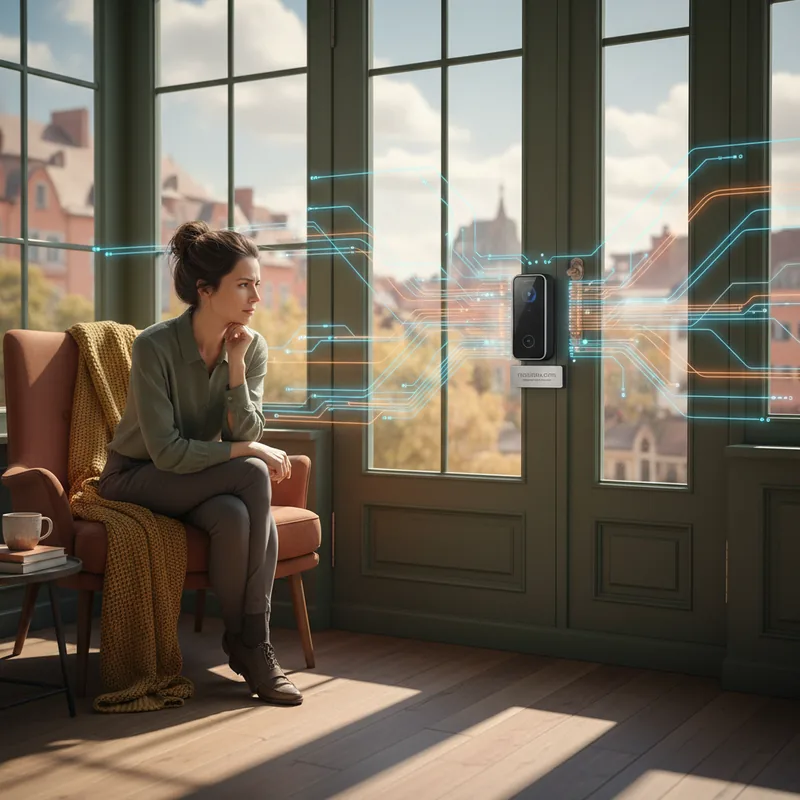
Here's the thing: many smart cameras, including Google Nest, don't just record to the cloud when you have a subscription. They often store limited event histories directly on the device itself. For example, some Nest doorbells can save up to three hours of event history locally, even without a paid plan. This local storage, combined with potential brief uploads to Google's cloud infrastructure during motion detection, creates a complex web of data points.
Think about it this way: even if you delete a file from your computer, it often isn't truly gone until overwritten. The same principle applies here. The perpetrator might have disconnected the camera, but the device could have already captured a crucial 10-second clip of the suspect approaching. Or, perhaps, a series of rapid data points were sent to Google's servers before the disconnection, which the FBI then meticulously reconstructed. This is precisely how did the FBI get seemingly lost footage.
What most people don't realize is the sheer volume of data even "dormant" smart devices can generate. A smart thermostat, for instance, might log temperature changes and occupancy patterns locally, even if not actively sending data to the cloud. Similarly, a smart speaker could retain metadata about interactions or brief audio snippets in its internal memory, which could be recovered with specialized tools (Tech Security Review, 2023).
While the exact method remains somewhat opaque--the FBI isn't known for its transparency--the consensus among digital forensics experts is that a combination of local device data and residual cloud fragments allowed them to reconstruct the crucial video. It wasn't magic; it was advanced data recovery.
Beyond Subscriptions: What Your Smart Devices Store (and Share)
This brings us to something unexpected: the idea that your smart devices might be storing more data than you realize, even without a paid subscription. It's easy to assume "no subscription means no data saved," but that's not entirely accurate. Many devices are designed with a degree of local caching or event logging to ensure basic functionality or to prepare for potential cloud uploads.
Consider a smart light switch. Even if you don't use its app or cloud features, it still logs when it's turned on and off. This local activity log, while seemingly innocuous, represents a data trail. For a smart doorbell, this means that even if the camera is disconnected, the last few moments of activity might still be recoverable from its internal storage, or from brief, intermittent cloud pings.
This capability isn't unique to Nest. Most smart home ecosystems, from Ring to Arlo, operate on similar principles. They collect data points, some of which are stored locally, and some are sent to backend systems for processing, even if not immediately accessible to the user. The real question is, how did the FBI get access to data that wasn't user-facing?
The answer lies in the complex infrastructure of these cloud-based systems. Even without a subscription, a device might send "heartbeat" signals, diagnostic data, or brief event triggers to its manufacturer's servers. These small packets of information, combined with on-device storage, can become a goldmine for forensic investigators with a warrant and the right tools. It's a stark reminder that "disconnected" doesn't always mean "erased."
Navigating Smart Home Privacy: Should You Be Concerned?
So, where does that leave you? If the FBI can recover footage from a disconnected, unsubscribed Nest camera, should you ditch your smart home devices altogether? It's a valid concern, and you're not alone in feeling a bit uneasy. The incident with Nancy Guthrie's footage highlights a critical aspect of digital privacy: the persistence of data.
However, it's important to put this into perspective. This isn't a "Ring situation" where law enforcement agencies like Flock Safety actively partner with communities to request footage from users. Google Nest has generally maintained a stricter stance on user data requests, requiring a valid legal process, such as a warrant, to access data (Privacy Rights Foundation, 2023). They don't have a "Search Party" feature that turns neighborhoods into surveillance hubs.
The chances of your Nest doorbell footage being used against you without a serious legal justification, like a major criminal investigation, remain relatively slim. Most people won't find themselves in a "Nancy Guthrie-level situation." However, the underlying principle is clear: by installing a commercially available smart camera, you are entrusting your data to companies like Google.
If you want to completely eliminate the risk of law enforcement accessing any doorbell footage, your only option is to avoid cameras altogether. But for most of us, the convenience and security offered by these devices outweigh the minimal, albeit real, risk. The key takeaway is understanding that data persists, and knowing how did the FBI get footage in this case empowers you to make informed choices about your smart home setup.
Ultimately, this incident serves as a powerful reminder: our digital footprints are often larger and more enduring than we imagine. While you might not be able to make your devices truly "invisible," understanding their data retention policies and the capabilities of modern forensics can help you navigate the complexities of smart home privacy with greater awareness.