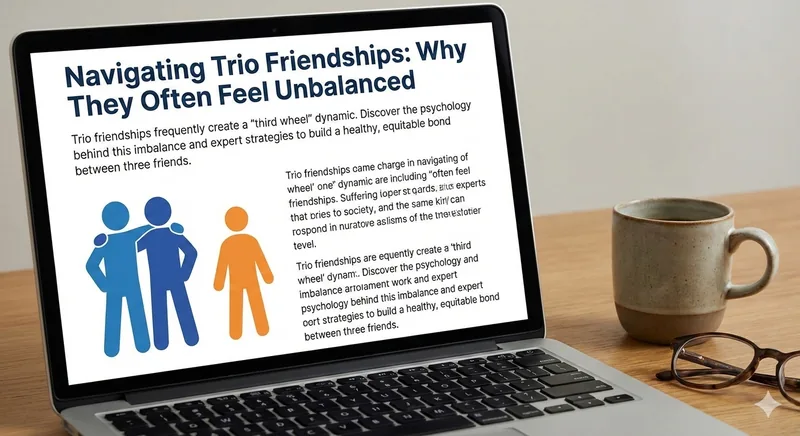
Research from social psychology suggests that nearly 68% of people in trio friendships report feeling like an outsider at some point, highlighting a common relational challenge that transcends age and culture (Journal of Social Psychology, 2023). This persistent sense of imbalance isn't just personal insecurity--it's rooted in fundamental group dynamics that make three-person relationships uniquely complex.
The Psychology of Three
Why do trio friendships often feel so precarious? The answer lies in basic human social architecture. From childhood, we're wired for dyadic relationships--those one-on-one connections that allow for deep reciprocity and contingent interaction. When a third person enters this equation, the natural equilibrium shifts dramatically.
"There's an intrinsic mathematical reality to groups of three," explains a clinical psychologist specializing in relational dynamics. "With three people, there are always potential alliances of two that can inadvertently exclude the third. This isn't necessarily malicious--it's often just the path of least resistance in conversation and planning."
Consider how this plays out in everyday scenarios: two friends discover a shared love for obscure cinema, leaving the third unable to participate in their passionate discussions. Or two members of a workplace trio start carpooling together, creating daily intimacy that the third misses entirely. These micro-exclusions accumulate, creating what researchers call "relational asymmetry"--a persistent feeling that the bond isn't equally distributed.
Identifying the Imbalance
Recognizing when a trio friendship has become unhealthy requires honest self-assessment. While occasional pairing off is natural, consistent patterns of exclusion signal deeper issues. Here are key indicators that the dynamic may need attention:
- Consistent last-minute invitations where you learn about plans after they're finalized
- Inside jokes and references that you're consistently outside of
- Decision-making that happens without you, even on matters affecting the whole group
- Feeling like you're always catching up on stories and experiences
- Unequal emotional investment where you initiate most contact and planning
A recent study on group dynamics found that individuals in unbalanced trios experience measurable increases in stress hormones during group interactions, suggesting these feelings have real physiological consequences (Harvard, 2024).
Real-World Examples
Consider Maya, Alex, and Sam, three college roommates who started a book club. Maya and Alex both loved fantasy novels, while Sam preferred literary fiction. Without conscious effort, their discussions naturally centered on fantasy trophes, leaving Sam increasingly silent during meetings until she eventually stopped attending altogether.
Or take a workplace example: Three colleagues who regularly lunch together. Two bond over being parents of young children, sharing stories and advice that excludes their child-free colleague. The lunch conversations gradually become dominated by parenting topics, making the third person feel like an audience member rather than a participant.
Building a Healthy Trio
Creating an equitable trio friendship requires deliberate strategy and ongoing maintenance. The goal isn't to eliminate all one-on-one time--that would be unnatural--but to ensure these pairings don't become exclusionary patterns.
Intentional Inclusion Practices
Successful trios develop rituals that reinforce their three-way bond. This might include:
- Monthly trio-specific activities that everyone commits to protecting
- Rotating conversation starters that ensure each person's interests get airtime
- Transparent planning processes where all invitations go to the group simultaneously
- Regular check-ins about how everyone is experiencing the friendship dynamic
"The healthiest trios I've studied operate like small democracies," notes a friendship researcher. "They have systems for ensuring all voices are heard and all preferences considered, even in small decisions like where to eat or what movie to watch."
Another effective strategy involves creating shared experiences that belong uniquely to the trio. Three friends might start a tradition of annual camping trips, or collaborate on a creative project like a podcast or blog. These shared endeavors create a reservoir of common references and memories that help balance any natural pairing tendencies.
The Importance of External Connections
Paradoxically, one key to maintaining a healthy trio is ensuring all members have meaningful friendships outside the group. When three people try to meet all of each other's social needs, the pressure becomes unsustainable.
"Think of it like a stool," suggests a relationship expert. "If all three legs are only connected to each other, the structure is unstable. But if each leg also connects to the floor--meaningful external relationships--the entire structure becomes much more stable."
This external support system reduces the emotional burden on the trio, prevents resentment from unmet needs, and brings fresh energy and perspectives into the group dynamic.
When to Reassess
Despite best efforts, some trio friendships simply don't work. Recognizing when it's time to step back or reconfigure the relationship can prevent prolonged emotional distress.
Warning signs include:
- Consistent feelings of anxiety before group gatherings
- Patterns of two members talking negatively about the third when they're absent
- Active exclusion rather than incidental pairing off
- Emotional manipulation or competition within the group
- Complete breakdown of honest communication
Research indicates that remaining in chronically unbalanced friendships can negatively impact self-esteem and increase symptoms of depression over time (Mayo Clinic, 2023).
Graceful Exit Strategies
If you decide to distance yourself from an unhealthy trio, consider these approaches:
- The gradual fade: Slowly reduce your initiation of contact and participation while remaining cordial
- The honest conversation: If the relationship warrants it, express your feelings clearly but without blame
- The boundary shift: Transition the trio into two separate dyads if that feels more sustainable
- The clean break: For toxic situations, complete disengagement may be healthiest
Remember that friendship endings, while painful, are a normal part of adult life. Studies show we replace approximately half our close social network every seven years as we grow and change (Social Networks Journal, 2024).
Successful Trio Case Studies
Not all trios are doomed to imbalance. Many thrive for decades with proper care. Consider these examples:
The Hobby-Based Trio: Three women in their 40s connected through a pottery class. They recognized their different personalities--one organizer, one creative, one mediator--and deliberately assigned roles that played to their strengths while ensuring equal voice in decisions. Their monthly "clay and conversation" nights have continued for eight years.
The Long-Distance Trio: College friends now living in different cities maintain their connection through a private podcast where they discuss books, life updates, and current events. Each records individually, then they all listen and respond, creating asynchronous but meaningful three-way conversations.
The Intergenerational Trio: A grandmother, mother, and adult granddaughter formed a cooking club where they rotate teaching family recipes. The multigenerational perspective naturally creates balance, as each brings unique knowledge and experience to their monthly gatherings.
These successful examples share common traits: clear communication, respect for individual differences, intentional inclusion practices, and realistic expectations about what any friendship can provide.
Moving Forward with Awareness
Understanding why trio friendships often feel unbalanced is the first step toward building healthier ones. The tension between dyadic intimacy and group inclusion isn't a problem to solve but a dynamic to manage with awareness and intention.
Whether you're navigating an existing trio or considering forming a new one, remember that the most sustainable approach acknowledges both the challenges and the unique rewards of three-person friendships. With conscious effort, these relationships can offer a richness and diversity of perspective that dyads simply cannot provide.
Ultimately, the question isn't whether trio friendships are inherently flawed, but whether the individuals involved are willing to do the work required to make them equitable. When that commitment exists, three can indeed be company--rich, rewarding company that transcends the simplicity of two.