Crafting a compelling abstract is a crucial skill for any academic writer, especially when adhering to the American Psychological Association (APA) style. If you need to write an abstract APA format? This guide provides the definitive steps and insights for 2025, ensuring your summary effectively captures the essence of your scholarly work. An APA abstract is a concise, self-contained summary of your research paper, typically 150-250 words, designed to give readers a quick yet comprehensive overview. It helps researchers determine if your paper is relevant to their interests, making it a gateway to your full study.
This guide will walk you through everything from understanding the core purpose of an APA abstract to detailed instructions for various paper types, all while incorporating the latest best practices for academic writing in 2025.
What is an APA Abstract and Why is it Essential?
An APA abstract serves as a brief, yet comprehensive, summary of a scientific or academic paper formatted according to the guidelines of the American Psychological Association. It is typically a single paragraph, ranging from 150 to 250 words, that encapsulates the core content of your research. The primary goal of an APA abstract is to provide readers with a quick, accurate, and objective understanding of your paper’s purpose, methods, findings, and implications, without requiring them to read the entire document. This makes it an indispensable tool for academic discovery and engagement.
In the fast-paced academic landscape of 2025, where digital databases and search engines are the primary means of discovering research, a well-written abstract is more critical than ever. It acts as the first point of contact for potential readers, including fellow researchers, students, and practitioners. A compelling abstract can significantly increase the visibility and readership of your work, as it often determines whether someone chooses to delve deeper into your full paper. Without an effective summary, even groundbreaking research might go unnoticed. Therefore, mastering the art of writing an abstract in APA style is not just about adhering to guidelines; it’s about maximizing the impact and reach of your scholarship.
Understanding the Basics of APA Abstract Format
When preparing a paper for publication or submission in psychology and other social sciences, understanding the fundamental requirements for an abstract APA format? is crucial. The abstract is always placed on a separate page, immediately following the title page and preceding the main body of your paper. While professional journal submissions almost always require an APA abstract, student papers might have varying requirements, so always confirm with your instructor. The standard length for an abstract falls between 150 and 250 words, though specific journals or courses may have slightly different expectations. It should be written as a single, unindented paragraph.
The purpose of this highly condensed summary is to provide a snapshot of your entire paper. Think of it as an elevator pitch for your research, designed to inform readers quickly about what your paper covers and whether it aligns with their interests. The APA Publication Manual emphasizes that every sentence in the abstract should be crafted for maximum impact, conveying essential points, concepts, or findings with precision. An effective abstract is objective and accurate, reporting on your paper’s content rather than offering commentary. It must only include information that is also present within the main body of your paper, ensuring consistency and integrity. For instance, if your paper introduces a novel experimental design, your abstract should briefly mention this without going into excessive detail that isn’t elaborated upon later.
Key Elements of Your APA Abstract Page
The abstract page in APA format has specific layout and content requirements that differentiate it from other sections of your paper. Beyond just the paragraph summary, the entire page must be formatted precisely to meet academic standards. For 2025 submissions, ensuring every detail is correct can prevent unnecessary revisions and enhance the professionalism of your work.
Your abstract page should include:
- Page Header: A running head (a shortened version of your paper’s title, in all caps) should appear in the top-left corner of the page, aligned with the left margin. This is followed by the page number, which should be ‘2’, in the top-right corner, aligned with the right margin.
- Section Label: The word “Abstract” should be centered and bolded at the top of the page, on its own line. This clearly identifies the section for readers and indexing systems.
- The Abstract Paragraph: This is the core of your abstract page. It must be a single, double-spaced paragraph, without any indentation. As previously mentioned, it should be between 150 and 250 words (unless specified otherwise), summarizing your paper’s introduction, methods, results, and discussion. For example, a well-crafted abstract might begin, “This study investigated the impact of digital wellness interventions on adolescent mental health, hypothesizing a significant reduction in screen time and improved mood scores among participants (Harvard, 2024).” This immediately sets the stage and introduces the main focus.
- Keywords Section: Immediately below the abstract paragraph, you will include a list of keywords. This line should begin with “Keywords:” (italicized), followed by three to five relevant terms separated by commas. This section is indented half an inch from the left margin, just like the first line of a regular paragraph. Keywords are crucial for digital discoverability, helping researchers find your paper when searching academic databases. For instance, if your paper is about the psychological effects of climate change, your keywords might be: climate change, eco-anxiety, mental health, environmental psychology.
Adhering to these elements ensures your abstract page is not only informative but also meets the rigorous presentation standards of APA style, a vital aspect for any serious academic contribution.
Step-by-Step Guide to Writing Your APA Abstract
Writing an effective abstract APA format? is a process best undertaken after your main paper is complete. While the abstract appears at the beginning of your paper, it is the final section you should write. This ensures you can accurately and comprehensively summarize all aspects of your finished research. Follow these steps to craft a powerful and precise abstract:
- Complete Your Paper First: Before attempting to write your abstract, ensure your entire research paper, including the introduction, literature review, methodology, results, and discussion sections, is finalized. This allows you to have a clear and accurate understanding of your paper’s scope, findings, and conclusions. Trying to write an abstract before your paper is finished often leads to inaccuracies or inconsistencies.
- Start on a New Page with Correct Formatting: Begin your abstract on a fresh page. Ensure your running head (if required by your instructor or journal) and page number ‘2’ are correctly placed in the header. Center the bolded word “Abstract” at the top of the page. Remember, no indentation for the abstract paragraph itself.
- Adhere to Word Count Guidelines: The standard word count for an APA abstract is between 150 and 250 words. Be mindful of this range. While brevity is key, ensure you don’t sacrifice clarity or essential information. If your professor or target journal specifies a different word count, always prioritize their instructions. A concise abstract might state, “This study explored the efficacy of mindfulness-based stress reduction (MBSR) techniques on college students’ academic performance and anxiety levels. Participants showed significant improvements in both metrics post-intervention.”
- Structure the Abstract Logically: Your abstract should mirror the structure of your paper. Begin by briefly stating the research problem or objective (introduction). Follow with a summary of your methodology, including participants, design, and key procedures. Next, present your main findings or results. Conclude with a brief discussion of the implications or conclusions drawn from your research. This logical flow ensures a comprehensive overview.
- Review Examples for Inspiration: Consult abstracts from professional journals in your field. Pay attention to how authors condense complex information into a few impactful sentences. Notice how they prioritize key information and maintain objectivity. These examples serve as excellent models for summarizing your own paper’s main ideas effectively.
- Draft and Refine for Clarity and Conciseness: Write a rough draft of your abstract, aiming to summarize each major section of your paper in one to two sentences. Once you have a complete draft, critically review it for length, clarity, and precision. Eliminate any jargon, unnecessary words, or redundant phrases. Each sentence should carry maximum information. Ask yourself if someone unfamiliar with your work could understand the core message from your abstract alone.
- Seek Peer Feedback: Have a friend, classmate, or mentor read your abstract. A fresh pair of eyes can help identify areas that are unclear, confusing, or contain grammatical errors. They can also confirm if your abstract accurately reflects the content of your full paper. This step is invaluable for ensuring your abstract is polished and professional.
Remember, the abstract is often the most-read part of your paper. Dedicate sufficient time to writing and refining it to ensure it makes a strong first impression and accurately represents your scholarly contribution.
Crafting Abstracts for Specific Paper Types
The general principles of an abstract APA format? remain consistent, but the specific content you emphasize will vary depending on the type of paper you are writing. Tailoring your abstract to the paper’s nature ensures it provides the most relevant summary for your audience.
Experimental Report Abstracts
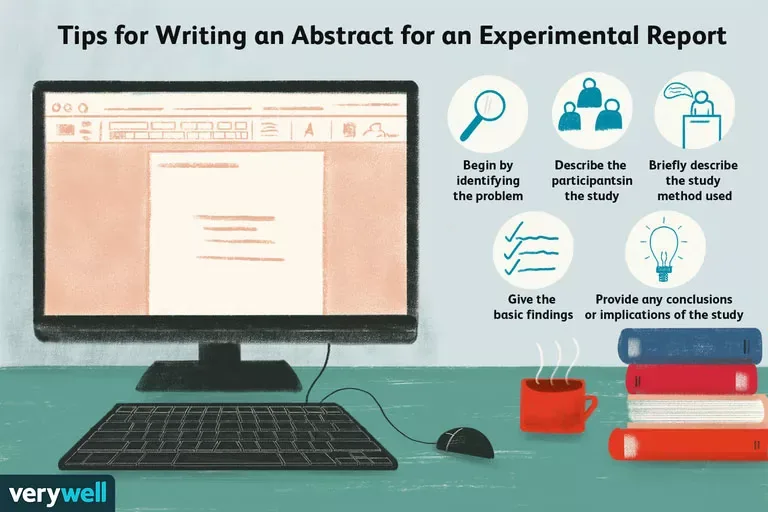
For an experimental report, your abstract should clearly outline the core components of your empirical study. This type of abstract typically focuses on the research question, participants, methods, key findings, and implications.
- Problem Identification and Hypothesis: Begin by stating the primary research question or problem you investigated. Clearly articulate your hypothesis or the specific aim of the study. For instance: “This study examined the effect of cognitive behavioral therapy (CBT) on reducing social anxiety symptoms in young adults, hypothesizing that participants receiving CBT would report significantly lower anxiety scores compared to a control group.”
- Participants: Briefly describe the study’s participants, including their number and how they were selected. Example: “A total of 120 undergraduate students (60 males, 60 females, Mage=20.3 years) were randomly assigned to either the CBT intervention or a waitlist control condition.”
- Methodology: Summarize the experimental design (e.g., within-subjects, between-subjects, mixed design) and the main procedures or interventions used. Avoid excessive detail, but provide enough information for readers to grasp the study’s approach.
- Key Findings: Present the basic results of your study. Focus on the most significant or salient findings without delving into statistical minutiae. This is a preview of your results section.
- Conclusions and Implications: Conclude by discussing what your results suggest and their broader implications. What new understanding does your study offer, and what directions does it point to for future research?
Literature Review Abstracts (including Meta-Analyses)
An abstract for a literature review or meta-analysis summarizes existing research rather than presenting new empirical data. The focus shifts to the scope of the review, selection criteria, and synthesized findings.
- Problem/Topic of Interest: Clearly define the specific topic or problem your review addresses. What gap in the literature does your review aim to fill? Example: “This comprehensive literature review synthesizes current research on the psychological impact of remote work arrangements on employee well-being and productivity since 2020.”
- Selection Criteria: Explain the criteria used to select the studies included in your review or meta-analysis. This provides transparency about your scope. For example: “Studies published between 2020 and 2024, focusing on adult populations in Western countries and employing quantitative measures of well-being, were included.”
- Participants (of reviewed studies): Inform the reader about the characteristics of participants across the studies you reviewed, if relevant. Were they college students, clinical populations, or a general adult demographic?
- Main Results/Synthesis: Provide a brief summary of the main findings or trends identified across the reviewed literature. For a meta-analysis, this would include the overall effect size.
- Conclusions and Implications: Discuss the overarching conclusions drawn from your synthesis and what these reveal about the current state of research on the topic. What theoretical or practical implications arise from your review?
Regardless of the paper type, remember that your abstract is a standalone summary. It must be clear, concise, and accurately reflect the content of your full paper, making it an invaluable tool for academic communication in 2025.
Optimizing Your APA Abstract with Keywords
Beyond the descriptive paragraph, a critical component of an abstract APA format? is the inclusion of keywords. These terms are not just an afterthought; they are powerful tools for discoverability in the digital age of 2025. Keywords act as searchable tags that help academic databases and search engines categorize and index your paper, making it easier for other researchers, students, and practitioners to find your work when they are looking for information on specific topics.
The APA guidelines suggest including between three and five keywords. These should be the most salient terms that accurately represent the core themes, concepts, and variables of your paper. Choosing the right keywords is essential because irrelevant or overly broad terms will hinder your paper’s visibility, while well-selected terms can significantly boost its reach.
Here’s how to effectively identify and use keywords:
- Reflect on Your Paper’s Core: Think about the main topics, theories, methods, and populations your paper addresses. What are the most important words or phrases that someone would use to search for research like yours? For instance, if your paper is titled “The Efficacy of Digital Detox Interventions on Adolescent Sleep Quality,” potential keywords might immediately come to mind.
- Utilize Your Introduction and Discussion: Often, the most important terms are found in your paper’s introduction (where you define your problem) and discussion (where you interpret your findings and suggest future research). Review these sections for recurring, significant terms.
- Be Specific but Not Obscure: Aim for keywords that are specific enough to narrow down searches but not so niche that no one would think to use them. For example, instead of just “therapy,” use “cognitive behavioral therapy” or “mindfulness-based interventions.”
- Consider Synonyms and Related Terms: While you have a limited number of keywords, think about closely related terms. If your paper uses “well-being,” you might also consider “mental health” if it’s a significant aspect.
- Format Correctly: The keywords should appear on a new line immediately following your abstract paragraph. Indent this line by a half-inch, type “Keywords:” (italicized), and then list your chosen terms, separated by commas. Do not end with a period.
Example Keyword List: If your paper focuses on the relationship between social media use and body image concerns among young adults, your keywords might be: Keywords: social media, body image, adolescents, self-esteem, digital platforms
By strategically selecting and correctly formatting your keywords, you significantly enhance the discoverability of your research, ensuring your valuable contributions reach the widest possible audience in the academic community of 2025.
Conclusion
Mastering the abstract APA format? is an indispensable skill for anyone navigating the academic and scientific landscapes of 2025. A well-crafted abstract is more than just a summary; it’s a powerful gateway to your research, influencing whether your work is discovered, read, and cited. By meticulously following the APA guidelines for structure, content, and word count, and by carefully selecting impactful keywords, you ensure your paper makes a strong first impression and effectively communicates its core message.
Remember to approach your abstract as the final, polished distillation of your entire paper. It should be objective, accurate, and concise, reflecting the integrity and depth of your research. In an era where information overload is common, a clear and compelling APA abstract is your best tool for standing out and contributing meaningfully to your field. Take the time to perfect this crucial section, and you’ll enhance the visibility and impact of your scholarly endeavors.