It's 10 PM. You've just finished another day that felt like an endless sprint, and now your mind won't quiet down. Tomorrow's to-do list, that awkward conversation from earlier, the looming deadline--they all swirl, tightening your chest. You glance at the discreet stash, wondering if a little something might finally switch off the relentless chatter, offering a moment of peace. Many people, just like you, grapple with anxiety and wonder: can marijuana really reduce these overwhelming symptoms?
The truth is complex, nuanced, and far from a simple 'yes' or 'no.' While some find temporary relief, the long-term picture suggests a delicate balance of potential benefits and significant risks. No cannabis-derived products are currently FDA-approved to treat anxiety, and research is still in its early stages (U.S. Food & Drug Administration, n.d.).
This deep dive explores how cannabis interacts with anxiety, the risks involved, the legal landscape, and what truly effective, sustainable alternatives exist for managing your mental well-being.
Decoding Cannabis and Anxiety: The Complex Truth
For centuries, various cultures have used cannabis as an herbal remedy. Today, with increasing legalization across the United States for both medicinal and recreational purposes, researchers are intensely exploring how compounds like THC (tetrahydrocannabinol) and CBD (cannabidiol) might influence mental health conditions, particularly anxiety. The allure is understandable: a quick, natural-seeming path to calm.
The Allure of Relief
At first glance, the idea that cannabis could soothe anxious minds seems promising. Early research suggests that low doses of THC might indeed produce a subjective sense of anxiety relief and even feelings of euphoria or sociability (Childs et al., 2017). It's this immediate, noticeable shift that often draws individuals to self-medicate, hoping to quiet the inner storm. For some, medical marijuana is even considered for panic attacks, though this comes with a significant caveat.
Consider Sarah, a young professional who struggles with social anxiety. Before a networking event, she might take a small dose of a THC-dominant product, hoping it will loosen her up and make interactions easier. In the short term, she might feel a slight lift, a sense of calm that allows her to engage more readily. But this fleeting relief often masks a deeper issue, and the effectiveness of such a strategy is highly individual.
Beyond the Buzz: THC vs. CBD
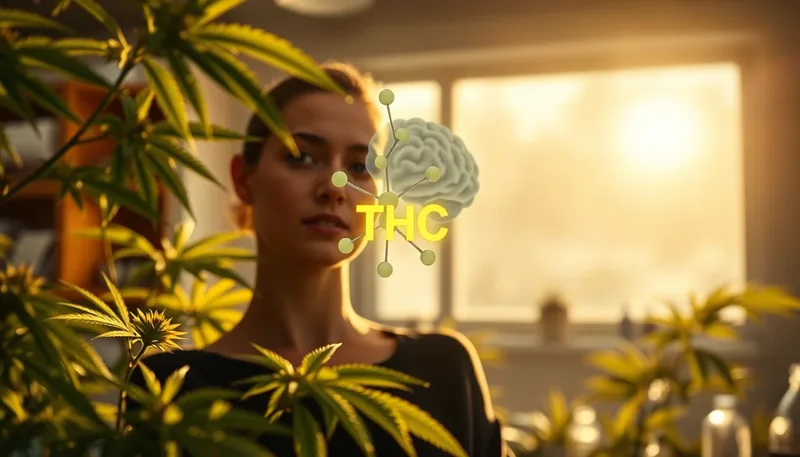
Cannabis contains hundreds of compounds, but THC and CBD are the primary players linked to mental health effects. THC is the psychoactive component responsible for the 'high,' impacting mood and perception. CBD, on the other hand, is non-psychoactive and has garnered attention for its potential therapeutic effects without the intoxicating buzz. Some evidence suggests CBD could be helpful in treating anxiety and addiction, but more rigorous research is still needed before it can be widely recommended (Shannon et al., 2019).
What most people don't realize is the critical difference in dosage. While low doses of THC might offer a sense of calm, higher doses often trigger the opposite effect, increasing negative mood and potentially inducing panic attacks (Childs et al., 2017). This dose-dependent response makes self-medication particularly risky, as it's easy to cross the line from perceived relief to heightened distress.
Short-Term Lull, Long-Term Loom
Beyond anxiety, cannabis has been explored for other mental health applications. Scientists at Washington State University found that smoking cannabis could significantly reduce self-reported levels of depression and stress in the short term (Cuttler et al., 2018). It's also been used for pain relief, especially for chronic or neuropathic pain, and some studies indicate it may improve sleep duration in the short term (Vaillancourt et al., 2022).
However, here's where it gets tricky: repeated use doesn't appear to lead to long-term symptom reduction. In fact, for some individuals, it might even worsen depression over time (Cuttler et al., 2018). So, while cannabis might offer a temporary lull, the question of whether can marijuana really reduce anxiety and other mental health symptoms in a sustainable, beneficial way remains largely unanswered and, in many cases, points to negative outcomes.
The Hidden Costs: Unpacking the Risks of THC for Anxiety
The immediate feeling of calm that some experience with cannabis can be compelling, but it's crucial to understand that these effects don't come without significant risks. Long-term or frequent use of THC-dominant marijuana is associated with a range of potential side effects that can undermine overall well-being, especially for those already struggling with anxiety.
A Shadow of Psychiatric Disorders
One of the most concerning findings from various studies is the link between self-medicating with marijuana, particularly in young adults, and higher rates of psychiatric disorders. This isn't just about general anxiety; it extends to panic disorder, depression, obsessive-compulsive disorder (OCD), and even schizophrenia (Feingold et al., 2016; Zvolensky et al., 2010; Spradlin et al., 2017; Hjorthøj et al., 2023).
Think about Liam, who started using cannabis in his late teens to escape feelings of sadness. Initially, he felt better, but over time, his depressive episodes became more frequent and severe. Research suggests that while depression might trigger cannabis use, higher consumption is often linked with worsened depressive symptoms (Womack et al., 2016). More research is needed to fully understand the causal relationship, but the correlation is stark.
Moreover, heavy marijuana use in adolescents, particularly among teenage girls, has been identified as a predictor for anxiety and depression, and an increased risk of suicide later in life (Gobbi et al., 2019). Certain susceptible individuals who regularly use high-potency marijuana may also face a greater risk of developing psychosis (Centers for Disease Control and Prevention, n.d.). If you or a loved one are experiencing suicidal thoughts, please seek immediate help.
The Trap of Dependence and Addiction
The central problem with using marijuana as an anxiety coping tool is its potential to create a psychological dependence. The effects are fast-acting, offering immediate, albeit temporary, relief. This can make individuals less likely to develop sustainable, behavior-based coping strategies that are effective in the long run.
This cycle often leads to cannabis use disorder, an addiction where a person cannot stop using the drug despite its negative impact on their life (National Institute on Drug Abuse, n.d.). Signs include continued use despite adverse physical or psychological effects, relationship problems, engaging in high-risk activities like driving while impaired, experiencing withdrawal symptoms, and intense cravings (National Institute on Drug Abuse, n.d.). Research indicates that around 30% of marijuana users will develop this disorder, with the risk four to seven times higher for those who start before age 18 (National Institute on Drug Abuse, n.d.).
Consider Maya, who found herself thinking, "I can't possibly give that presentation without a hit first." This thought pattern, where a substance becomes a perceived prerequisite for daily functioning, is a classic sign of psychological dependence. It highlights how quickly temporary relief can morph into a dependency that hinders genuine coping skills.
Those who use marijuana heavily may also experience cannabis withdrawal syndrome (CWS) when trying to cut back or stop. Symptoms include anxiety, irritability, mood swings, nervousness, sleep problems, and intense cravings, often leading to relapse (National Institute on Drug Abuse, n.d.).
When Relief Backfires: Increased Anxiety and Physical Effects
Ironically, for many, the very substance they turn to for relief can exacerbate their anxiety. People predisposed to higher anxiety levels are often more likely to experience negative effects like dysphoria or panic from THC (Feingold et al., 2016). THC can elevate heart rate, which, for someone already anxious, can intensify feelings of panic. Too much marijuana can lead to feelings of fear, paranoia, or a disturbing sense of disconnection from reality (National Center for Biotechnology Information, 2011).
Beyond mental effects, cannabis can cause dizziness, nausea, confusion, and blurred vision, all of which can contribute to a heightened state of anxiety (National Center for Biotechnology Information, 2011). A rare but serious consequence of frequent use, especially with today's more potent strains, is cannabis hyperemesis syndrome (CHS), involving cyclical nausea and vomiting (Perisetti et al., 2020). This paradoxical condition often finds relief only through abstinence.
Furthermore, long-term marijuana use is linked to memory loss, as THC alters the hippocampus, a brain region crucial for memory formation (National Institute on Drug Abuse, n.d.). Physical effects can also include cardiovascular strain, high blood pressure, impaired motor coordination, and an increased risk of falling or fainting (National Center for Biotechnology Information, 2011).
The dangers of self-medicating are clear: immediate relief reinforces use, even when the substance causes unpleasant side effects. This creates a challenging cycle that increases the risk of dependence. The critical question of can marijuana really reduce anxiety without introducing a host of other problems remains, for most, answered with a resounding caution.
Navigating the Legal Landscape: What You Need to Know
The legal status of marijuana for anxiety is a patchwork across the United States. While the federal government still classifies cannabis products containing more than 0.3% THC as illegal, many states have moved to legalize medical or recreational use.
A growing number of states and territories have specifically approved the use of medical marijuana to treat a diagnosed anxiety disorder. These include North Dakota, New Jersey, New Mexico, Nevada, Oklahoma, Pennsylvania, Puerto Rico, and Virginia. Additionally, states like California, New Hampshire, and Missouri grant doctors the discretion to prescribe medical marijuana treatments based on their professional judgment.
This evolving legal landscape adds another layer of complexity for individuals seeking to manage their anxiety. Even where legal at the state level, the federal stance means there are still significant legal and practical considerations that must be navigated carefully.
Beyond Cannabis: Proven Paths to Lasting Calm
It's vital to remember that a certain level of anxiety is a normal human experience, often serving as a helpful signal in threatening situations. However, when anxiety becomes pervasive, debilitating, and difficult to control, it's a clear sign to seek professional help. Fortunately, numerous effective and sustainable strategies exist to manage anxiety without the risks associated with cannabis.
Therapy: Rewiring Your Mind for Resilience
Proactive coping strategies, often learned through therapy, support groups, and educational resources, can create lasting change. Unlike the temporary effects of marijuana, these approaches build genuine resilience. Cognitive behavioral therapy (CBT), for instance, is a highly effective, evidence-based treatment that helps individuals identify and change the thought patterns and behaviors that contribute to their anxiety (Carpenter et al., 2018).
Working with a psychotherapist can help you uncover the underlying causes of your anxiety and develop personalized, long-term management tools. This collaborative process equips you with skills to navigate stress and anxiety, fostering a sense of control and empowerment that no substance can truly provide.
Medication: A Helping Hand When Needed
For many, prescription medication offers a safe and effective treatment pathway for anxiety disorders. Selective serotonin reuptake inhibitors (SSRIs), for example, have a firmly established track record of efficacy and safety (Strawn et al., 2018). Unlike marijuana, the long-term risks and benefits of these medications are well-studied and understood, making them a more predictable and often safer choice.
Some anti-anxiety medications are taken daily to manage ongoing symptoms, while others are prescribed for episodic use during periods of extreme anxiety or panic attacks. A psychiatrist or primary care doctor can assess your specific situation and recommend a treatment plan that aligns with your needs and health profile. This professional guidance ensures that if medication is appropriate, it's used safely and effectively, providing genuine relief where can marijuana really reduce symptoms often falls short.
Seeking Support: Breaking Free from Cannabis Use Disorder
If you've been relying on marijuana or other THC-based products to cope with anxiety and suspect you might be developing a dependence or addiction, remember that help is readily available. Cannabis use disorder is a treatable condition, and various therapeutic approaches can guide you toward recovery.
Talk therapy is often the cornerstone of treatment, helping individuals address patterns that contribute to substance use, strengthen their motivation to quit, and develop healthier coping mechanisms for stress. Common types of therapy include:
- Cognitive behavioral therapy (CBT): Focuses on changing the thoughts and behaviors linked to drug use (Sherman & McRae-Clark, 2016).
- Motivational enhancement therapy: Helps increase an individual's desire and commitment to change (Sherman & McRae-Clark, 2016).
- Contingency management: Uses behavioral strategies to reinforce positive behaviors, such as abstinence, through incentives (Sherman & McRae-Clark, 2016).
While there are currently no FDA-approved medications specifically for cannabis use disorder, doctors may prescribe medications to treat co-occurring mental health conditions like anxiety or depression, which can be a significant part of the recovery journey (Kondo et al., 2020). If you or a loved one are struggling with anxiety or addiction, please reach out to the Substance Abuse and Mental Health Services Administration (SAMHSA) National Helpline at 1-800-662-4357 for information on support and treatment facilities in your area.