In the pursuit of a fulfilling life, happiness often takes center stage. Yet, our emotional landscape is far richer and more nuanced than this single, often fleeting, feeling. Beyond the simple state of being happy, a vibrant spectrum of positive emotions beyond happiness contributes profoundly to our well-being, resilience, and personal growth. Understanding and cultivating these diverse uplifting feelings can unlock deeper satisfaction and meaning in our daily lives as we navigate the complexities of 2025 and beyond.
Psychologist Barbara Fredrickson, in her seminal work Positivity, highlights that a broad range of positive emotions helps us build personal resources and broaden our perspectives in invaluable ways (Fredrickson, 2001). These distinct emotional states, while sometimes overlapping, each offer unique benefits, from strengthening social bonds to inspiring creativity. By recognizing and actively seeking these emotions beyond happiness, we can create a more robust foundation for a truly joyful existence.
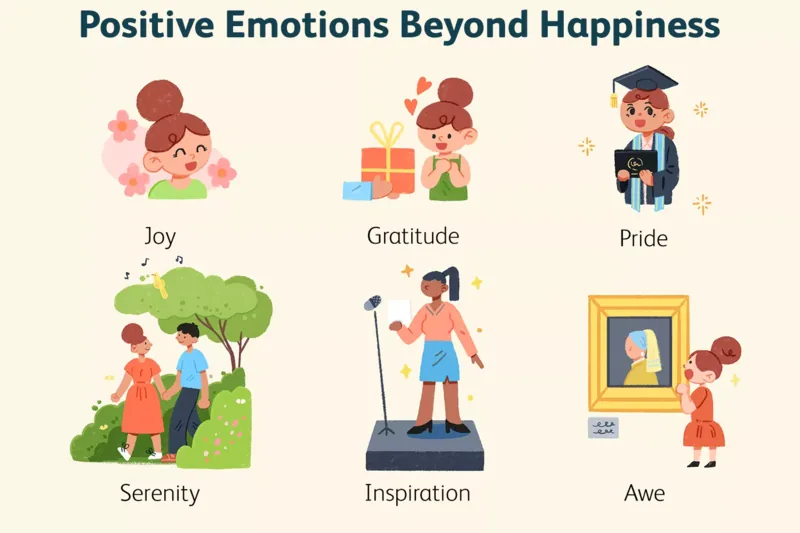
Joy
Joy stands out as a distinct and powerful positive emotion, often described as a profound response to positive events or circumstances. It’s more than just a fleeting good mood; studies have linked consistent experiences of joy to increased long-term well-being, suggesting it activates unique pathways in our brain compared to other positive states (Watkins et al., 2018). When we are truly delighted by a situation, joy naturally blossoms, enriching our perception of the world.
Experiencing joy can be as simple as relishing a beautifully prepared meal at a new restaurant or sharing an enlightening conversation with a cherished friend. These moments, where everything aligns perfectly, fill us with a deep sense of contentment and pleasure. For example, the pure elation of watching a child discover something new, like the magic of bubbles, can evoke an immediate and powerful feeling of joy that resonates deeply. Actively seeking out such delightful experiences can significantly enhance our overall emotional health.
Gratitude
Gratitude, often interchangeably referred to as thankfulness or appreciation, is a cornerstone of positive psychology and a potent emotion beyond happiness. It arises when we consciously acknowledge the positive influences, people, and circumstances in our lives. This recognition can range from profound appreciation for significant gifts or acts of kindness to a simple acknowledgment of the ability to wake up each new day, fostering a deeper connection to our present reality.
The more gratitude we cultivate, the more likely we are to experience other uplifting feelings, including joy. This powerful emotion encourages prosocial behaviors, prompting us to “pay it forward” and contribute positively to our communities (Shiraki & Igarashi, 2018). For instance, feeling grateful for your own career success might inspire you to mentor a junior colleague, offering guidance without expecting anything in return. While predominantly positive, gratitude can sometimes evoke complex emotions like guilt if we feel unable to reciprocate kindness, highlighting its multifaceted nature in our emotional landscape.
Pride
Pride is a positive emotion we experience when we achieve a significant goal or make a meaningful contribution, reflecting a sense of accomplishment in our abilities. This feeling isn’t limited to personal triumphs; we can also feel immense pride in others, such as watching a family member graduate or seeing a friend receive a well-deserved promotion. It’s about recognizing inherent worth and effort, whether in ourselves or those we cherish.
Authentic pride, which stems from genuine achievements, is a powerful motivator, fueling our desire to continue setting and reaching new goals, thereby enhancing performance in various aspects of life (Weidman et al., 2015). The validation from others can amplify these feelings; the more value others place on our accomplishments, the greater the pride we typically feel. For example, a student might feel immense pride not just from earning a high grade, but from the recognition and praise received from a respected teacher, solidifying their sense of capability and driving future academic pursuits. This feedback loop helps us internalize our successes and strive for even more.
Serenity
Serenity embodies a state of profound peacefulness and calm, a gentle emotion beyond happiness that brings a deep sense of contentment. It arises when we find ourselves in circumstances that feel effortless, harmonious, and simply “right.” Imagine a tranquil Sunday morning spent leisurely with loved ones, or the quiet solace found during a contemplative walk through a blooming botanical garden. These moments allow us to truly breathe and be present.
According to Fredrickson’s broaden-and-build theory, contentment encourages us to savor the present moment and reflect on our priorities, leading to a deeper understanding of ourselves (Fredrickson, 2001). This inner peace has tangible benefits; research indicates that children who experience more serenity tend to exhibit more prosocial behaviors and less aggression (Cuello & Oros, 2014). They are often more inclined to offer help and comfort to others, demonstrating the outward ripple effect of inner calm. Embracing serenity allows us to pause, re-center, and appreciate the quiet beauty of existence.
Interest
Interest is a dynamic positive emotion characterized by focusing our attention on something that holds personal significance or novelty. It’s the spark that ignites curiosity, drawing us towards exploration and learning. Whether you’re captivated by a complex psychological theory, engrossed in a historical documentary, or fascinated by a new musical genre, interest invites us to delve deeper. This emotion is a crucial driver of engagement, propelling us beyond the familiar into new intellectual and experiential territories.
While we often find comfort in what’s familiar, interest thrives on novelty, prompting us to discover new ideas, places, and skills (Sung et al., 2016). It energizes the learning process, acting as a vital motivator for academic success and lifelong personal development (Harackiewicz et al., 2016). Consider the intense focus a budding artist develops when learning a new technique, spending hours refining their craft. This sustained engagement, fueled by interest, not only builds expertise but also opens up new avenues for creativity and intellectual growth, making it a cornerstone of continuous self-improvement.
Amusement
Amusement is a joyful emotion derived from perceiving something as funny or entertaining, culminating in laughter or a lighthearted feeling. It’s an involuntary response that bubbles up, even when we might try to suppress it in inappropriate settings. Whether it’s the infectious giggle of a baby, a perfectly timed witty remark, or a hilarious meme, amusement serves several valuable purposes in our emotional repertoire. It is a powerful antidote to stress, offering a much-needed break from the seriousness of life.
Aristotle recognized amusement as a form of relaxation, providing relief from daily pressures and worries (Robinson, 2018). When shared with others, laughter, the outward expression of amusement, significantly strengthens social bonds and fosters a sense of connection (Caruana, 2017). Beyond its social benefits, laughter offers tangible health advantages: it decreases stress hormones, boosts immune system function, and increases endorphin secretion, which can alleviate discomfort and improve mood (Yim, 2016). Actively seeking out humor, such as engaging with comedic content or playful interactions, is a simple yet effective way to cultivate this enriching emotion.
Hope
Hope is defined as the expectation that future experiences will be positive, or that challenging situations will resolve favorably. It’s the steadfast belief in a brighter tomorrow, even when current circumstances are difficult (APA, 2018). This powerful emotion beyond happiness provides a vital lifeline during hard times, significantly impacting our mental and physical wellness. It offers a forward-looking perspective, encouraging perseverance through adversity.
Research consistently shows that hope can improve well-being and psychosocial outcomes. For instance, a study on newly diagnosed cancer patients found that those with higher levels of hope experienced greater well-being and better adaptation to their illness (Peh et al., 2016). Moreover, when combined with self-compassion, hope helps individuals cognitively reassess negative events, such as athletes recovering from a game loss, leading to improved future performance (Doorley et al., 2022). Cultivating hope involves envisioning positive possibilities and taking small, actionable steps towards desired outcomes, reinforcing our belief in a favorable future.
Inspiration
Inspiration is a profound emotion that arises when we witness others embodying their best selves, whether through exceptional moral character, masterful performance, or remarkable excellence. It sparks a recognition of our own potential for greatness, connecting us to a higher sense of purpose and capability. This uplifting feeling acts as a catalyst, urging us to strive for personal and professional growth, making it a key emotion beyond happiness for self-improvement.
Inspiration empowers us to push forward through challenges, motivating us to meet our needs and achieve ambitious goals (Buheji et al., 2014). It’s also strongly linked to increased creativity; engaging in activities that inspire us can ignite our imagination and lead to novel ideas (Liang et al., 2013). This could involve listening to an impactful speaker, immersing ourselves in nature, or engaging in collaborative brainstorming sessions. By actively seeking out inspiring experiences and narratives, we can continuously fuel our drive for innovation and personal evolution, transforming abstract ideals into actionable aspirations.
Awe
Awe is a transformative emotion that pulls us into a profound sense of connectedness to something vastly larger than ourselves, often triggered by grandeur or immense beauty. It’s that breathtaking moment when you gaze at a starlit sky from a remote wilderness, feeling utterly overpowered by wonder and respect. Awe has the unique power to reshape our perception of the world and our place within its vastness, offering a humbling yet exhilarating experience that transcends ordinary positive emotions.
When experiencing awe, individuals often report an altered perception of time, a diminished sense of self, and heightened feelings of interconnectedness (Yaden et al., 2019). This profound emotion also inspires scientific thinking, prompting us to question the natural world and pursue deeper understanding (Gottlieb et al., 2018). For example, witnessing the sheer power of a massive waterfall or the intricate beauty of a microscopic organism can ignite a desire to comprehend the underlying principles of the universe. Actively seeking experiences that evoke awe, whether in nature, art, or human achievement, can broaden our perspective and foster a sense of shared humanity.
Love
Love, arguably the most frequently felt positive emotion, is defined by psychologist Barbara Fredrickson as the shared experience of any other positive emotion with someone you deeply care about. It’s a powerful force that allows us to understand others more intimately, prioritize their well-being, and build profound levels of intimacy and trust (Otero et al., 2019). Love is not just a feeling; it’s an active connection that enriches lives and strengthens communities.
The emotion of love offers significant physical benefits, including lower blood pressure, stronger immune systems, improved heart health, reduced pain, and increased longevity (University of Utah Health, 2016). These physiological advantages underscore why loving relationships are so vital for overall health. Furthermore, love literally changes our brains; MRI studies show that being in love increases activity in brain regions associated with self-control, learning, reward, motivation, and emotion regulation (Song et al., 2015). Cultivating love through empathy, shared experiences, and genuine care is paramount for a deeply satisfying and healthy existence.
Cultivating Your Emotional Spectrum
To experience a richer tapestry of emotions beyond happiness in your daily life, consider integrating these practical strategies. These techniques are designed to help you actively seek out and internalize the diverse positive feelings discussed, fostering a more resilient and joyful disposition in 2025 and beyond. By intentionally focusing on these practices, you can expand your emotional toolkit and enhance your overall well-being.
- Develop a Gratitude Habit: Regularly dedicate time to reflect on the things you are thankful for, whether it’s a quiet morning coffee or a supportive friend. Writing down your blessings in a journal can amplify these feelings, making gratitude a consistent positive force in your life (Harvard, 2024). This simple practice strengthens your appreciation for the present.
- Focus on One Emotion at a Time: Identify which of these uplifting emotions you experience least frequently. For a week or two, intentionally create moments to cultivate that specific emotion. This focused approach allows you to explore and savor a new facet of your emotional potential, revealing new avenues for joy.
- Get Outdoors: Spending time in nature, whether a brisk walk or a challenging hike, significantly improves mood and mental clarity. Even short breaks during the workday to get fresh air can elevate your spirits and reduce stress, connecting you to the natural world’s calming influence.
- Recognize Negativity Triggers: Become aware of situations, environments, or even people that consistently evoke negative emotions. By identifying and strategically managing or avoiding these triggers, you can consciously steer your life towards more positive experiences and interactions.
- Spend Time with Uplifting People: Surround yourself with family, friends, colleagues, or community members who genuinely make you feel good. Positive social connections are vital for emotional well-being, as shared laughter and support can significantly elevate your mood and foster a sense of belonging.
- Stay Present: Ruminating on past regrets or anxieties about the future can prevent you from fully experiencing happy emotions today. Practice mindfulness to gently bring your attention back to the “here and now,” savoring the current moment and its inherent beauty. This mindful awareness unlocks immediate positive feelings.
If, despite implementing these strategies, you consistently struggle to experience these diverse positive emotions, it may indicate deeper underlying issues. Reaching out to a mental health therapist can provide invaluable support in uncovering and addressing any challenges preventing you from fully embracing a rich emotional life. Remember, seeking help is a sign of strength and a proactive step towards profound well-being.