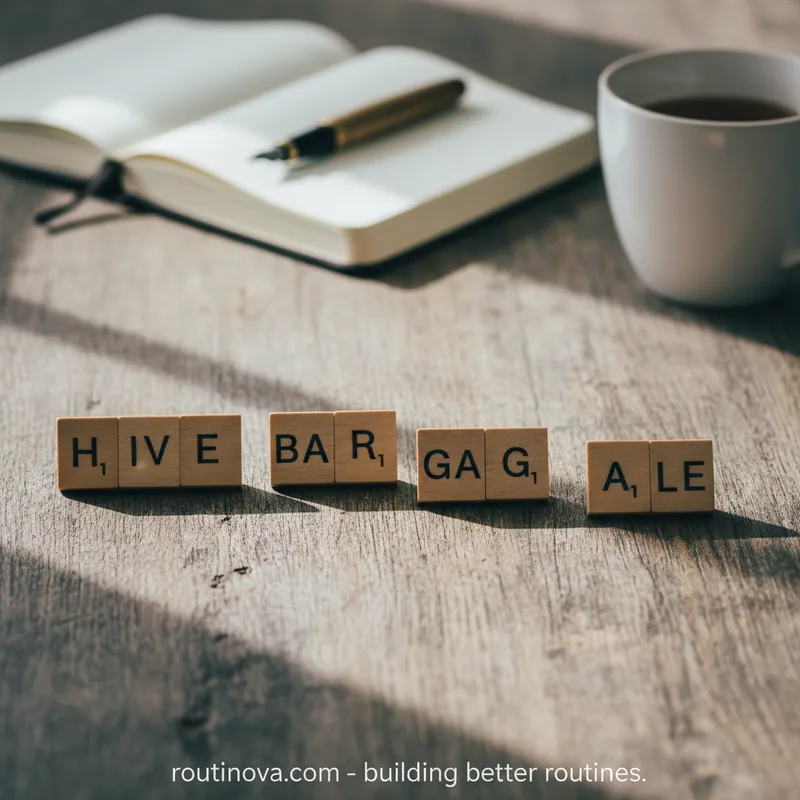
Ever stare at a grid of words, feeling like you're on the cusp of a revelation, only to be stumped by a cunning linguistic trick? Navigating the New York Times Connections puzzle can be a delightful challenge, testing your vocabulary and your ability to spot hidden connections. If you're seeking today's NYT Connections hints and the answer for Friday, January 2, 2026, you've come to the right place. We'll break down the clues, offer strategies, and reveal the solutions to help you conquer puzzle #936.
Today's NYT Connections Hints and Strategies
The New York Times Connections puzzle presents players with 16 words, and the goal is to group them into four sets of four based on shared themes. Sometimes the connections are straightforward, while other times they rely on wordplay or less common meanings of words. Today's puzzle, for January 2, 2026, is no exception to this intriguing format. As you scroll, you'll find spoiler-free hints that gradually reveal more about the categories before the final answers are laid bare.
Spoiler-Free Category Breakdowns
Before we dive into the specifics, here's a look at the *types* of categories you'll encounter today. These descriptions are designed to guide your thinking without giving away the game:
- Yellow Category: Focuses on verbs that share a similar action.
- Green Category: Explores nouns that relate to a performer's repertoire.
- Blue Category: Groups together nouns representing a measure of quality or performance.
- Purple Category: Involves a clever wordplay twist, specifically with food items.
Hints for Today's Connections Puzzle
Ready for a little nudge? Here are some more specific hints to help you piece together today's NYT Connections puzzle:
- Yellow Hint: Think about the actions of documenting or recording information. What words might a secretary or a diligent student use?
- Green Hint: What is a comedian known for presenting to an audience? Consider the recurring bits or segments in a comedy act.
- Blue Hint: These words all signify a level that must be achieved or surpassed. Think about setting goals or evaluating performance.
- Purple Hint: This category involves common food items, but with a quirky twist. You'll need to look closely at the letters.
A Closer Look at Tricky Words
Some words in today's puzzle might seem out of place or have multiple meanings. Let's clarify a few:
If you add a letter to the beginning of HIVE, you might get a common green plant often found in salads or as a garnish, like chives. This hints at the wordplay involved in the purple category.
The word BAR can function as a noun referring to a physical object, but here it's used metaphorically, as in setting a high 'bar' for expectations or achievement, similar to establishing a standard (Harvard, 2024).
GAG, in the context of this puzzle, refers to a joke or a comedic routine, often one that's a bit silly or intended to elicit a laugh, much like a clown's act.
The Connections Solutions Revealed
Prepare for the full reveal! Below are the categories and the words that belong in each for today's NYT Connections puzzle #936.
Yellow Category: WRITE
This group consists of verbs associated with the act of writing or recording. It's a solid starting point for many players.
- JOT
- LOG
- NOTE
- RECORD
Green Category: SHTICK
This category brings together words related to a performer's act or routine, particularly in comedy. A 'shtick' is a signature bit or characteristic style.
- BIT
- GAG
- NUMBER
- ROUTINE
Blue Category: BENCHMARK
These words all refer to a standard or level used for comparison or evaluation. They represent a measure of quality or performance that needs to be met.
- BAR
- EXAMPLE
- METRIC
- STANDARD
Purple Category: VEGETABLES MINUS STARTING LETTER
This is the trickiest category, relying on wordplay. Each word is a vegetable name with its first letter removed. For example, 'kale' becomes 'ale', and 'chives' becomes 'hive'. This requires a keen eye for phonetic and orthographic manipulation.
- ALE (Kale)
- EEK (Leek)
- HIVE (Chive)
- QUASH (Squash)
How I Solved Today's Puzzle
My process began by looking for the most obvious connections. The words LOG, RECORD, NOTE, and JOT immediately stood out as verbs related to documenting information, forming the Yellow group.
Next, I considered the performance aspect. BIT, GAG, NUMBER, and ROUTINE all fit well together as elements of a comedic act or performance, leading to the Green category.
The Purple category often involves wordplay. I noticed ALE and QUASH. Thinking about vegetables, 'kale' sounds like 'ale', and 'squash' starts with 's', leaving 'quash'. This sparked the idea of removing the first letter from vegetable names. Testing this, 'chive' becomes 'hive' and 'leek' becomes 'eek'. This confirmed the Purple category.
Finally, the remaining words were BAR, EXAMPLE, METRIC, and STANDARD. These words clearly relate to a level of performance or a benchmark, solidifying the Blue category. The key here is recognizing that 'bar' can mean a standard to meet, not just a physical object.
Strategies for Winning Connections
To excel at NYT Connections, remember that the game thrives on misdirection. Overlapping words are common; a word might seem to fit multiple categories, but it only belongs in one. Don't submit a group until you're confident all four words exclusively belong together. For instance, 'bacon' might initially seem like food, but in another puzzle, it could be grouped with painters like 'Close' and 'Munch' (The Atlantic, 2023).
When stuck, identify words that seem completely out of place with the obvious themes. These outliers can often be the key to unlocking a more obscure category, like the vegetable wordplay in today's puzzle. If you're still struggling, don't hesitate to use the hints provided, or consult resources that analyze the puzzle's structure and word meanings. Consistent practice with today's NYT Connections hints and answers will sharpen your pattern recognition skills over time.
Check back tomorrow for your next set of today's NYT Connections hints!