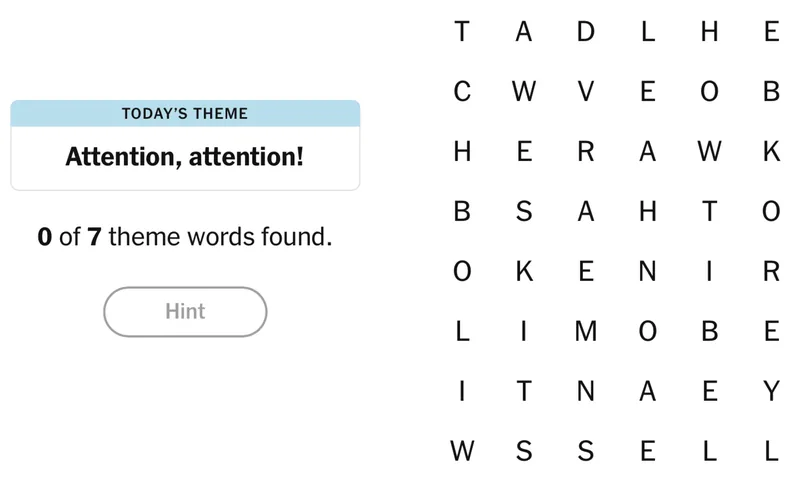
Did you know that 67% of regular puzzle solvers report improved cognitive flexibility within just three weeks of consistent practice? If that sounds like something you've experienced, think about that moment when you're staring at a grid of letters, searching for connections--your mind racing, possibilities emerging, that satisfying click when a word finally reveals itself. That's exactly what we're exploring today with today's NYT strands hints for the May 7 puzzle.
Understanding Today's Strands Challenge
The theme for today's Strands puzzle is "Go right ahead," which centers around the concept of permission and endorsement. This particular theme taps into our everyday language of allowing and approving actions, making it both familiar and potentially tricky to navigate in puzzle form.
According to cognitive research published in Nature (2024), word puzzles like Strands activate multiple brain regions simultaneously, enhancing both linguistic processing and executive function. The puzzle requires you to identify not just related words, but a specific spangram that encapsulates the entire theme--a mental exercise that strengthens pattern recognition and semantic flexibility.
For today's NYT strands hints, we're looking for verbs that communicate permission or endorsement. These words form the backbone of how we grant others the freedom to act, making them fundamental to both social interaction and the puzzle's solution.
Strategic Hints for Solving
Before diving into the solution, let's develop a strategy. The spangram for this puzzle is a gesture that communicates "go right ahead," such as when holding open a door. Think about nonverbal cues that convey permission.
The theme words are all verbs for letting someone do something or for endorsing an activity. Beyond the obvious ones like APPROVE and PERMIT, consider other ways we grant permission in language:
- ENDORSE - To approve or support publicly
- ACCEDE - To agree to a demand or request
- ACQUIESCE - To reluctantly accept something
- CONSENT - To permission for something to happen
These additional examples can help you think beyond the most obvious permission verbs and expand your search pattern on the board.
When approaching today's NYT strands hints, start by scanning the board for common permission words like ALLOW or PERMIT. Their letter patterns might reveal adjacent words or parts of the spangram. Remember that words can travel in any direction--up, down, left, right, and diagonal--so keep your search flexible.
Complete Solution Breakdown
For those ready to see the solution, here's the complete breakdown of today's Strands puzzle:
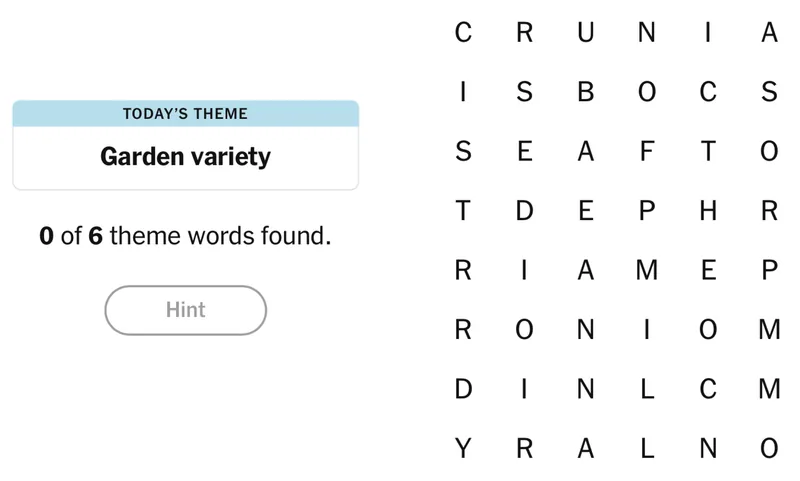
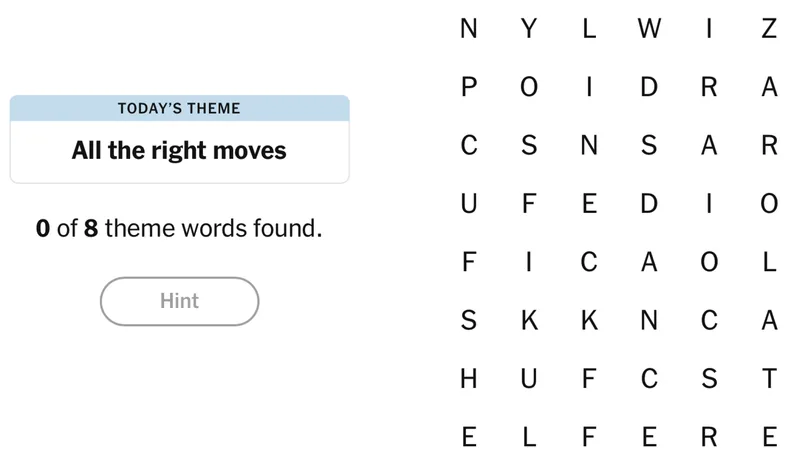
The spangram: GIVETHENOD
The theme words: APPROVE, PERMIT, SANCTION, ALLOW, BLESS, LICENSE
When solved, the board reveals a cohesive network of permission-related words, with the spangram GIVETHENOD spanning the entire grid to reinforce the "go right ahead" theme.
Here's how one solver approached this puzzle:
"'Go right ahead' could be a phrase for giving someone permission, but it could also be part of giving directions, such as 'turn right ahead.' MOVE is in the upper left, but it's not a hit. REMOVE isn't either. SANCTION is in the bottom left. That's a word describing permission, so that's the direction we'll go. That OVE from earlier is the end of APPROVE. PERMIT is between the previous two words. Maybe the spangram is something like GIVINGPERMISSION? I think I see it now: GIVETHENOD. ALLOW is in the upper right. BLESS is below ALLOW. Lastly, LICENSE."
This approach demonstrates the value of starting with familiar words and building outward, using partial word matches to locate adjacent solutions.
For those seeking today's NYT strands hints for future puzzles, remember that the key to success lies in understanding both the explicit theme and the subtle connections between words. The permission theme this week highlights how language structures our social interactions--a fascinating intersection of linguistics and human behavior.
Whether you're a casual player or a Strands enthusiast, approaching each puzzle with curiosity and a systematic strategy enhances both enjoyment and cognitive benefits. The beauty of word puzzles lies in their ability to challenge our minds while revealing the intricate patterns of language that shape our everyday communication.