In the digital age, a simple five-letter word puzzle captivates millions daily. Yet, for many, the daily challenge of Wordle can transform from a delightful mental exercise into a frustrating roadblock. We've all been there - staring at the grid, out of ideas, desperately hoping for a spark of inspiration. But what if a little guidance could turn that frustration into a triumphant solve?
Mastering the Daily Wordle Challenge
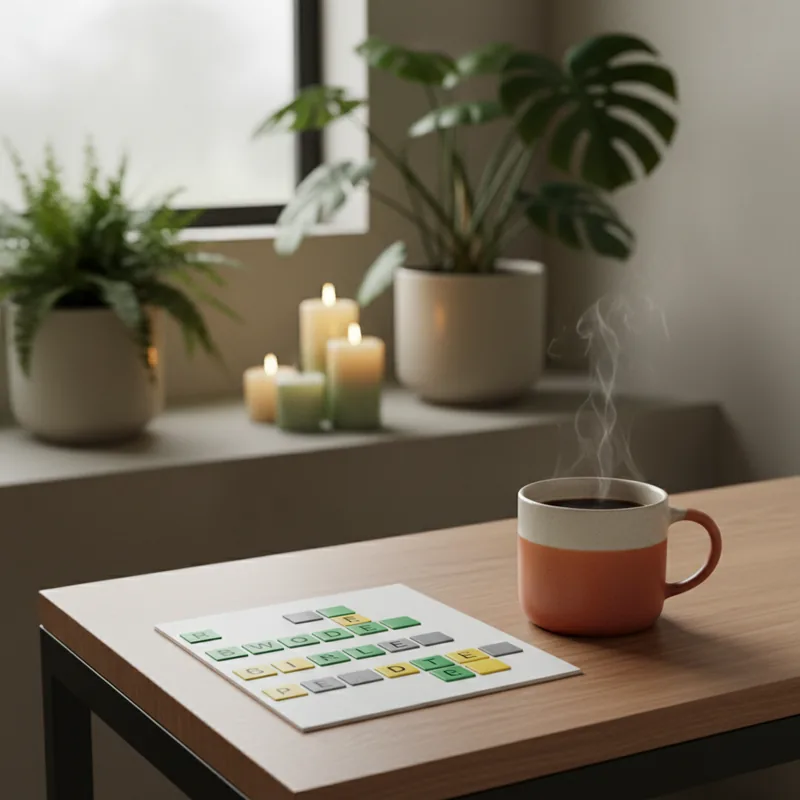
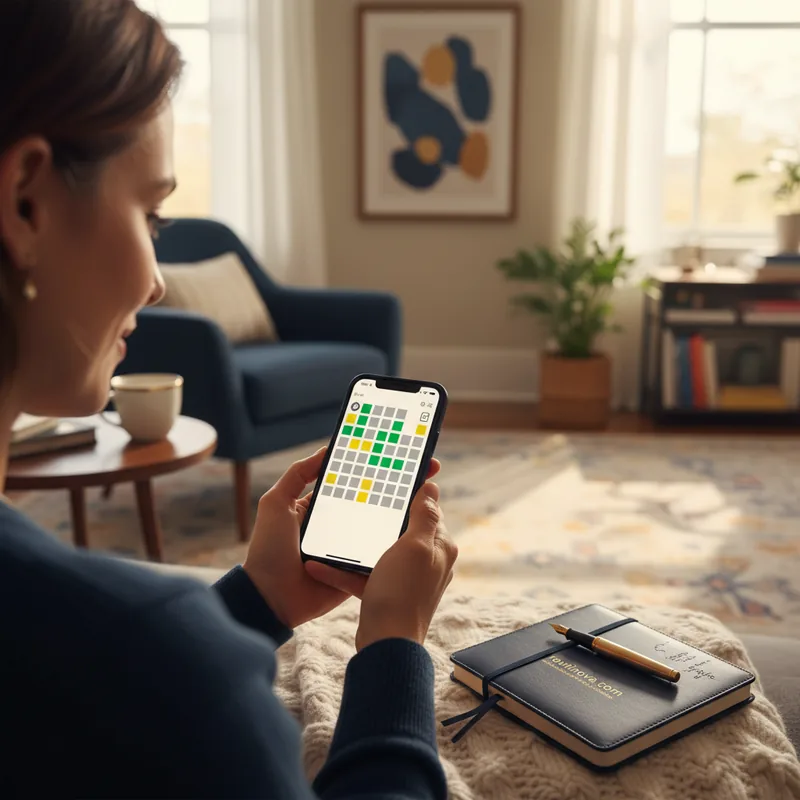
Wordle, the universally popular word-guessing game, presents a fresh five-letter mystery every midnight, resetting with the dawn in your local time. The objective is straightforward: deduce the secret word within six attempts. Each guess provides crucial feedback. Correct letters in the correct position turn green, letters present but misplaced appear yellow, and those absent entirely are marked gray. Understanding these color cues is the bedrock of your Wordle strategy, transforming each guess into an informed step towards the solution. For those seeking a deeper dive into the mechanics, resources exploring effective Wordle tactics offer valuable insights (New York Times, 2021).
Today's puzzle, Wordle #1,668 for Monday, January 12, 2026, proved to be a relatively accessible challenge. For those who landed directly on the answer, congratulations! For others, perhaps you're seeking a nudge in the right direction. We're here to provide today's Wordle hints (and) the answer to help you conquer this daily brain teaser.
Unpacking Today's Wordle: Hints for January 12
To aid your quest for today's Wordle hints (and), let's break down the characteristics of the solution word for January 12, 2026. This approach focuses on common letter frequencies and positional clues, a strategy often employed by seasoned players (MIT Technology Review, 2022).
The word for today, January 12, 2026, contains five common letters. For reference, the most frequent letters in the English language are generally considered to be E, T, A, O, I, N, S, H, R, D, L, U. Identifying these common letters within your guesses can significantly narrow down the possibilities.
A key piece of information for today's puzzle is that there are no repeated letters. This means each letter in the five-letter solution is unique, simplifying the process of elimination.
Furthermore, the word contains two vowels, which is a common distribution and can help you focus your letter placement strategies.
To assist further with today's Wordle hints (and), here are the starting and ending letters: The word begins with the letter T and concludes with the letter L.
The Solution Revealed
Ready for the grand reveal? The answer to Wordle #1,668 on January 12, 2026, is:
TRIAL
A common word that fits the criteria of starting with 'T', ending with 'L', and containing two vowels without repetition. This word is a great example of how combining common letters can lead to a swift solve.
A Strategic Solve Example
To illustrate how one might arrive at TRIAL, consider this approach. A strong starting word like RAISE could be used. If RAISE yields yellow for R, A, I, and S, and gray for E, it tells you these letters are in the word but not in those positions. A subsequent guess like TRIAL, which incorporates the known 'T' and 'L', and strategically places the vowels 'I' and 'A' from the previous guess, could very well lead to a quick win. My own attempt saw me guess RAISE, revealing yellow for R, A, and I. My second guess was TRIAL, which perfectly landed the solution in two tries.
Elevating Your Wordle Game Beyond Today
While today's puzzle might be solved, the journey of Wordle mastery is ongoing. Developing a consistent strategy can turn every day into a win. Effective starting words are crucial; consider terms rich in common letters like CRANE, SLATE, or TRACE. These words maximize the chances of hitting green or yellow squares early on, providing vital information for subsequent guesses (The New York Times, 2021). An MIT analysis suggests words like SALET or REAST can also be highly effective at ruling out possibilities quickly.
Beyond the initial guess, focus on letter patterns and positional logic. If you've identified a common letter like 'S' but it's yellow, try placing it in a different spot in your next guess. If a letter is gray, ensure you never use it again. This simple rule prevents wasted attempts and keeps your focus sharp.
Consider the nuances of word structure. For example, if you've deduced the word ends in -OUND, don't waste guesses on MOUND, SOUND, and HOUND sequentially. Instead, try a word like MARSH to test 'M', 'R', 'H', and 'S' simultaneously. This kind of strategic thinking, often referred to as fishing for hints, can dramatically shorten the number of guesses needed.
The Wordle lexicon itself can sometimes be a curveball. The New York Times occasionally introduces words that might not have been in the original game's list, sometimes leaning towards more colloquial or even thematic terms. Being adaptable and open to less common, yet valid, five-letter words is part of the evolving challenge.
Beyond Wordle: A Universe of Word Puzzles
If the thrill of Wordle leaves you wanting more, a vibrant ecosystem of word games awaits. For those who enjoy a multi-puzzle challenge, games like Dordle and Quordle require you to solve multiple Wordle grids simultaneously, demanding efficient use of each guess. Octordle and Sedecordle escalate this challenge further with eight and sixteen puzzles, respectively.
For a different kind of linguistic dexterity, consider Anagrammer, where the goal is to unscramble letters to form words. Then there's Waffle, a game that tests your ability to rearrange letters within a grid to match correct feedback, requiring you to strategically back into a solution. For the truly competitive, Redactle offers a unique meta-puzzle where you uncover a Wikipedia article by guessing words, with damage taken for time spent between guesses, adding a layer of timed pressure. Finally, Absurdle presents a dynamically changing target word, forcing you to adapt your strategy as the game actively works against your progress, rewarding persistence and adaptability.