It’s 7:15 AM. You’re pouring coffee, half-asleep, when the mug slips. Before your brain fully registers what’s happening, your hand instinctively shoots out, catching it mid-air. A sigh of relief. Or perhaps you’re trying a new yoga pose, feeling your body adjust, balance, and subtly shift weight until you find that sweet spot of stability. These aren’t just lucky accidents or random movements; they're everyday demonstrations of a remarkable ability: bodily-kinesthetic intelligence.
This fascinating aspect of human cognition helps us navigate our physical world, from the simplest gestures to the most complex athletic feats. Understanding what to know about this intelligence can unlock new appreciation for your own physical capabilities and highlight how crucial it is for a fulfilling, independent life.
Understanding Your Body's Hidden Language
At its core, bodily-kinesthetic intelligence is how we understand and control our body's movements in space. Part of Harvard psychologist Howard Gardner’s groundbreaking Multiple Intelligence Theory, it represents our innate knowledge of our own physical form and its potential (Gardner, 1983).
Gardner defines this intelligence as the “abilities to control one's body movements and to handle objects skillfully.” Think of a professional dancer executing a complex routine, an Olympic athlete performing with precision, or a surgeon meticulously operating. Each demonstrates an extraordinary command over their physical being, using fine motor skills and spatial awareness to accomplish their tasks.
Adam King, PhD, an associate professor at Texas Christian University, echoes this sentiment, describing it as “the ability to manipulate objects and perform physical skills by using our sensory inputs to understand where our body is, relative to itself and within the environment” (King, 2024). This intricate interplay of senses—sight, touch, proprioception (awareness of body position)—allows us to perform countless actions without conscious thought.
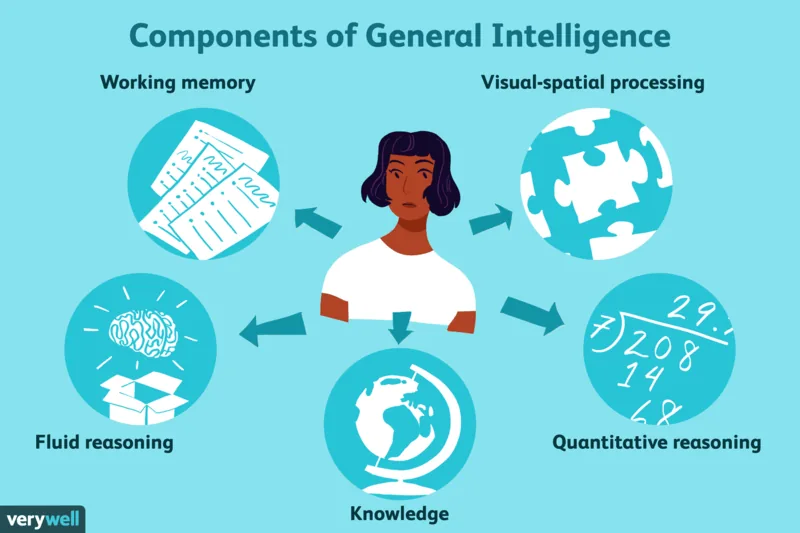
Gardner’s broader theory of multiple intelligences, while initially framed for educational settings, provides a rich lens through which to view human potential. The types of intelligence he posited include:
- Visual-spatial
- Linguistic-verbal
- Logical-mathematical
- Bodily-kinesthetic
- Musical
- Interpersonal
- Intrapersonal
- Naturalistic
This framework highlights that intelligence isn't a single, monolithic entity, but a diverse set of capabilities, with bodily-kinesthetic intelligence playing a vital role in our physical engagement with the world.
How It Shapes Your World: Everyday Kinesthetic Prowess
Bodily-kinesthetic intelligence isn't just for elite performers; it's woven into the fabric of our daily existence. Researchers measure it through indicators like body control, sensitivity to rhythm, expressiveness, ability to conceptualize movement, and object manipulation (Michelaki & Bournelli, 2022). But here's what to know about its practical applications:
- Precision in Craft: Consider a master chef swiftly dicing vegetables with surgical precision, their knife an extension of their hand. Or a skilled carpenter, whose hands intuitively know the exact pressure and angle needed to shape wood perfectly.
- Artistic Expression: Beyond dance, musicians use incredible kinesthetic intelligence. A pianist's fingers glide across keys, translating complex musical ideas into precise physical actions, or a violinist's bow arm executing nuanced strokes.
- Problem-Solving in Motion: Think about a rock climber navigating a challenging ascent, their body constantly assessing the environment, finding footholds, and adjusting balance to conquer gravity.
- Medical and Therapeutic Impact: For medical professionals, understanding kinesthetic intelligence is paramount. As King explains, it helps physical and occupational therapists support patients in maintaining core motor functions, like balance, especially after injuries or with conditions affecting sensory systems (King, 2024).
This intelligence becomes particularly crucial when sensory inputs are impaired. King gives the example of children with cochlear implants: “When you have conditions where part of those sensory systems are impaired, or gives inaccurate information, the body has to be able to compensate and perform the task.” These children adapt, finding different ways to move and interact with their environment, showcasing the body's remarkable ability to learn and compensate.
Cultivating Your Body's Wisdom: Enhancing Kinesthetic Skills
The good news is that bodily-kinesthetic intelligence can be nurtured and improved throughout life. What to know about stimulating this intelligence varies by age, but the underlying principle remains the same: engage your body purposefully. For children, the opportunities are vast:
- Play and Physical Education: Simple engagement in physical education classes, schoolyard games, and obstacle courses naturally develops motor skills and body awareness.
- Balance and Stability Training: Activities like walking on a balance beam, using a wobble board, or navigating unstable surfaces challenge the body to maintain equilibrium.
- Gymnastics and Dance: These activities are powerhouses for kinesthetic development, involving rotations, changes in vertical position, and activating the vestibular system (King, 2024). Dance, in particular, has been used in creative arts and even for conflict resolution training (Alexander & LeBaron, 2013).
For older adults, especially those facing neurodegenerative conditions like Parkinson’s disease, the focus shifts to maintaining independence through functional, everyday movements. King emphasizes activities that mimic daily life, such as reaching for objects in cabinets or carefully stepping while unloading groceries (King, 2024). His research even included integrating non-contact boxing into exercise routines, demonstrating how diverse movements can support physical control and quality of life.
The Deeper Meaning: Why This Intelligence Matters
Ultimately, understanding what to know about bodily-kinesthetic intelligence is about more than just physical prowess; it’s about appreciating a fundamental aspect of human existence. For disabled people, or those looking to maintain vitality as they age, this intelligence is a cornerstone of quality of life and independence. It allows for adaptation, continuous learning, and a profound connection to our physical selves.
Whether you're a professional athlete, a meticulous crafter, or simply navigating your morning routine, your body is constantly processing information and executing movements with surprising grace and efficiency. Nurturing this intelligence means investing in your autonomy, your expression, and your ability to interact fully with the world around you. It’s a testament to the incredible wisdom held within your own body, waiting to be explored and celebrated.